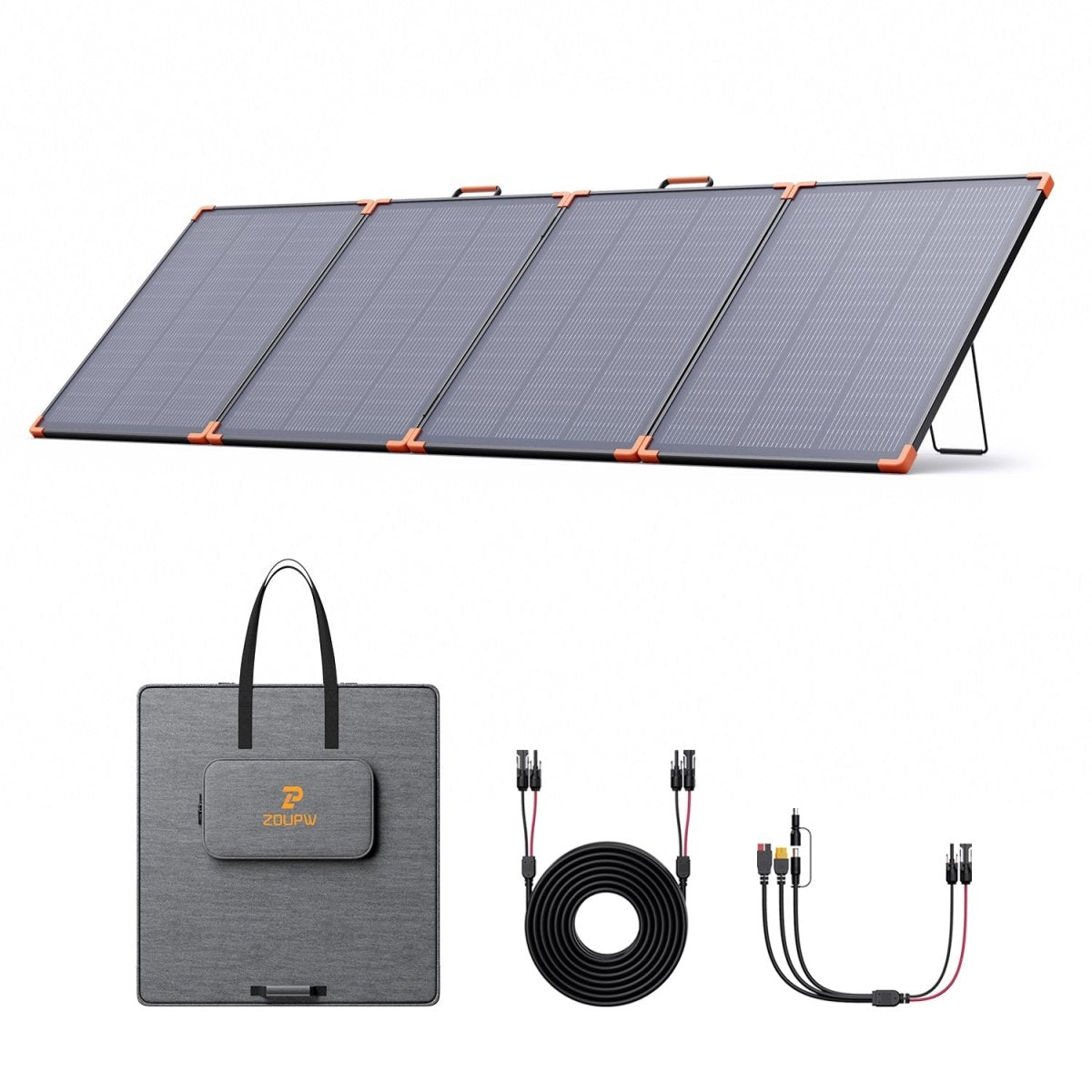
ZOUPW’s range starts at 100 watts and tops out at 480, spread over foldable, rigid and bifacial designs. Choose badly and you either end up short on power or pay for watts your station will never accept.
This guide gathers what the brand publishes and what independent testers have measured, so you can narrow the choice one step at a time. It is research, not a hands-on test.
Ahead you will find the specs decoded, a lineup overview, a look at how ZOUPW’s pricing holds up beside Jackery and Renogy, care habits, and the written warranty and return terms.
Who ZOUPW Is
Start with what the company does. ZOUPW makes solar panels and small charging gear, namely kits, battery chargers and power banks. It does not build power stations, and its panels are pitched as add-ons for stations that other companies sell.
Jackery and EcoFlow take a different route, offering stations, panels and accessories as one matched ecosystem. ZOUPW is the alternative for people who already own a station from somebody else.
Its slogan is “Limitless Energy, Anywhere.” On its about page, ZOUPW describes the goal as putting professional-grade solar within reach of ordinary households, not only dedicated off-grid enthusiasts.
The site gives no founder, founding year or headquarters location. The research behind this guide turned up none of them, so the brand’s age and origins remain unknown, and that is worth keeping in mind if company history matters to you.
Prices run from about $100 for a basic 100W foldable to roughly $650 for the 480W bifacial flagship. In the research behind this guide, ZOUPW came in $50 to $150 below comparable Jackery or Renogy panels at each wattage compared.
The catch shows up in the one independent test of a smaller ZOUPW panel, where the 200W foldable fell well short of its rating. A later section has the numbers.
What ZOUPW Sells
Alongside the panels, the catalog includes kits, battery chargers and power banks. The panels themselves come in three styles.
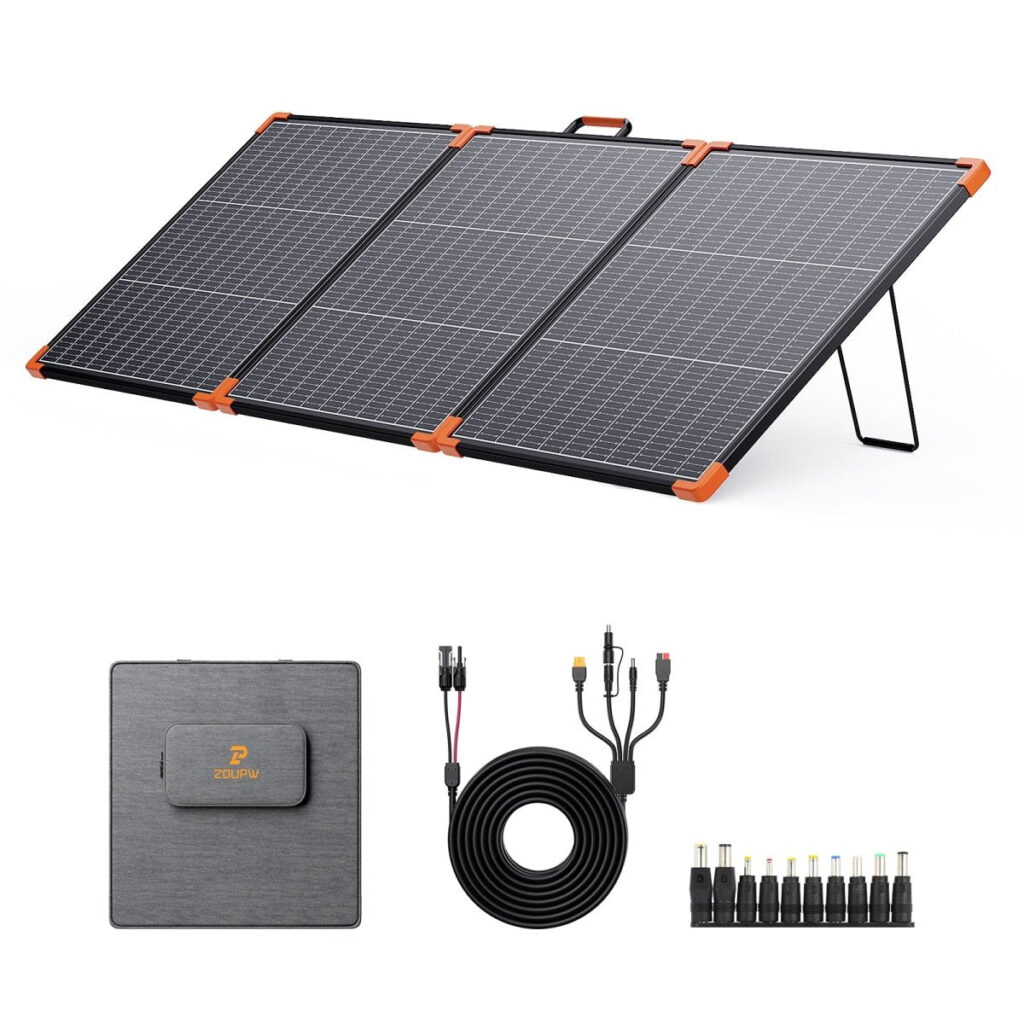
- PowerFold (foldable): aluminum frames with ETFE surfaces, built for camping and RV use where the panel goes up and comes down often.
- N-Pro (rigid): tempered glass, meant to be mounted once on a roof, a boat deck or an RV and left there.
- Bifacial models: a second light-catching face. The brand says the rear side may add as much as 30% output when conditions suit.
Cells in most of the range are N-Type 16BB monocrystalline, rated as high as 25% efficiency. A few models add a built-in solar angle guide, and panels ship with connector adapters and a carrying bag.
Match Wattage to Your Power Station
Begin with the station, because its maximum solar input rating caps charging speed no matter how big the panel is. Find that figure on the station’s spec sheet before you compare panels.
Station capacity gives a rough starting point:
- Under 500Wh: 100W to 200W, a typical range for a daily recharge.
- 500Wh to 1,500Wh: 200W to 300W, which speeds up charging without overshooting.
- Big stations, RV rigs and off-grid systems: 300W to 480W for heavier daily loads.
The cap works like this. A station limited to 300W of solar input draws 300W at most, so a 480W panel connected to it leaves 180W unused. More panel only pays off when the station can take it.
Before you shop, write down the devices you plan to power and for how long. That list tells you whether a small top-up panel or a large one makes sense, and it keeps you from guessing.
Check Voltage and Connectors
Voltage is the second compatibility test. Each power station has a maximum input voltage, and the panel’s open-circuit voltage must stay below it. Chain panels in series and their voltages add together, so the check matters more as your array grows.
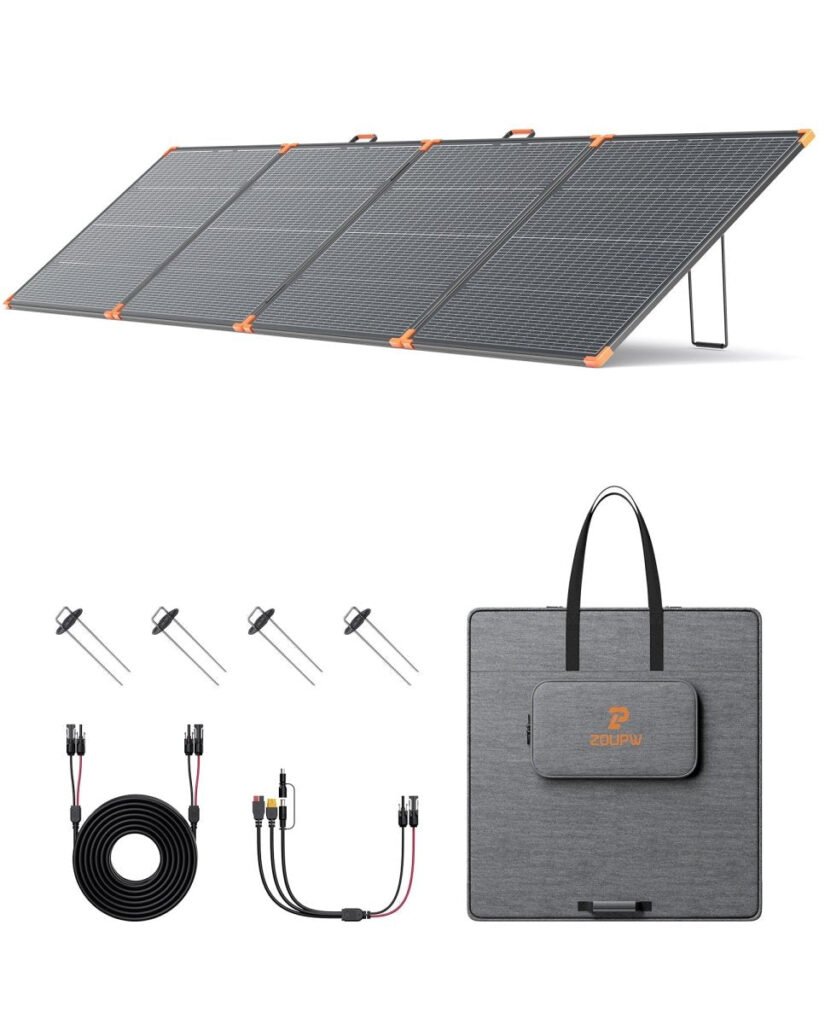
For plugs, ZOUPW includes adapters for MC4, XT60, Anderson and DC7909 or DC8020 connections. Its compatibility list names EcoFlow, Jackery, Bluetti and Anker stations, along with Pecron, Goal Zero and BougeRV, plus UGREEN, OUPES and FlashFish.
For most of those you should not need a separate adapter. Still, confirm the connector on your own station before ordering, since the list is only a starting point.
Foldable, Rigid or Bifacial
Choose by how the panel will be used, not by the biggest number on the page.
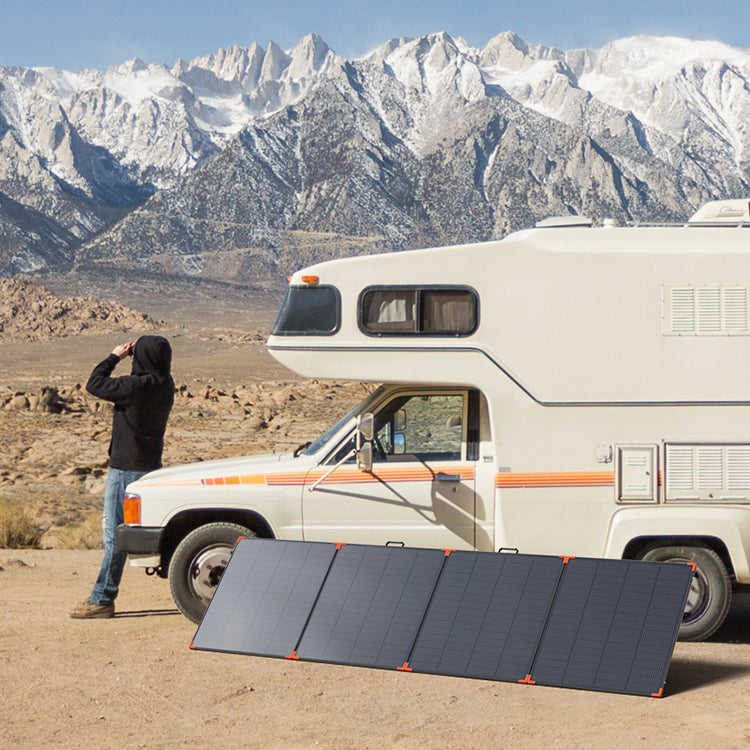
Picture the routine first. If you unpack and repack on weekend RV outings or tent trips, a foldable fits. If the panel will sit on a roof or a boat for good, the rigid N-Pro line is the better match, and its 10 year warranty compares with one year on most foldables.
Bifacial designs earn their keep over reflective ground. Pale sand, snow or a light tarp bounce light up to the rear face, while dark grass gives it little to work with.
N-Type cells
N-Type refers to how the silicon in each cell is doped. ZOUPW rates its N-Type monocrystalline cells at up to 25% conversion efficiency. Older budget designs generally use P-Type cells, which top out a few points lower.
Busbars and the 16BB label
BB stands for busbars, the thin metal strips on a cell that collect current and send it to the wiring. In general, more busbars mean less power lost inside the cell, so a 16BB layout is meant to gather current more evenly than older 9 or 12 busbar designs.
Bifacial design
A bifacial panel has a transparent backsheet, which lets the rear of each cell take in reflected light. ZOUPW’s figure of up to 30% extra rear-side power is a best case that depends heavily on how and where the panel is mounted.
ETFE surface and IP68 rating
Foldable panels are covered in ETFE, a plastic film that resists UV and scratches. Tempered glass, used on the rigid N-Pro line, is heavier and stiffer, which is why only the foldables collapse into a bag.
ZOUPW lists IP68 protection on its panels. The research behind this guide reads that as sealed against dust and able to cope with rain-level water, not as a submersion rating, so keep panels out of standing water.
The ZOUPW Lineup at a Glance
Seven models span the range, listed here from smallest to largest.
| Model | Best for | Price at ZOUPW |
| 100W Portable | Top-ups for a power bank or small backup battery; includes a solar angle guide | about $103 |
| 180W Portable | A lower-cost pick in the smaller wattage tier | about $180 |
| FoldGo 200W Portable | A cheaper way into the 200W tier if your station accepts no more than 200W | check the current price at ZOUPW |
| 300W Foldable N-Type | A medium power station | about $323 |
| 400W Portable Foldable | RV owners who want extra headroom without the flagship price; IP68 | about $440 |
| 450W Portable Foldable | Large stations and RVs; has an independent test showing it reached its rating | about $500 |
| 480W Bifacial | The highest wattage in the range, with extra rear-side gain over reflective ground | about $650 |
Of the seven, the 450W has an independent test showing it reached its full rating under strong sun. The details are in our full verdict on the ZOUPW 450W panel.
How ZOUPW Compares to Jackery and Renogy
Independent testing puts all three brands side by side at the 200W tier.
| Panel | Measured output | Share of 200W rating |
| Renogy 200W Portable | 177W | about 89% |
| Jackery SolarSaga 200 | 171W | 86% |
| ZOUPW 200W Foldable | 144W | 72% |
Those numbers come from an outdoor-gear test that ranked ZOUPW’s 200W foldable tenth of twelve panels, marking it down for lower efficiency and weaker results in wind. At this wattage, Renogy and Jackery held a clear edge.
A separate independent reviewer tested the 450W foldable and found it reached its full rating in strong sun, with readings above 400W whenever irradiance exceeded 800 W/m². The same reviewer put its weight roughly 20 to 30% below rigid panels in its class.
Together the tests show two outcomes, one ZOUPW panel falling short of its label and another matching it. They do not establish a rule for the whole range, so judge each model by its own evidence.
Price and warranty
The 450W is listed at about $500 at ZOUPW, and the independent reviewer’s comparison put Jackery and EcoFlow panels in that class $100 to $200 higher. On warranty, ZOUPW’s foldable panels generally carry one year, shorter than what some premium brands give on flagships. The rigid N-Pro line carries ten years.
Which should you buy
If efficiency at 200W is your priority, the tested lead belongs to Renogy and Jackery. For a larger panel, the 450W is the ZOUPW model with independent measurements behind it, and it reached its rating in strong sun.
Care, Storage and Setup Tips
Point it at the sun
Some ZOUPW models include a solar angle guide, which helps you aim the panel directly at the sun instead of estimating by eye. Good aim can matter more for output than any cleaning routine, especially under cloud.
Handle connectors with care
Match the adapter to the port before you push anything in, and never force a plug that does not fit. Keep connected plugs away from moisture, and put the adapters back in the supplied carrying bag when you disconnect.
Go easy on the kickstand
The kickstand is the main moving part of a foldable panel. Open it only as far as it stops, and set the panel on level ground instead of propping it on a slope. If a hinge or stand fails anyway, contact ZOUPW support with your order number and photos, the same route the warranty describes.
Dry it and store it sensibly
Wipe the panel dry before folding it, because moisture caught between folded sections is likely a bigger concern for the backing than one wet afternoon in use. Keep it somewhere temperate. A car trunk that gets very hot can stress the wiring and connector seals over time.
Keep cleaning gentle
Dust and pollen come off both the ETFE film and the rigid glass with a soft cloth and water. Avoid scouring pads and ammonia-based glass cleaners, since repeated abrasive cleaning can wear the surface down over the years.
Where to Buy and What Is Covered
To get the full return window and the warranty terms for your product category, order from ZOUPW’s own store, which opens the brand’s homepage. If you buy anywhere other than ZOUPW’s own site, the reseller’s policy applies instead of ZOUPW’s, so check that seller’s rules first.
Checkout accepts Visa, Mastercard, American Express, PayPal, Apple Pay, Google Pay, Shop Pay and Union Pay. Shipping inside the continental U.S. is free, with 1 to 5 days of processing before dispatch.
Be cautious about a seller whose price sits far below ZOUPW’s own with no stated reason, a listing that never mentions the connector adapters ZOUPW panels ship with, or a seller who cannot answer basic warranty questions or points you away from ZOUPW support. Transit damage has to be reported within a week of delivery, and photos of the box and of the panel itself help.
Warranty by product type
| Product type | Warranty length |
| Rigid N-Type panels | 10 years |
| Bifacial foldable panels | 3 years |
| Metal-frame ETFE foldables | 3 years |
| Most portable foldables | 1 year |
| Lightweight foldables | 1 year |
| Flexible panels | 1 year |
| Cables, adapters and other accessories | 1 to 2 years |
| Refurbished or used items | 6 months to 1 year |
In scope are manufacturing and material faults and abnormal failures during normal use. Out of scope are normal aging, accidental damage, misuse, repairs by anyone but the brand and water exposure beyond the IP68 rating. Coverage stays with the original purchaser and cannot be transferred.
To claim, email [email protected] with the order number, the model, a description of the problem and photo or video evidence.
Returns
- Window: 30 days from delivery for orders placed directly with ZOUPW. Refurbished items get 7 days, and only for defects.
- Condition: unused, unmodified and undamaged, in the original box with every accessory. A Return Merchandise Authorization number is required before you ship anything back.
- Costs: ZOUPW pays return shipping for items that arrive damaged, defective or wrong. If you simply changed your mind, you pay shipping and a 10 to 15% restocking charge applies.
- Refunds: processed 7 to 10 business days after inspection, plus your bank’s own posting time.
Frequently Asked Questions
Does ZOUPW make power stations too?
No. Its catalog is panels, kits, power banks and battery chargers, all intended for use with stations made by other companies.
Do the panels deliver their printed wattage?
It varies by model. In independent tests, the 450W reached its full rating, while the 200W foldable measured about 72% of its rating.
How are N-Type and bifacial different?
N-Type is about the cell’s semiconductor material and the efficiency it starts from. Bifacial is about panel design, with a rear face that also picks up reflected light. A single panel can be both.
What should I know about the IP68 rating?
In the research behind this guide it signals sealing against dust and rain-level water exposure, but it is not described as a rating for full submersion.
What if a panel is damaged in transit?
Tell ZOUPW within 7 days of delivery and send photos that show both the packaging and the panel.
Do refurbished panels have a warranty?
Yes, though a shorter one, from 6 months to 1 year. The return window for refurbished items is 7 days and covers defects only.
Which payment methods can I use?
The store lists Visa, Mastercard, American Express, PayPal, Apple Pay, Google Pay, Shop Pay and Union Pay.
Ready to compare models? You can browse the full range at ZOUPW’s store, which opens ZOUPW’s own site, then check your station’s input limits before you choose.