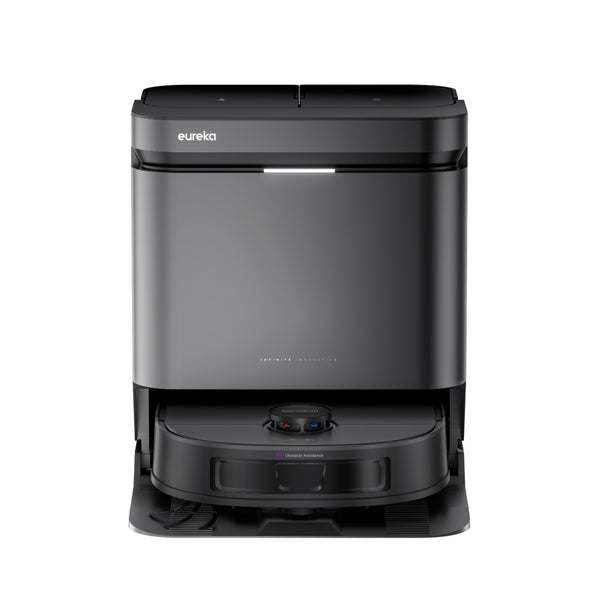
Shopping for a vacuum gets easier once you stop comparing suction numbers and start comparing homes. A robot suits one floor plan, an upright suits another, and a stick or canister fills the gaps between them.
Eureka makes a handy example, because it sells every common type under one name: robot vacuums, sticks, uprights, canisters and wet/dry cleaners. This guide covers how to choose a type, what the brand’s technology names mean, how Eureka compares with Shark, how to look after your machine, where to buy a genuine one and how the brand got to where it is.
The guide is research-based. It draws on Eureka’s own product details and independent coverage rather than hands-on testing, and where a figure is the brand’s claim, the text says so.
Start With Your Home, Not the Spec Sheet
Eureka sells five main kinds of vacuum, and each one solves a different problem. Your floors and your daily routine should drive the choice more than your budget does. The sections below start from the situation and work toward the type.
Open floors and mostly hard surfaces
If the goal is to stop vacuuming by hand, start with a robot. The layout matters, because a robot needs clear access to every room it will clean. Hard floors with some low or medium carpet suit it best, while stairs, deep shag rugs and rooms it cannot enter are where it loses ground.
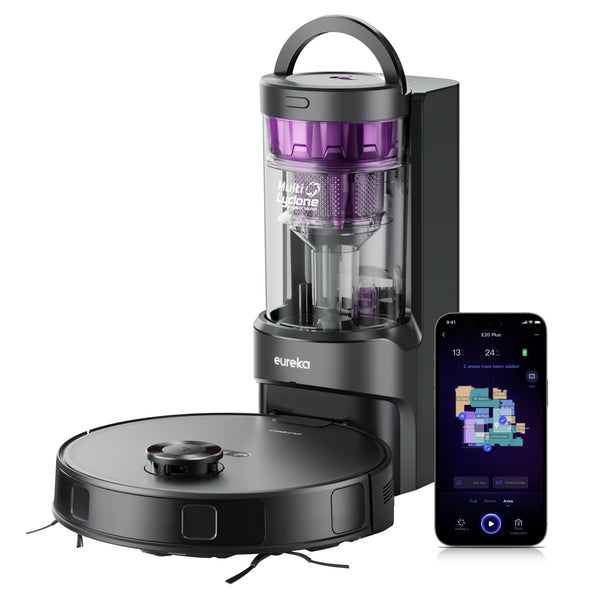
Eureka’s robots split into two camps. The J15 Evo Ultra has the most suction, at 22,000 Pa. The E20 Plus has only 8,000 Pa but adds DuoDetect AI obstacle avoidance. If cords, toys or pet bowls collect on your floors, that navigation may count for more than the bigger number.
Whatever you choose, walk the rooms first and note what usually ends up on the floor. What you find tells you more than any line on a spec sheet.
Stairs and several levels
A stick is the grab-and-go option. Hauling a heavier machine between floors gets old, and a stick also earns a place as a spare for fast touch-ups between longer cleaning sessions.
Eureka’s sticks cover a wide range. A wet/dry handheld costs about $30, and the ReactiSense series sits at the top end. In the middle, the ReactiClean 410 has a 200W brushless motor and five layers of HEPA filtration, and its runtime runs from 15 to 50 minutes, depending on the mode you pick. Eureka also gives it an illuminated brushroll to make fine dust easier to see on hard floors.
Heavy carpet or a focus on filtration
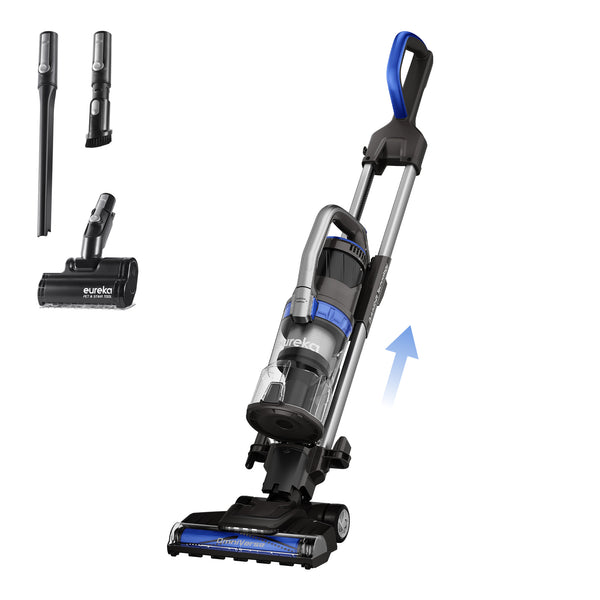
Carpet-heavy homes are where an upright earns a look, since the type is built around raw cleaning power. Eureka’s better-equipped example is the OmniVerse NEU800. It pairs an 850W dual-motor system with HEPA filtration that Eureka rates to trap 99.9% of particles as small as 0.3 microns.
The NEU800 also carries a 2-year warranty and a QuickShift switch that moves between floors, furniture, crevices and stairs. On a tighter budget, the AirSpeed and Dash Sprint lines come in under about $130.
A lighter body with a long hose
A canister trades the bulk of an upright for a flexible hose, which helps on stairs, upholstery and car interiors because the body stays on the floor while the hose does the reaching.
The long-running Mighty Mite 3670G is a bagged canister that weighs 8.6 pounds, with triple filtration and a blower port for garages and patios. The WhirlWind NEN186BL XL is a larger bagless canister, which suits anyone who would rather not empty a bin after every session.
Garage and workshop spills
Wet/dry cleaners like the NEW400 are meant for jobs in garages, kitchens and workshops. They are not a substitute for a vacuum you use on everyday floors, so think of one as an add-on.
Eureka Models at a Glance
Eureka’s catalog is large, so this table picks out representative models across the range. Prices are approximate regular prices at Eureka’s store and they can change, so check the current figure before you buy.
| Model | Type | Key details | Price at Eureka |
|---|---|---|---|
| J15 Evo Ultra | Robot | 22,000 Pa of suction, self-emptying dock, ScrubExtend edge mopping | Check the current price at Eureka |
| E20 Plus | Robot | DuoDetect AI obstacle avoidance, bagless base, 8,000 Pa | Check the current price at Eureka |
| E20 Evo Plus | Robot | The budget step down in the robot range | about $400 |
| OmniVerse NEU800 | Upright | 850W dual motor, HEPA filtration, 2-year warranty | about $230 |
| FlexReach 652 | Upright | A cheaper upright without the full HEPA package | about $180 |
| ReactiClean 410 | Stick | 200W brushless motor, illuminated brushroll | about $130 |
| Mighty Mite 3670G | Canister | Bagged, 8.6 pounds, blower port | about $100 |
| WhirlWind NEN186BL XL | Canister | Larger bagless canister for bigger homes | about $250 |
The flagship robot deserves a closer look. Our full verdict on the Eureka J15 Evo Ultra covers its lab results, its weak spots and who should skip it. In short, an independent review scored it 95 out of 100 for overall cleaning, but it has no front camera and a bulky dock.
What the Brand’s Tech Names Mean
Eureka’s robot pages lean on a handful of trademarked names. They vary in substance: a few point to distinct hardware, while others label features that are common across the category. The table sums up each one, based on the brand’s own documentation.
| Name | What it is | What Eureka states |
|---|---|---|
| FlexiRazor | An anti-tangle roller brush with a comb-and-cut design in the brush housing | It cuts hair tangles by 99% |
| DragonClaw | A V-shaped side brush that guides debris toward the main roller | On the related E20 brush, anti-wrap performance 14% ahead of a standard round brush |
| ScrubExtend | A mop pad on a swing arm that reaches baseboards and corners | About 98.95% edge coverage and 100,000 extension cycles in its own tests |
| Self-cleaning base | A dock that empties the bin, rinses the pads and blows hot air over them to dry | Up to 131°F drying on the J15 Evo Ultra, with a 3L bag rated for up to 75 days |
| DuoDetect AI | 3D obstacle avoidance built on dual-line laser sensors | Meant to identify cords and shoes and steer around them |
The J15 Evo Ultra also applies 8N of pressure through ScrubExtend and raises the pad 12mm when it senses carpet. Its dock dries with hot air only, without the hot-water pad washing some rivals offer.
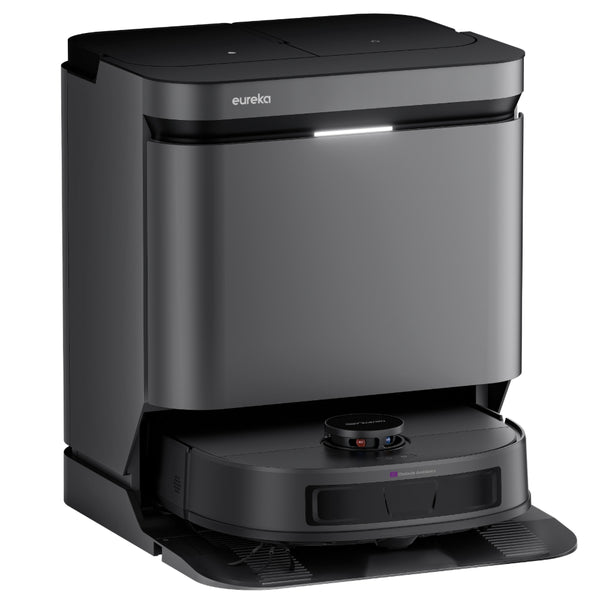
Navigation is the real divide in the robot range. The J15 Evo Ultra maps with single-line laser LiDAR and skips camera-based obstacle avoidance, and the E20 Plus adds DuoDetect AI. It is a practical trade, not just a branding split.
If you live with pets or long hair
FlexiRazor and DragonClaw are the names to read up on. They bear on how often you will clear the brush by hand, and both are brand claims worth checking on the product page.
If hard floors and tidy edges matter
ScrubExtend is the relevant spec here, because the swing arm is what carries the pad out to baseboards and corners.
If clutter is the problem
The E20 line’s DuoDetect AI may be worth more to you than the extra suction on the J15 Evo Ultra.
How Eureka Compares With Shark
Shark is a fair rival for Eureka. Both sell across every vacuum type, both position themselves against premium names on price, and both center their robot lines on self-emptying mop combos.
Flagship robots side by side
| Detail | Eureka J15 Evo Ultra | Shark PowerDetect, self-emptying |
|---|---|---|
| Suction | 22,000 Pa | Not rated in Pa, with five PowerDetect sensing technologies |
| Navigation | Laser LiDAR with a single line | Sensors that read dirt and floor type |
| Mopping | ScrubExtend edge mop with hot-air drying | Only on 2-in-1 versions, so it depends on the model |
| Dust base | A bag, rated for up to 75 days | A bin you empty, rated for up to 60 days |
Day to day, the dock matters most. Eureka’s flagship takes a bag that you will have to buy again eventually. Shark pitches its bagless bin as a way to avoid bag purchases, at the cost of emptying the bin yourself. Prices vary by model and base on both sides, so compare the current figures at each store.
Which way to lean
- Lean toward Eureka if your home is open, mostly hard-floored and a little carpeted, and tidy edges matter. The ScrubExtend arm is a hardware answer to edge mopping, and an independent review scored the J15 Evo Ultra 95 out of 100 for overall cleaning.
- Lean toward Shark if your floors stay cluttered. PowerDetect is built around sensing hidden dirt and adjusting to each surface, while the J15 Evo Ultra has no front camera. Eureka’s own E20 Plus is the other option to weigh in that case.
Whichever you favor, hold the spec sheet up against your own layout before deciding.
Who is behind each brand
- Eureka: founded in 1909 and owned by Midea Group since 2016.
- Shark: launched in 2007 under Euro-Pro, a company founded in 1993. Euro-Pro was renamed SharkNinja in 2015. Majority owner JS Global Lifestyle spun the company off in 2023, and it began trading on the NYSE. Its headquarters are in Needham, Massachusetts.
Neither is a small independent outfit. Both have large backers behind them and update their lineups frequently.
Keeping a Eureka Running Well
A neglected vacuum usually loses cleaning power long before the motor fails, and the routine is quick. Several of the intervals come straight from Eureka’s specs, which makes them easy to schedule. This table sorts the jobs by how often they come up.
| Job | How often | Notes |
|---|---|---|
| Clear hair and thread from the brush | Weekly in pet homes, monthly otherwise | FlexiRazor and DragonClaw reduce hair wrap, but they do not remove the chore entirely. |
| Wipe the dock’s charging contacts | Monthly | Use a dry cloth. Dirt there can stop a robot from docking or charging. |
| Rinse washable filters | Monthly | Cold water and no detergent. This covers HEPA uprights such as the OmniVerse NEU800 and several sticks. |
| Replace or deep clean mop pads | Every two to three months | Replace a pad sooner if it stops lying flat or looks thin. |
| Change the dust bag | About every 75 days on 3L docks | Mark a date on the calendar. |
| Store cordless sticks | Whenever they sit unused | Leave a partial charge rather than letting the battery run flat. |
Two details deserve a little more attention. First, give a rinsed filter at least a day to dry completely. Refitting it damp can leave a musty smell and may harm the filter itself. The foam pre-filters on bagged canisters such as the Mighty Mite get the same look and rinse.
Second, a lingering odor from the pads is a cue to start a manual wash cycle right away. And weak performance that persists despite regular upkeep is worth raising under the warranty, covered further down.
Where to Buy and How Returns Work
Start with Eureka’s own store
Buying straight from Eureka’s own store at us.eureka.com shows you the real current lineup rather than a possibly outdated third-party listing. Eureka’s return process also covers purchases made directly through Eureka.com, which is one more reason to start there.
You will also find Eureka at Walmart, Target and Best Buy, which each keep dedicated Eureka product pages. If you buy anywhere other than Eureka’s own site, make sure the seller is authorized.
Warning signs on a listing
With a range this large, fake and gray-market listings are a risk worth checking for. These are the signs to watch.
- A model number that is absent, vague or unknown to Eureka’s catalog. Real families include J15, E20, ReactiClean and OmniVerse.
- A bargain that undercuts Eureka’s own price by a wide margin, particularly on a robot.
- Marketplace sellers (eBay is one example) and unfamiliar websites, as opposed to Eureka’s store or a large retailer’s own page.
- A robot that cannot reach Eureka’s app or firmware updates, which can signal a refurbished or gray-market unit being passed off as new.
Returns, step by step
- Start within 30 days of delivery. The item must be unused and undamaged, boxed in the original packaging with every accessory.
- Contact [email protected] by email and include the serial number plus either your order number or your receipt.
- Send the item back. Eureka pays return shipping on undamaged items, but it does not accept unauthorized or cash-on-delivery returns.
- Expect a short wait for the refund. Eureka says it processes returns in roughly 2 business days from receipt, after which the credit takes another 3 to 5 business days to reach your original payment method.
Note that the original shipping charge is deducted from the refund, except on defective products. For an item that arrives damaged or stops working, write to the same address within 30 days of delivery, since defective returns skip that deduction.
Keep the store in mind, too. A purchase from Walmart, Target or Best Buy follows that retailer’s return policy instead of Eureka’s, so check those terms before you commit.
Warranty by product line
Eureka does not use one warranty across the range. Coverage is set per product line and varies more than at many brands.
- 5 years: the Innova upright line.
- 2 years: the OmniVerse NEU800 upright, the Mighty Mite 3670G canister and the Innova cordless stick line.
- 1 year: some entry-level models.
Read the warranty on the specific product page before you buy.
Where Eureka Came From
Eureka’s founding date is documented, and its ownership changes help explain how the brand looks today. Here is the timeline.
- 1909: founded in Detroit by Fred Wardell, a Toronto real estate auctioneer who had acquired several vacuum cleaner patents.
- 1915: a Eureka vacuum wins the Grand Prize at the San Francisco International Exposition.
- 1927: the company has sold 2 million units and, at one stage, makes roughly a third of the vacuums sold in the United States.
- 1945: Eureka joins forces with Williams Oil-O-Matic, which makes heaters and refrigerators, and briefly trades as the Eureka-Williams Corporation.
- 1960: the company makes thermal batteries for NASA and contributes to early electric vehicle work, according to its own company history.
- 1974: Electrolux acquires Eureka and keeps it for more than four decades.
- 1982: TIME magazine lists the Mighty Mite among the decade’s top-10 products, and that name is still sold.
- 2008 and 2009: the Envirovac line launches, then the company marks its centennial.
- 2016: Midea Group, a Chinese appliance conglomerate, buys Eureka from Electrolux. In the United States it operates as Midea America Corp from Parsippany, New Jersey.
The Midea years line up with a shift in the catalog. Self-emptying docks, LiDAR navigation and app-controlled mopping arrived in that era, and they now headline a range that still includes the upright and canister lines that made the name. Midea’s manufacturing scale supports the robots.
Eureka’s about page frames the goal as building tools for the messiness of everyday life, with efficient engineering valued over perfection. In practice that means a wide catalog aimed at ordinary households.
Frequently Asked Questions
Who is behind the Eureka name today?
Midea Group, a large Chinese appliance maker, bought Eureka from Electrolux in 2016. Its U.S. arm, Midea America Corp, is based in Parsippany, New Jersey.
Does Eureka still count as an American brand?
Partly. The brand began in Detroit and its North American operations remain in New Jersey, but ownership has been foreign since 1974, first Swedish under Electrolux and then Chinese under Midea.
Which Eureka robot suits cluttered floors?
The E20 Plus is the one to look at. DuoDetect AI gives it 3D obstacle avoidance that the J15 Evo Ultra lacks, although it has less suction.
Can I control a Eureka robot by voice?
The J15 Evo Ultra works with Alexa, Google Assistant and Siri. Its own app handles room, zone and map controls.
Is Eureka a sensible pick for a pet household?
Eureka says FlexiRazor and DragonClaw brushes are designed for hair-heavy homes, and HEPA filtration for pet dander appears on several models. Both are brand claims, so read the spec page for the exact model you have in mind.
Does Eureka still sell the Mighty Mite?
The 3670G is the version in the current canister range. The name goes back decades, to a 1982 TIME magazine mention.
Does Eureka own the ideas behind its tech names?
It owns the trademarks. The engineering ideas, such as extending mop arms and anti-tangle side brushes, appear across the robot category under other names.
How do the J15 Evo Ultra and E20 Plus differ?
Suction and navigation are the split. The J15 Evo Ultra offers 22,000 Pa and a bagged dock, while the E20 Plus offers 8,000 Pa, a bagless dock and DuoDetect AI.
Final Thoughts
Choose the type first, then the model, then check the return and warranty terms for the store you plan to use. A robot suits open, hard-floored homes, an upright suits carpet, a stick suits stairs and a canister suits a lighter body with a long hose.
When you are ready to compare current prices, see Eureka’s range at Eureka’s store, where each model page lists its specs and warranty terms.