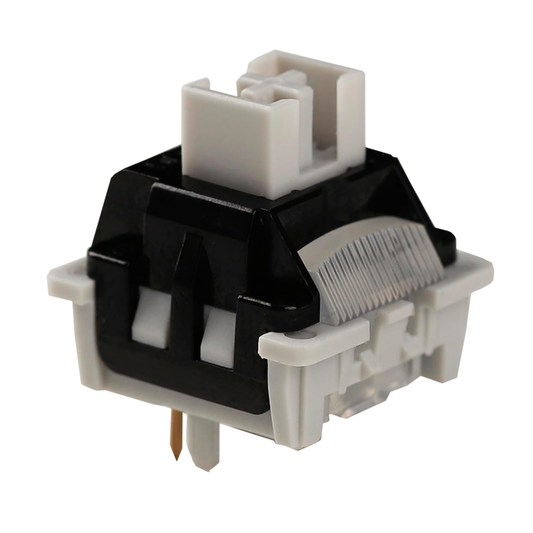
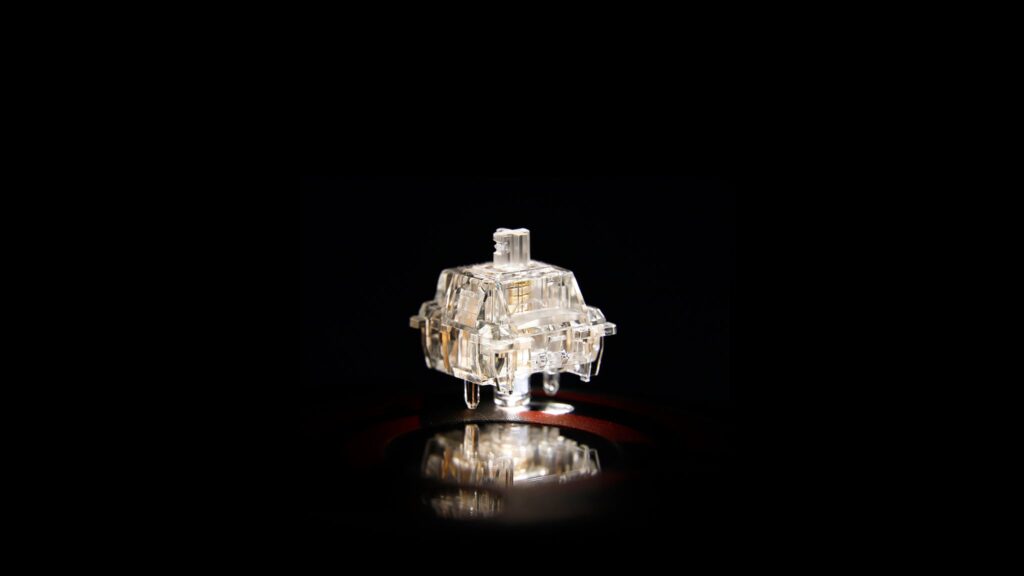
YMDK sells the Leobog GrayWood V4, a five-pin linear switch, in bundles starting at about $8. Sound-test videos from switch enthusiasts describe a deep, thocky tone with a hint of scratch underneath, and that pairing of price and tone is what this page looks at.
Everything here comes from YMDK’s published specs, an independent switch review and those sound-test videos. It is research, not a bench test.
The short answer: an inexpensive option for a hot-swap board if you like the tone those videos describe and can accept a slight scratch and a supply that arrives in limited batches.
What You Are Buying
Leobog makes the GrayWood V4, a linear switch with five pins, and YMDK sells it. Linear means there is no bump or click, so every press feels the same from top to bottom.
- Type: 5-pin linear
- Operating force: 40gf, with a tolerance of about 3 grams
- Bottom-out force: 50gf, with the same tolerance
- Total travel: 3.6mm
- Lubrication: pre-lubed at the factory
- Bundle sizes: 10 to 110 pieces
- Price: starts at about $8 at YMDK for the smallest bundle (regular price)
Some descriptions of the switch call the housing POM (polyoxymethylene), a plastic switch fans often link with a deeper, less scratchy tone than polycarbonate. The independent review covered below lists a PC and PA66 housing blend instead.
The force and travel figures are the numbers you compare against other switches. A lower force means a lighter press, and a longer travel generally feels softer under the finger.
Pre-lubing saves a step. The switches can go straight into a hot-swap board without buying lube or a switch opener first.
The V4 revision adds two shaft feet and a reworked light guide column, changes aimed at reducing stem wobble.
To browse YMDK’s switches and other parts, visit YMDK’s own store.
What an Independent Review Found
An independent switch review site put the GrayWood V4 through its usual test routine and gave its smoothness a score of 8 out of 10.
The same review recorded noise of around 80 decibels. It lists a PA12 stem, a housing made from a PC and PA66 blend, and factory pre-lubing, which matches the lube claim in YMDK’s listing.
That housing description differs from the POM wording above. If the exact plastic matters to you, check the product page before ordering.
Where It Holds Up and Where It Doesn’t
The strengths
- Price against the sound described. Sound-test videos describe a deep, thocky tone, and the smallest bundle starts at about $8.
- Factory lube. The first install needs no lube or opener, which is handy for a first hot-swap build.
- Stability tweaks. The extra shaft feet and the light guide column are aimed squarely at stem wobble.
The trade-offs
Sound-test videos and side-by-side clips from switch enthusiasts describe a deep, thocky tone with some scratch texture underneath. The same clips contrast it with premium POM switches, which sound smoother and more muted and cost several times as much. A little scratch is the trade-off at this price.
Expect small differences between individual switches as well. YMDK lists a tolerance of about 3 grams on both the operating and bottom-out figures, so the real force of any one switch can sit slightly above or below the number on the page.
Supply is the other catch. YMDK runs the switch in limited batches, so a listing can read sold out until the next restock. While you wait, YMDK also carries switches from Gateron and TTC.
Keeping them smooth
A factory lube job needs little attention at first. After months of heavy use the lube can thin, and keys may start to feel scratchier than when they were new.
At that point, opening the switch and brushing a little dielectric grease onto the stem rails can bring back much of the original feel. Dust is the more frequent nuisance, so a short blast of compressed air aimed between the keycaps, not down into the switches themselves, clears it before it builds up.
Who Should Buy It
This suits someone building or refreshing a hot-swap keyboard who likes the tone the sound tests describe and wants to keep the price modest. The pre-lube makes it an easier choice still.
Skip it if you want the cleanest sound possible with no scratch at all. In that case, save for a premium POM linear, and think of the GrayWood V4 as a budget option rather than a direct substitute.
Check compatibility before you order. A 5-pin switch has two extra plastic legs for stability, so your board needs a socket or plate cutout made for 5-pin. On a hot-swap board you press switches in by hand, with no soldering iron.
Choosing a Board to Pair It With
A switch bundle is only one part of a build. YMDK lists kits in ten layout sizes, from 10 percent keypads up to full-size boards, and many kits arrive without switches or keycaps, so budget roughly $30 to $50 more to cover both.
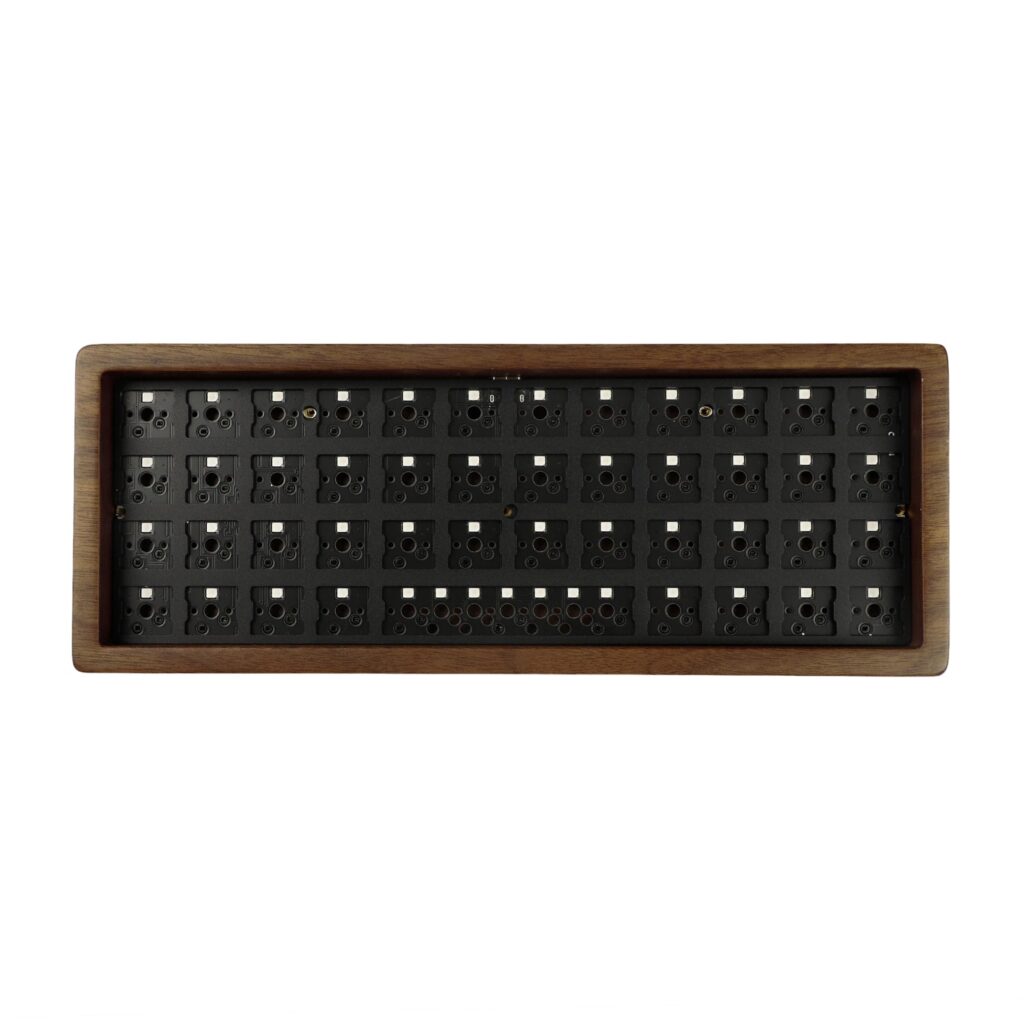
Layout and desk space
| If you want | Look at |
|---|---|
| A numpad for daily spreadsheet work | 96 percent or full-size |
| Dedicated arrow keys | 75 percent or tenkeyless |
| The smallest footprint, with shortcuts in place of a numpad or arrows | 60 or 65 percent |
Hot-swap or solder
A hot-swap board lets you press the GrayWood V4 in by hand. A solder kit costs a little less for the same layout, but it needs an iron, solder and patience, which makes it a better fit for a second build once you know the hobby suits you.
What kits cost
Entry-level hot-swap kits in plastic cases sit under about $60, usually in 60 percent layouts. Aluminum or wood cases run from about $60 to $150, and some come with a Bluetooth version of the same board. Ready-built boards, bigger layouts and specialty designs start around $150.
A Bluetooth version is often marked with an S or X in the model name. Wired is simpler for a board that never leaves one desk, and Bluetooth earns its premium if you switch between devices.
To look through the kits and parts, browse YMDK’s own store.
Ordering From YMDK
YMDK is China-based and ships worldwide. Processing takes 2 to 8 days, and after that DHL or FedEx add about 2 to 8 days of transit. Standard shipping to the US with Yanwen runs about 7 to 20 days.
YMDK also lists ePacket at 25 to 70 days, and the store advises against it unless nothing else is available.
Returns are accepted within 7 days of delivery, as long as the item has not been used beyond that window. Soldered custom keyboards are excluded entirely, and return shipping is on the buyer. A package that arrives damaged is replaced rather than refunded.
YMDK also states a maintenance service window of 3 months after delivery, so test a new kit in the first weeks instead of leaving it in a drawer.
FAQ
Is the GrayWood V4 pre-lubed?
Yes. YMDK’s listing says it ships pre-lubed from the factory, and the independent review agrees.
What are the force and travel numbers?
YMDK lists 40gf of operating force and 50gf of bottom-out force, each with about 3 grams of tolerance. Total travel is 3.6mm.
Will it fit my keyboard?
It is a 5-pin switch, so the board needs a hot-swap socket and a plate cutout made for 5-pin. Check the kit’s own listing for what it supports.
How big are the bundles?
YMDK sells the switch in bundles from 10 up to 110 pieces, starting at about $8 for the smallest. Pick a count that covers every key on your layout, with a few spares.
What if it is sold out?
Limited batches mean a listing can sell out. Check the listing again for a restock, or look at YMDK’s Gateron and TTC switches in the meantime.
The Verdict
For a budget hot-swap build, the GrayWood V4 is a reasonable candidate. It is pre-lubed, lists 40gf of operating force with 3.6mm of travel, and sound-test videos describe a deep tone, all from about $8 at YMDK.
The caveats are real but manageable. The tone carries some scratch, each force figure has a tolerance of about 3 grams, and stock comes in limited batches.
If that trade suits you, browse the range at YMDK’s own store and confirm the current price at YMDK before you order.