ChoiceQuill is reader-supported. When you buy through links on this page, we may earn a commission. You pay the same price either way.
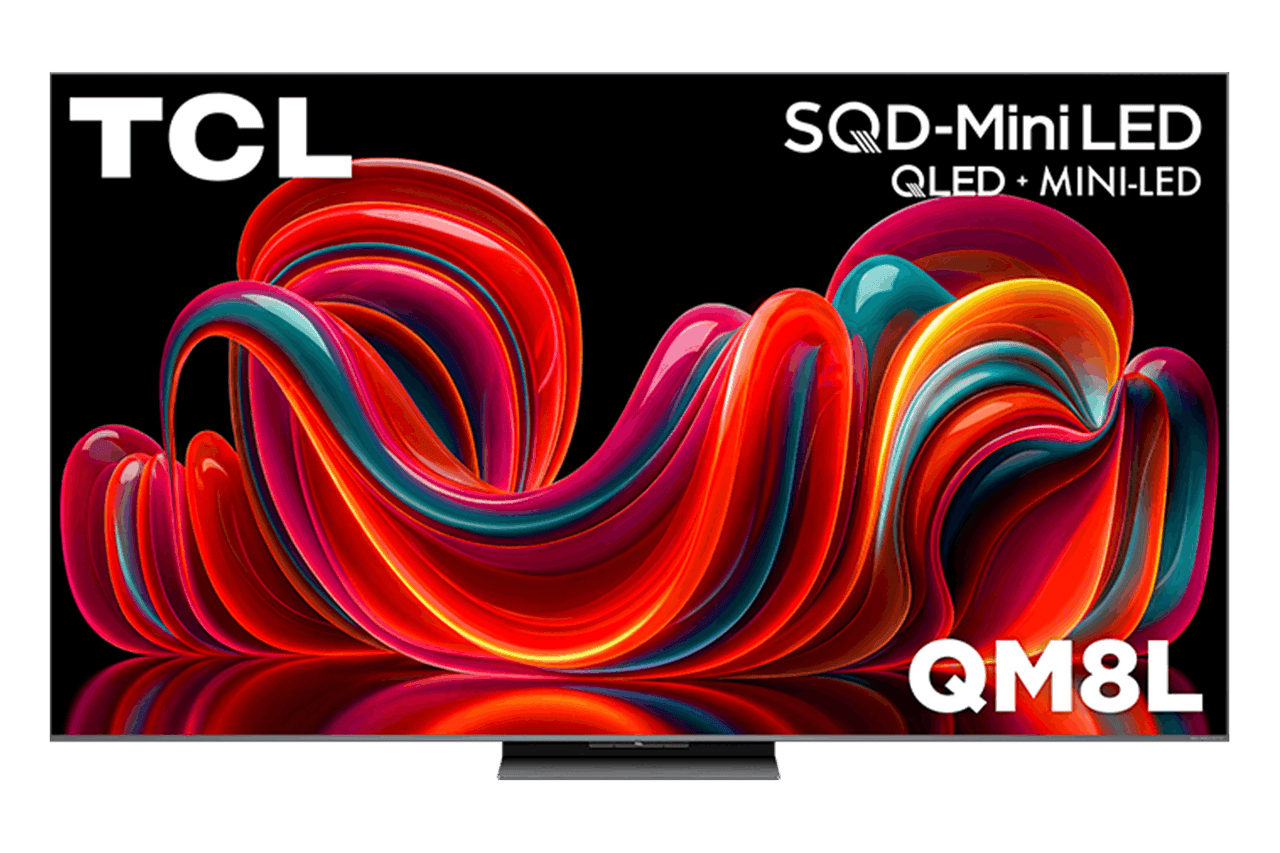
TCL wants the QM8L to be the TV that proves it can compete above its price class. It is the 2026 successor to the QM8K, and reviewers keep pointing to it as evidence.
We went through the lab measurements and then read what buyers say. The real question is whether the hype survives once the TV is sitting in an actual living room.
Backlight, Ports and Price Tags
The QM8L is built around TCL’s SQD-Mini LED backlight. Its mini-LED zones are paired with a broader quantum dot color range than the previous year’s model offers.
The TV comes in four sizes: 65, 75, 85 and 98 inches. Buying direct from TCL, prices run from $2,499.99 to $5,999.99.
Up to 4,000 local dimming zones are available on the 65 and 75-inch versions, along with a 144Hz native refresh rate. Four full HDMI 2.1 ports round out the connections on those two sizes, and that is rare at this price.
| Model | Direct price |
| 65QM8L (65-inch) | $2,499.99 |
| 75QM8L (75-inch) | $2,999.99 |
| 85QM8L (85-inch) | $3,999.99 |
| 98QM8L (98-inch) | $5,999.99 |
Brightness on the Box vs. on the Bench
The box claims a peak of up to 6,000 nits. In independent lab testing, a 10% window reached closer to 1,900 to 2,000 nits.
That result is still excellent. It just is not the figure printed on the packaging.
A gap between the marketing peak and the measured peak is normal across the TV industry. It still helps to know about it before you line up spec sheets side by side.
The Calibrated Numbers
After calibration, color accuracy landed at a delta E near 1.1. Grayscale came in at 0.7.
Both results are low enough that you would struggle to tell this TV from a reference display.
The set covers 97.7% of DCI-P3. In the wider BT.2020 space it reaches 89.3%, and that coverage beats the QM8K.
In game mode, input lag came in below 10 milliseconds. That puts it on par with dedicated gaming monitors.
Testing turned up one recurring criticism: judder during certain film scenes. The motion settings menu can fix it.
Straight out of the box, Filmmaker Mode also showed a slightly higher color temperature error than the calibrated results above. So do not judge the picture by the default settings alone.
What Owners Praise
Buyer feedback matches the lab data. People describe a bright, saturated image that holds up even in daylight.
Gamers single out the low input lag and the 144Hz support. They call both a real step up from their previous TV.
What Owners Complain About
Few of the complaints involve the panel itself. Most are about everything wrapped around it.
The biggest gripe is the Google TV home screen. It gets crowded with ads and suggestions that resist being turned off.
A minority of owners ran into a hardware fault early on, such as a cluster of dead pixels or a purple line. These reports appear in only a small share of reviews. Catching the problem early usually means the 1-year warranty applies.
Some buyers add that support takes a while to reply when a replacement is needed.
None of this is unique to the QM8L. The same issues turn up across TCL’s whole TV lineup and across most budget-to-mid-range brands too.
QM8L or Last Year’s QM8K?
For someone who already owns the QM8K, stepping up to the QM8L is a worthwhile change, though not a dramatic one. It brings better color gamut coverage, slightly sharper dimming precision and cheaper entry prices at matching screen sizes.
For someone buying fresh, there is little reason to hunt down the older set. The newer one is cheaper and performs better.
Who Will Get the Most Out of It
Think of the QM8L as the pick for shoppers who want top-tier brightness and gaming features without a top-tier bill. Bright rooms, home theaters and gaming setups that need 144Hz plus low input lag are all natural fits.
If picture quality matters most to you and an interface heavy on ads does not bother you, the QM8L ranks among the stronger values around right now.
Buyers on a tighter budget, or those who do not need full mini-LED performance, may find the flagship more than they need.
Our Verdict
The lab figures support TCL’s marketing here, which many budget TVs cannot manage. Picture complaints are minimal, and nearly every pushback from buyers concerns software or support rather than the screen.
Few rival mini-LED TVs at the same price compete with it head to head.