Buying tools goes wrong in a predictable way. People grab the kit with the biggest number on the box, then find out it does not match the jobs they actually have.
GoYwato’s lineup is short, which keeps that choice manageable. It centers on a cordless impact driver kit, with two home hand-tool sets alongside it. This guide shows how to match each one to your projects, what the specs mean, and what to check before you spend.
It is built from the brand’s published specs and details rather than hands-on testing. It covers choosing, comparing, buying and caring for the tools, so you can decide with fewer surprises.
Start With the Jobs You Actually Do
Before you look at any product page, write down the last few jobs you did around the house, plus the ones on your list. Hanging shelves, assembling flat-pack furniture, tightening a loose hinge, fixing a fence panel, building a deck. The list tells you more than any spec sheet.
Then sort each job into one of two piles. The first pile is fastening: anything with screws, bolts or lag bolts, especially long ones going into wood. The second pile is everything else: gripping, turning, cutting, hammering, measuring and checking that something is level.
Fastening jobs point toward a cordless driver. Hand jobs point toward a kit of wrenches, pliers, a hammer and a tape measure. Plenty of projects need a bit of both, and GoYwato sells both.
A few more questions help narrow it down.
- Where do you work? Overhead work, cabinets and crawl spaces favor a lighter tool with its own light.
- How often do you work? Occasional fixes need the basics. Regular maintenance rewards a fuller kit with fewer gaps.
- Where will the tools live? A case with a molded tray keeps everything together and easy to carry.
- Do you already own cordless tools? The answer decides whether a new battery system is a burden or a non-issue.
A complete toolbox beats a long list of pieces you never touch. Pick for the jobs on your list, not for the biggest piece count.
Meet the GoYwato Lineup
The brand lists five products, which keeps a side-by-side comparison simple.
- Standard cordless impact driver kit: 21V brushless, rated at 2655 in-lbs (300 N·m), shipping with a pair of 4.0Ah packs, a charger, 14 sockets and 10 bits in a case.
- Compact impact driver kit: rated higher on paper at 2832 in-lbs (320 N·m), but with two 2.0Ah batteries and a 9-piece socket set.
- Red-finish driver: the same specs as the standard kit, in red instead of yellow and black.
- 214-piece home tool kit: the essentials set for general repairs.
- 287-piece home tool kit: the fuller workshop set.
GoYwato sells through a storefront on Amazon and through its own website. The hand-tool kits are listed on the brand’s website with their full contents.
If you want the product-level view in one place, our full verdict on the GoYwato impact driver and tool kits goes through the whole lineup. The rest of this guide helps you choose between the pieces.
Choosing a Cordless Impact Driver
An impact driver is a tool for driving fasteners, and a few specs separate one kit from another.
Torque
Torque is the twisting force the motor can deliver. The standard GoYwato driver is rated at 2655 in-lbs (300 N·m), and the brand names furniture assembly, framing a deck and freeing old rusted screws as target jobs. The compact kit is rated at 2832 in-lbs (320 N·m).
A bigger number on paper does not automatically mean a better kit for you. The compact version gets its higher rating alongside smaller batteries and fewer sockets, so the rest of the package changes.
Batteries
The standard kit includes two 4.0Ah lithium-ion batteries and a charger. Two packs mean one can charge while you carry on with the other. The compact kit swaps in two smaller 2.0Ah packs, trading battery size for a lighter kit.
Weight and handling
The standard driver weighs 3.62 lbs (1.64 kg) on its own, and the whole packed kit comes to about 7.89 lbs (3.58 kg). If most of your work is overhead or in tight spots, a lighter tool is easier on the arm. If you mostly work at bench height, weight matters less.
Accessories
The standard kit adds 14 sockets and 10 screwdriver bits, with a carrying case and a manual to hold it all. The sockets cover seven metric sizes (5, 5.5, 6, 7, 8, 10 and 12mm) and seven fractional sizes from 3/16" to 7/16", a spread that should suit most furniture hardware and small bolts.
When you compare any two driver kits, line up the whole box: motor, torque, battery size, battery count, sockets and bits. A bare tool with a tempting spec can turn out to be the one that needs extra purchases.
What the Specs Mean in Plain Terms
Product pages lean on a handful of terms. Here is what each one means for the tool in your hand, based on what the brand lists.
Brushless motor
A brushed motor passes current to the rotor through carbon brushes that rub against it. Wear, friction and heat build up at that contact point, and they limit how long such a motor stays healthy. A brushless motor does the same job with electronic switching, so the contact point disappears. The expected payoff is less wasted energy, less heat and a longer service life.
The brand pairs this design with a 2655 in-lbs torque rating on its standard driver. To see what GoYwato currently lists, browse GoYwato’s storefront on Amazon.
Tool-free hex chuck
Instead of a keyed or threaded chuck, GoYwato uses a 1/4" all-metal hex with what it calls a steel-ball fix. Hold the sleeve back, push a bit or socket in, then release the sleeve. Steel balls in the collar seat themselves in the bit’s groove, and pulling the sleeve back again lets go. Nothing needs tightening, and there is no key to misplace.
Reverse automatic stop
With the driver in reverse, press the small yellow button beside the gear indicator. Per the brand, the tool then brakes as the screw comes free, and the aim is to keep a loosened screw from spinning off and flying away.
Built-in LED
A light on the tool comes on when you pull the trigger, so no separate switch is involved. Dark spaces such as cabinets and the area under a sink are where that helps most.
Battery protection
For the 4.0Ah packs, the brand publishes three figures: 75A max discharge for overcurrent protection, a 230A current for short-circuit protection, and 70°C for high-temperature discharge protection. In plain terms, one is meant to guard against current being drawn too fast, one against a spike when the contacts are bridged, and one against internal heat building up.
Protections like these are normal on quality lithium-ion tool packs, so the notable point is simply that GoYwato lists the numbers instead of a capacity figure alone.
Carbon alloy and TPR grips
Carbon alloy steel is a familiar choice for wrenches, pliers and ratchets. The brand says the version in its hand-tool kits is forged at high temperature, which it ties to a mix of light weight and hardness. Forging simply means shaping the metal under heat and pressure. TPR, the soft rubber on the grips, is there for comfort and cushioning rather than ruggedness.
Choosing a Home Hand Tool Kit
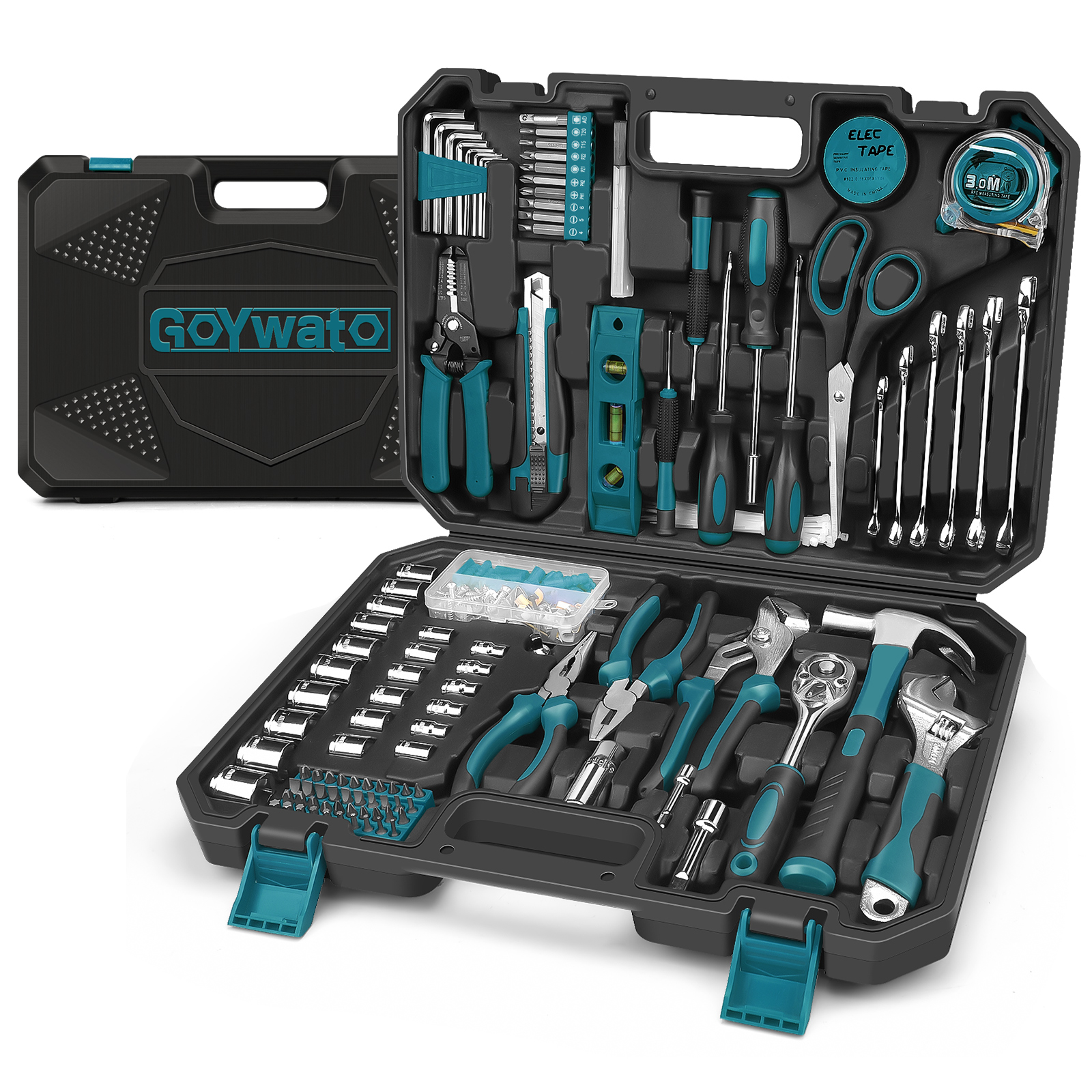
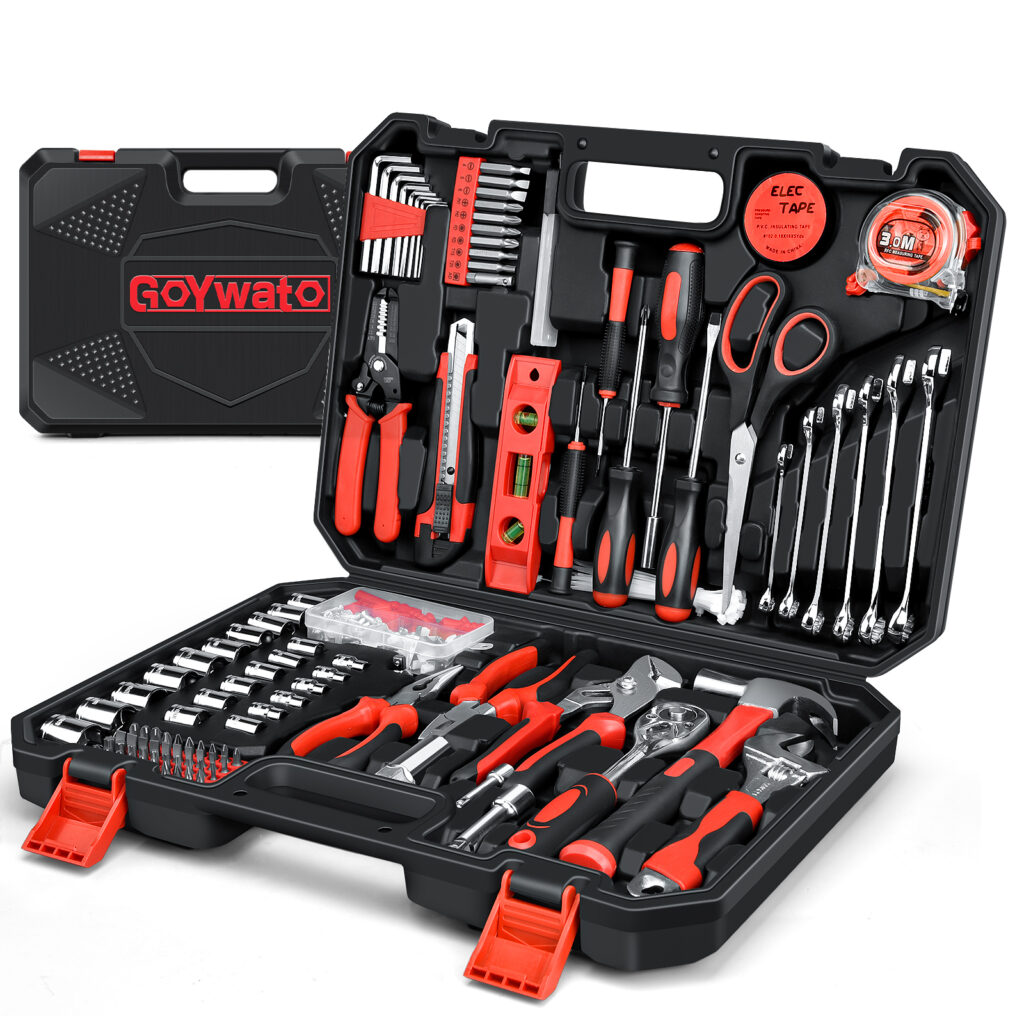
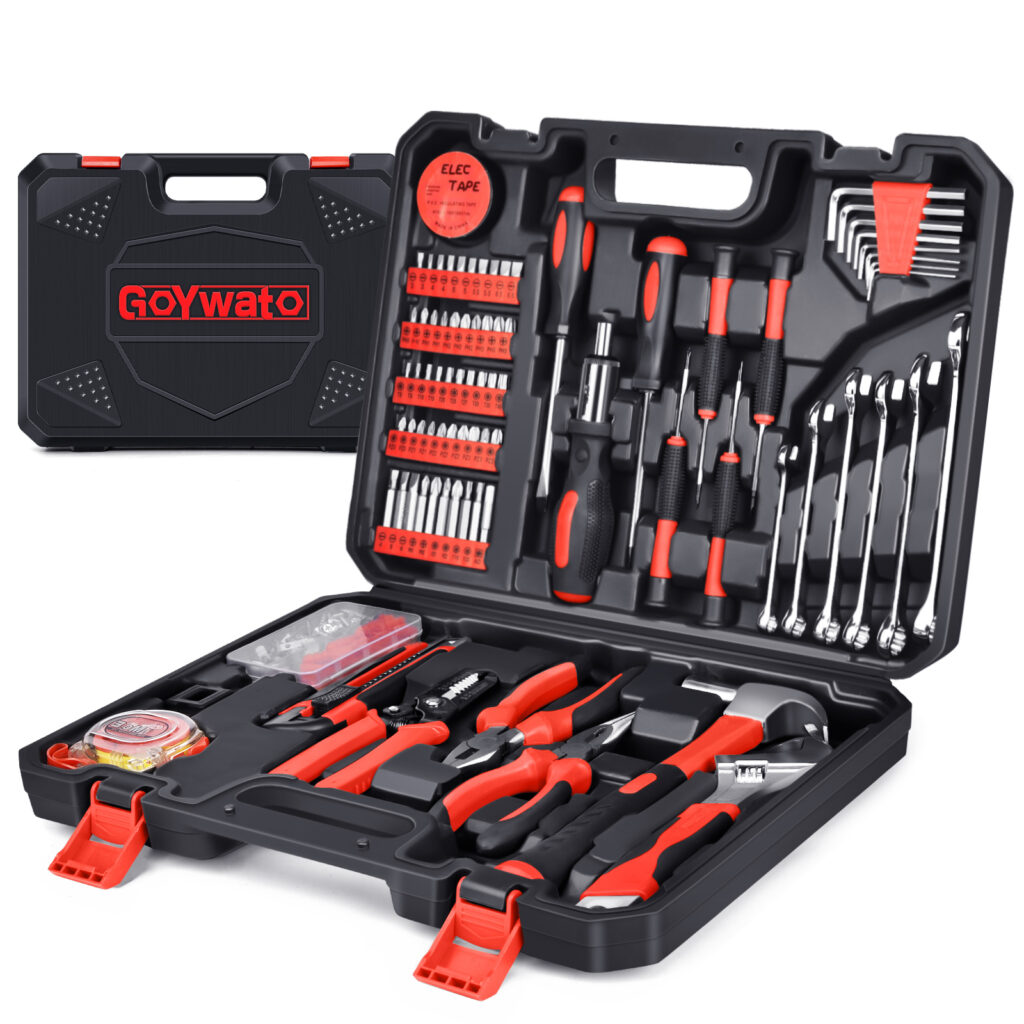
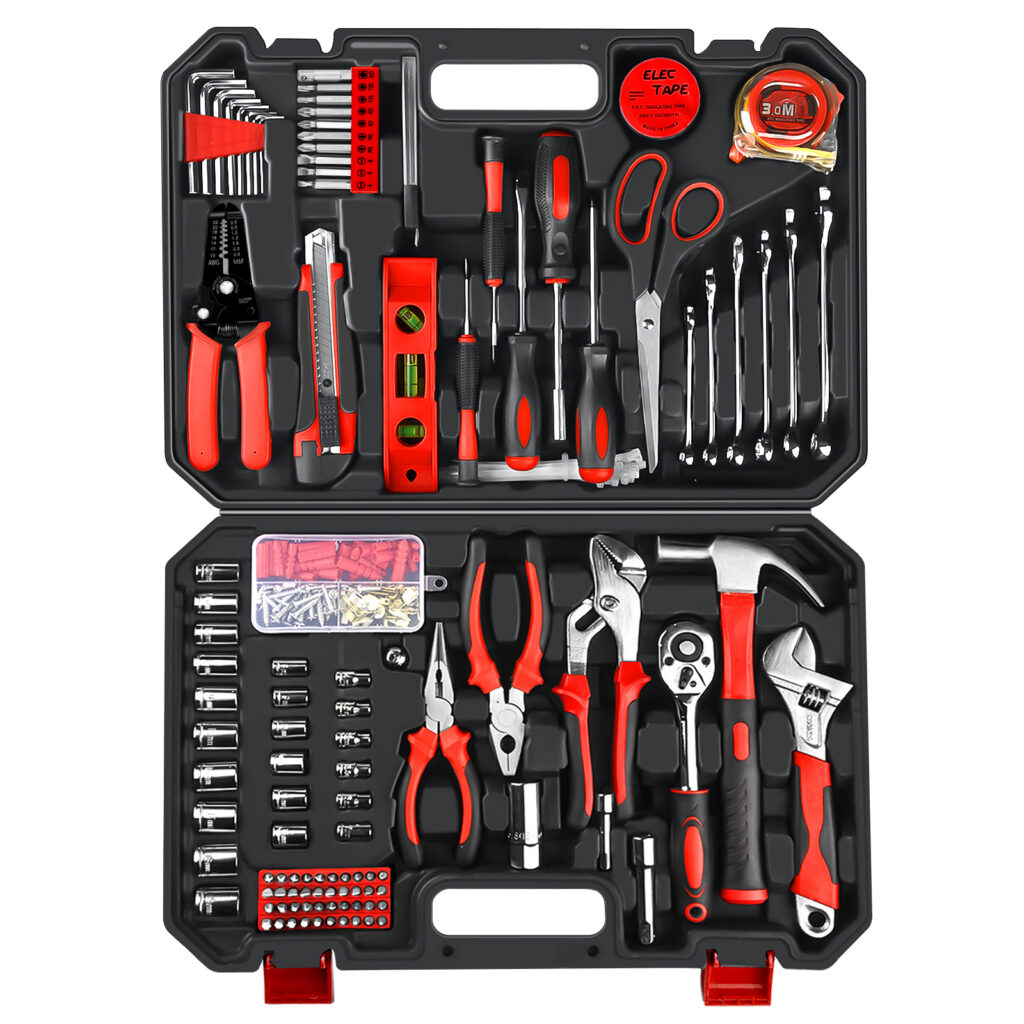
GoYwato’s two hand-tool kits share a design. Both come in a hard case with a hollow-molded tray and card slots, so every tool has its own spot. The difference is how much is inside.
The 214-piece kit
This kit covers the basics. It holds needle nose and linesman pliers, an adjustable wrench, a combination wrench, a wire stripper, hex keys, a tape measure and a ratchet screwdriver. That lineup suits hanging shelves, tightening loose hinges and small plumbing or electrical repairs.
It is a sensible fit for a first apartment or a new home, or as a present for a person who owns no tools at all.
The 287-piece kit
Step up and everything above carries over, with a spirit level, a claw hammer, water pump pliers, a ratchet wrench with sockets and a bigger assortment of wood screws added. It is the better choice for a garage, regular home maintenance, or anyone who wants fewer gaps before a job outruns the kit.
Do you need more than one?
The driver and the kits do different work, so a single project can easily call for both. Powered fastening belongs to the driver. Anything that needs gripping, turning or a hammer blow falls to a kit, which means you are not choosing one over the other.
A tip that applies to any kit: lay out the tools you reach for most and check that they are all in the box. Missing one essential piece is more annoying than carrying a few extras.
GoYwato Versus DeWalt
DeWalt is an established name in this class, so it makes a useful yardstick for a direct look.
Torque and motors
Brushless motors are standard at both brands in this class, so the old technology gap between budget and premium drivers has mostly closed. DeWalt’s 20V MAX brushless drivers, such as the DCF887 line, are rated from roughly 1,825 to 3,300 in-lbs depending on the model. GoYwato’s 2655 in-lbs rating sits in the middle to upper part of that span.
What is in the box
Here the gap is wider. GoYwato bundles two batteries, a charger, sockets and bits. DeWalt drivers are frequently listed tool-only, with batteries and a charger sold on their own or packed into certain combo kits. If you own nothing yet, the complete GoYwato box saves you several separate purchases.
Battery systems
This is the biggest dividing line. GoYwato’s 21V system is proprietary. Its batteries do not fit DeWalt, Milwaukee or Makita tools, and those brands’ batteries do not fit GoYwato tools, even though the voltage class looks similar.
If you already own several tools from another brand, staying inside that system makes sense, because you avoid buying redundant packs and chargers. If you are building a collection from scratch, the lock-in does not apply to you yet.
Track record
DeWalt has decades of reputation and an established repair and parts network. GoYwato has been around for a shorter time, and a spec sheet cannot confirm how consistent its build quality is across production runs, so the shorter history is a real factor.
DeWalt fits better when you already own its packs, want a parts network behind the tool, or cannot afford downtime on paid work. GoYwato fits better when you are starting fresh, want a complete kit in one box, and accept a younger brand in the budget tier.
Who Makes GoYwato
GoYwato does not present itself as a legacy tool brand. Its published material has no founder biography, press coverage or story page, so the one thing you can check is a manufacturer name printed on the hardware.
The battery label credits Yongkang Tengrui Trading Co., Ltd as the maker, with an address in an industrial zone in Jinhua City, Zhejiang Province, China. That province hosts many hardware and hand-tool factories, which make tools for private-label lines and for better-known names alike.
A printed address at least gives you something to look up. It says nothing about build quality on its own, but it points to a region with deep tooling know-how.
The arrangement resembles a private-label setup, in which a manufacturer puts its own label on a few products and sells mainly through online channels. That is not a red flag by itself. It does mean specs and warranty terms are the yardstick, because there is no long brand history to lean on.
Buying Genuine and Handling Returns
Marketplace listings sometimes reuse a brand’s photos or borrow a similar-sounding name, so a few quick checks are worthwhile before you order.
- Label: look on the battery and the driver for the maker’s name, Yongkang Tengrui Trading Co., Ltd, and a support email.
- Case: the kits ship in a black hard case bearing the GoYwato logo on the lid, in the same branding shown on the brand’s website.
- Seller: on Amazon, the listing should be sold by the brand’s own store, not by a third party recycling its photos.
The brand’s Amazon storefront appears under the GoYwato Store name. To see what the brand currently lists there, check GoYwato’s Amazon storefront, and look up the current price on Amazon before you decide. The two hand-tool kits are sold through the brand’s own website.
If a kit turns up damaged or incomplete, message the seller through your order instead of assuming nothing can be done.
The brand states a 12-month warranty and a 24-hour response window for support. Keep your order confirmation as proof of purchase, then reach out through Amazon order messaging or the email on the brand’s website, depending on where you bought.
Returns follow the store you buy from. Amazon’s listing shows its own return terms, so read them before ordering. GoYwato’s website does not publish detailed return terms, so check with support first if you buy there.
Care Tips for Tools and Batteries
A warranty covers defects, not wear. How long a tool lasts day to day depends on how you treat it, and most of the habits take a minute.
Battery care
Protection circuits handle sudden faults, but they do nothing about the slow wear that comes from habits. Two storage extremes are worth avoiding with lithium-ion packs: weeks parked at a full charge, and long stretches sitting fully drained.
Room temperature is the better place to keep them. The 70°C limit exists for use on the job, so a hot car or a baking garage through the summer is not what it is for.
Chuck, bits and sockets
Sawdust and drywall dust collect around the sleeve. A dry cloth across it from time to time keeps the action smooth, and debris in the collar is a likely culprit if a tool-free chuck starts to stick.
Bits and sockets deserve a glance too. Rounded corners and flattened tips make the tool work harder and pass extra strain to the chuck and motor.
Reverse stop
When backing out a screw, switch the reverse automatic stop on. The brand intends it to brake the driver as the screw releases, which spares you a flying screw and the motor an uncontrolled spin.
Hand-tool kits
Carbon alloy handles wear better than it handles moisture, since it is not stainless. Dry each tool before it goes back in the case, particularly after outdoor jobs, because damp air trapped in a closed case encourages rust.
Keep every tool seated in its own molded slot. Loose tools grind against each other in transit, which dulls edges and loosens grips over time.
Care will not cure a defect. If a battery latch, chuck or trigger gives out during normal use, the brand’s 12-month warranty is the route to take.
Questions People Ask
How much torque does the GoYwato driver have?
The standard model is rated at 2655 in-lbs (300 N·m), and the compact kit at 2832 in-lbs (320 N·m).
How many batteries come in the kit?
Two, plus a charger. The standard kit’s packs are 4.0Ah, while the compact kit’s are 2.0Ah.
Are the batteries compatible with other brands?
No. GoYwato’s 21V system is proprietary and does not fit tools or chargers from DeWalt, Milwaukee or Makita.
What comes in the standard driver kit?
The driver, a pair of batteries, a charger, 14 sockets, 10 bits, a case and a manual.
How much does the driver weigh?
The tool alone is 3.62 lbs (1.64 kg). With its case, the packed kit is about 7.89 lbs (3.58 kg).
Does the driver have a light?
Yes, a built-in LED switches on with the trigger.
Who makes GoYwato tools?
The battery label names Yongkang Tengrui Trading Co., Ltd of Zhejiang Province, China.
What material are the hand tools?
Carbon alloy, which the brand says is forged under heat, with TPR rubber on the grips.
So which GoYwato product should you pick?
If your jobs involve lots of screws, such as furniture, decks and fences, start with the standard impact driver kit. It has the fullest accessory set and the larger batteries.
If your jobs lean toward repairs and general upkeep, start with the 214-piece kit. If you want a garage-ready set with a hammer, sockets and a level, choose the 287-piece kit.
If you work on both kinds of jobs, plan on a driver plus a kit. Check your existing batteries first, since GoYwato’s system stands alone.