TCL used to be the name you noticed on a store shelf next to a famous rival. Today it is one of the largest TV makers in the world, and independent lab tests have put its flagship brightness ahead of a Samsung flagship.
That rise creates a new problem for shoppers. The lineup is wide, the model names read like a keyboard mash, and the right choice depends on your room, your habits and whatever you plug into the screen.
This guide works through it in order. It covers how to choose a tier, what the technology terms mean, what gamers should look for, how TCL stacks up against Hisense, how to set up and look after a TV, and where the brand came from. It draws on TCL’s published specs and independent lab results, not on a test bench of my own.
Start With Your Room, Not the Model Name
Before you read a single spec sheet, answer four plain questions. Where will the TV sit? How much daylight reaches the screen? How far away will you watch from? And what will you connect to it?
Those answers narrow the field faster than any acronym. Walk the room with a tape measure, note the windows and outlets, and decide whether the set will stand or hang.
Size comes next, and it narrows the lineup on its own. TCL’s mini-LED models start near 65 inches, where local dimming makes the biggest visible difference, so a smaller screen usually means the entry tier. A 65-inch set is generally matched to roughly 6.5 to 9 feet of viewing distance. For other seating distances, a common rule of thumb divides the distance in inches by 1.5 to 2 to suggest a diagonal for a 4K picture.
Daylight changes the priority list. In a room with big windows, brightness comes first, and the QM8L’s measured peak of about 1,900 to 2,000 nits gives it more to work with than an entry-level QLED set when glare is a problem.
Decoding TCL’s Model Names
Reading a TCL model name gets easier once you picture the layers of the screen. Working from the light source at the back to the processor that drives it all, each term points to one part of the picture you will see.
Mini-LED sets the lighting
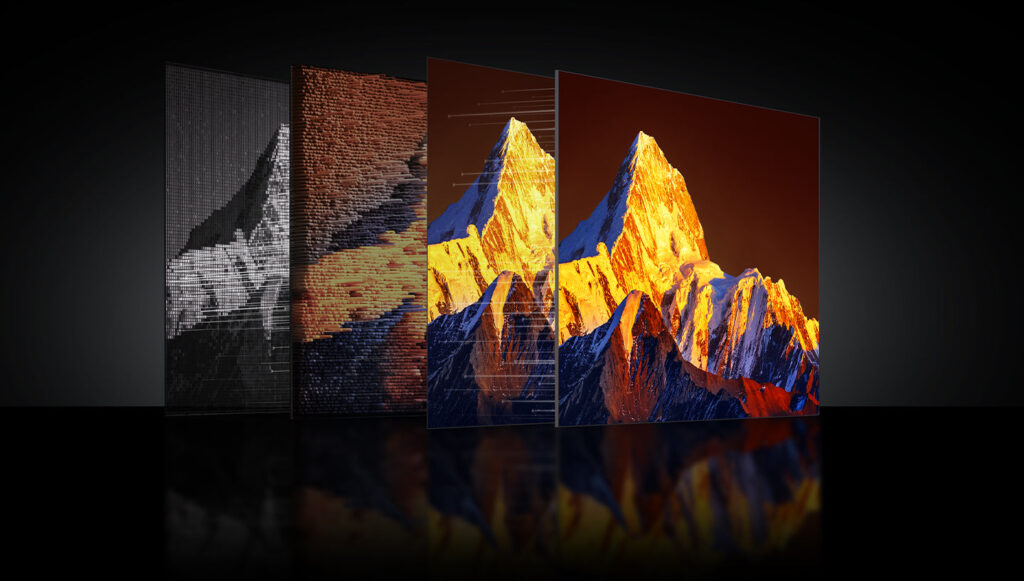
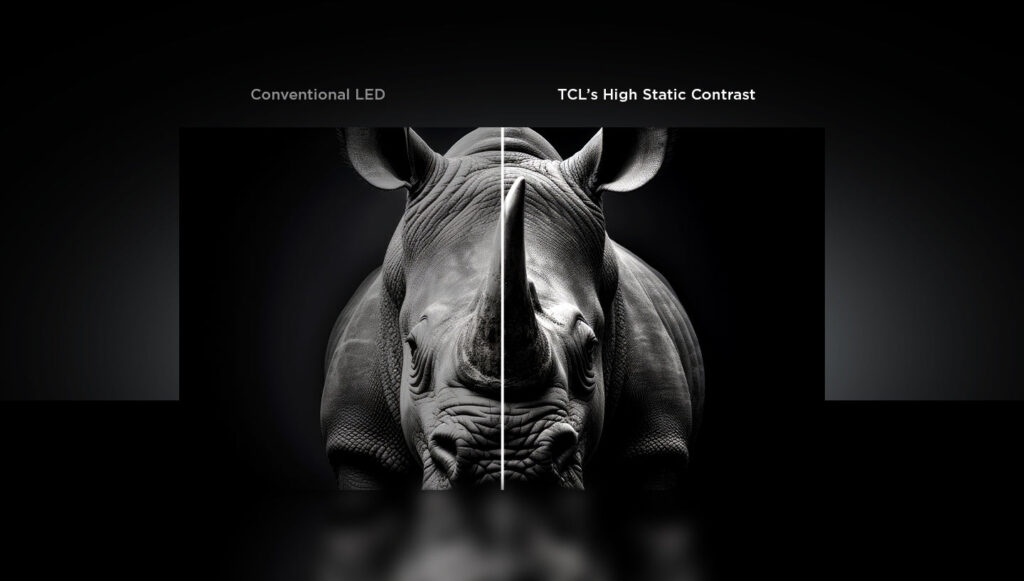
Behind the panel sits the light source, and mini-LED describes how it is built. Thousands of small LEDs are arranged in zones, and each zone can brighten or dim on its own. A dark zone can sit beside a lit one, so a bright star keeps its sparkle and the sky around it stays black instead of turning gray.
More zones usually means less blooming, the glow that creeps around bright objects. TCL lists up to 4,000 zones on the QM8L, and independent testing recorded near-zero blooming on it.
QLED and SQD set the color
In front of the backlight, quantum dots do the color work. The Q in QLED refers to them: a film layered ahead of a regular LED backlight that produces purer, more saturated color than a plain LED panel manages alone. It is an add-on to the light source rather than a separate kind of light, which is why it appears on budget models such as the P7L and V6D as well as on almost every set above entry level.
SQD-Mini LED is TCL’s name for a refined version of that layer, short for Super Quantum Dot Mini-LED. In lab testing the QM8L reached 97.7% of DCI-P3 and improved on the QM8K in the wider BT.2020 space.
RGB Mini-LED takes another route
The RM9L and RM7L lines skip the filter film. Separate red, green and blue mini-LEDs produce the color directly, an approach TCL aims at reference-monitor accuracy. Of TCL’s backlight designs it is the newest and the most experimental.
The chip and the software
A Pentonic chip handles upscaling, motion processing and the smart interface. The newest generation moved from Pentonic 700 to Pentonic 800, and the practical gain is room for four HDMI 2.1 inputs instead of two, which matters if a current console is in the picture.
On top sits Google TV, the smart platform across TCL’s current US range, with NXTVISION image processing layered over it. A few models, such as the V6D, use Fire TV instead.
Does any of it matter?
The alphabet soup works mainly as a tier marker. A QLED set without mini-LED gives good color but less control over contrast. QD-Mini LED adds proper dimming, and SQD-Mini LED widens the color range further. There is no need to memorize the letters; just expect a measurable step with each rung of the ladder.
How the TCL Lineup Breaks Down
TCL’s TV range falls into four rough tiers. Knowing which one you are shopping in narrows the choice quickly.
Entry QLED
The P7L and V6D have quantum dot color but no mini-LED backlight. They suit a bedroom, a dorm or a second TV where picture quality is not the top concern. The V6D runs Fire TV, a plus for anyone already settled in Amazon’s streaming ecosystem.
Mid-range Mini-LED
The QM6L and QM7L add real mini-LED dimming zones and stronger contrast than the entry sets. The QM7L is the model that brings mini-LED below the flagship tier. It cannot match the QM8L on brightness or contrast, yet it is a genuine step up from basic QLED.
Flagship
The QM8L sits at the flagship tier, combining SQD-Mini LED, up to 4,000 zones, 144Hz and four HDMI 2.1 ports. For the full detail, read our full verdict on the TCL QM8L, which covers the lab numbers and the software settings.
Ultra-premium
At the top, the RM9L is TCL’s RGB mini-LED model, with sizes reaching 115 inches. TCL lists a peak as high as 9,000 nits, more than 5,600 zones and full BT.2020 coverage from narrow-band RGB LEDs, with no quantum dot filter in the path. It is aimed at home theater fans who want the newest display technology.
The mid-range and flagship tiers cover a wide range of rooms, and the entry tier works for a secondary room. The RM9L only makes sense for someone with a dedicated theater and the budget to go with it.
Beyond the TV
TCL builds more than screens, and a few of its other products pair nicely with a TV. The Q85H soundbar handles Dolby Atmos and DTS:X across a 7.1.4-channel layout. It pairs an 860W rated system with a wireless subwoofer, and the rear speakers are wireless too. TCL’s RAY-DANZ reflector approach is meant to spread sound through the room rather than aim it at the wall.
The NXTPAPER 11 Plus is a tablet with an 11.5-inch 120Hz display, 256GB of storage and an 8000mAh battery, and a stylus comes in the package. TCL’s nano-etched anti-glare coating is meant to give the display a paper-like look and feel instead of a glassy one.
For home comfort, TCL’s window air conditioners span 8,000 to 14,000+ BTU. TCL rates the 8,000 BTU Q-Series smart inverter unit for rooms up to 350 square feet and lists its Quiet mode at as low as 42dB. A step up, the 12,000 BTU model W12W9E2-3 is rated for rooms up to 550 square feet and works with Alexa, Google Assistant and an app.
Picking a TV for Gaming
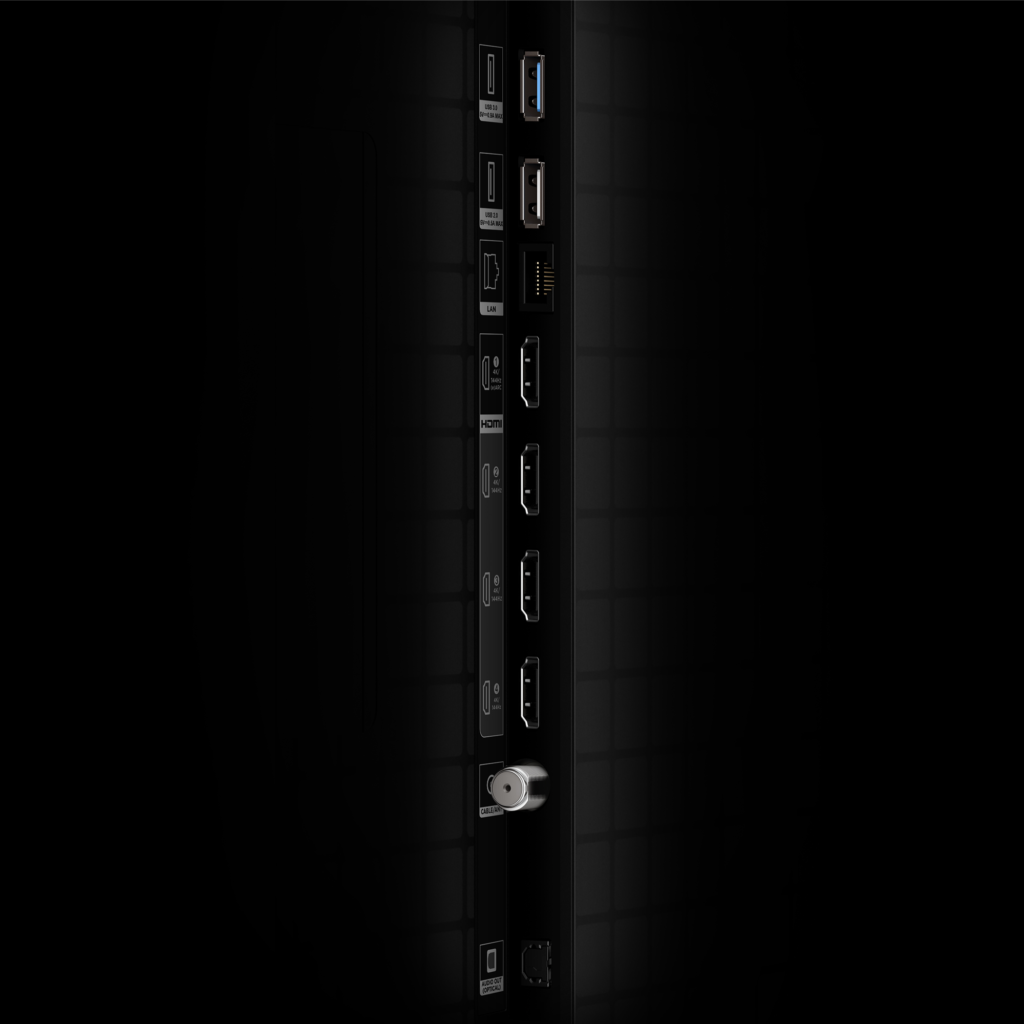
Start with a list of everything that will plug in: console, PC, soundbar. Then count the HDMI 2.1 inputs, because TCL’s entry and mid-range models offer fewer of them, and a console and a soundbar sharing one TV is where the shortage shows.
The QM8L and anything above it make the better starting point for gamers. That tier brings four full HDMI 2.1 inputs, a 144Hz native panel and variable refresh rate support, and independent lab testing found input lag below 10 milliseconds when game mode was on.
Game Mode keeps its own settings profile on a TCL TV, so anything you tweak for film content leaves it alone.
TCL Against Hisense
Hisense is TCL’s nearest true competitor. Each is a Chinese-owned mini-LED specialist, and both target the shopper who wants flagship-style pictures without stepping up to the very top of the range. The fairest matchup is the QM8L against Hisense’s U7SG.
The short answer: choose TCL if contrast, zone count and measured color accuracy matter most, and choose Hisense if refresh rate and software choice carry more weight. Neither pick is wrong, because both firms engineer their flagships properly. The details sit in the table below.
| Model | Backlight | Max zones | Brightness claim | Refresh | Sound | Software |
| TCL QM8L | SQD-Mini LED | 4,000 | 6,000 nits | 144Hz | Expandable, Bang & Olufsen tuning | Google TV |
| Hisense U7SG | Hi-QLED MiniLED Pro | 3,000 | 3,000 nits | 165Hz | 2.1.2ch with Dolby Atmos | Google TV or Fire TV |
On the TCL side, the zone count is higher on paper, and independent testing found near-zero blooming and color that lands very close to a reference after calibration. TCL also sells an expandable sound system tuned with Bang & Olufsen, which goes beyond a typical built-in speaker setup.
On the Hisense side, the native refresh rate is 165Hz against TCL’s 144Hz. Hisense also lets buyers pick between Google TV and Fire TV, whereas TCL’s current US models stay with Google TV. Both flagships can run Google TV, so on that platform the software experience is similar.
Price is the final piece, and it moves, so check the current price on Amazon for whichever set you prefer.
Setting Up and Caring for Your TV
A handful of habits help whether you bought a flagship or something lower in the range. They are grouped here by when you will need them.
Before you plug it in
Put a surge protector rated for electronics between the TV and the wall. The power board in any television can be damaged by a storm or a swing in the grid, and a failure traced back to a power event may fall outside warranty cover, so the protector is a small cost against that risk.
Allow for airflow too. A mini-LED backlight runs hotter than a basic LED panel, more so at the brightness TCL’s top sets can reach. On a wall mount, keep a few inches of space free around the rear vents, and avoid a closed cabinet with no air movement, which can push temperatures up over time.
In the first hour
Open the picture menu first. TCL ships its sets with motion smoothing switched on, which can make films look strangely smooth and add judder to certain scenes, and lab testing of the QM8L flagged that judder specifically. Filmmaker Mode, or hand-tuned motion controls, can reduce much of it.
Then turn to the home screen. Google TV’s front page includes promotional rows by design. Under Settings, then Apps, remove what you never launch, and switch off the personalized recommendations option in your account to thin the rows further.
Last, leave updates on automatic. TCL releases firmware for bug fixes, steadier streaming apps and the occasional HDMI or audio sync fix, and the System menu holds the automatic-check setting. It is worth keeping on even when everything seems to work.
Over the years
Dust the screen with a dry microfiber cloth, or one barely damp with distilled water, and wipe in a single direction instead of scrubbing. Keep paper towels and window spray away from the panel, and avoid ammonia-based products, which can slowly wear down the anti-glare and quantum dot coatings.
If a cluster of dead pixels, a colored stripe or another panel flaw appears, tell TCL promptly. A direct purchase carries a 30-day return window, and after that the standard warranty for manufacturing defects applies, so an early report keeps the simpler route open.
Buying Safely and Knowing the Warranty
Start with where the product comes from. TCL runs its own US store, and its TVs, soundbars and tablets also ship through retailers such as Amazon, Walmart and Best Buy, while Home Depot carries the air conditioners and appliances. Buying directly from TCL or from one of those retailers is the most straightforward way to get a genuine unit with warranty cover from the first day.
Outright fakes are a minor worry for products like these, because TVs and tablets are complicated and costly to imitate well. What deserves attention on a large marketplace is the seller behind the listing. A unit that was opened, returned or imported outside normal channels can be listed as new, and warranty and support questions are then harder to resolve.
A short check helps. Read the seller line on the listing: one sold directly by the retailer, or labeled as an authorized TCL seller, is the safer pick. For any other seller, look at their profile and how long they have been trading. You can start from TCL’s storefront on Amazon, which opens Amazon, and apply the same check to any listing you choose.
TCL’s standard US warranty runs one year, a term the brand’s own site frames as peace of mind. It spans TVs, soundbars, tablets and window air conditioners. Because it targets manufacturing defects, accidental damage, such as a dropped tablet or a TV knocked about in a move, is typically excluded.
Returns depend on where you buy. TCL’s own store gives 30 days. Through Amazon, Walmart or Best Buy, the retailer’s policy governs and may run shorter or longer, so read the listing’s terms before committing.
The Story Behind the Brand
TCL made cassette tapes long before it made TVs. In 1981, Li Dongsheng and Luca Situ launched a small tape business in Huizhou, in China’s Guangdong province, under the name TTK. Li, who came aboard as a technician a year later, was running it as general manager by 1985.
The name did not survive 1985. TDK, a Japanese tape maker, took legal action over how alike the two names looked, and the company chose to rename itself instead of contesting the case. Using the initials of Telecom Corporation Limited, it became TCL.
Growth after that came through three kinds of move:
- New products: a cordless phone in 1994, billed as the first made in China, took the business into consumer electronics, and by 2001 TCL was a leading color TV brand at home.
- New markets: entry into Vietnam in 1999, then a Hong Kong stock exchange listing.
- Acquisitions: Germany’s Schneider Electric in 2002, then in 2003 a joint venture with Thomson of France, which brought manufacturing know-how and European distribution.
By 2005 TCL counted among the world’s leading color TV brands, a position that Samsung, LG and Hisense have also held at various times, depending on the year and region. It is now routinely listed among the largest TV makers.
TCL Electronics is today a Hong Kong-listed multinational. In figures:
- Seven R&D centers around the world and 17 manufacturing bases.
- Roughly 40,000 sales outlets.
- TVs, soundbars, tablets, phones and window air conditioners sold in more than 160 countries.
- A solar energy unit, TCL SunPower Global.
- A top-tier global Olympic sponsorship, the level Samsung and Coca-Cola share.
What should a shopper take from that story? Manufacturing depth. TCL has built its own products for decades, so it is a long-established maker rather than a newcomer putting its badge on another firm’s output.
Common Questions
Is TCL a good TV brand?
TCL is counted among the largest TV makers by volume, and its flagship mini-LED sets measured competitively against pricier Samsung and Sony models in independent lab testing. Whether it suits you depends on your room, the tier you pick and how you feel about a Google TV home screen that includes promotional rows.
Does a mini-LED TV risk burn-in?
TCL’s mini-LED and QLED sets pair an LED backlight with an LCD layer. Burn-in is usually discussed in connection with OLED panels, where individual pixels can age unevenly, and LCD designs are generally regarded as much less prone to lasting image retention.
Do TCL TVs have Dolby Atmos?
Most current models support Dolby Atmos passthrough and decoding. Speakers built into any TV are limited next to a dedicated soundbar, and TCL’s Q85H soundbar covers Dolby Atmos and DTS:X in a 7.1.4-channel layout for fuller playback of the format.
Is the NXTPAPER screen good for reading?
TCL designed its nano-etched anti-glare layer so the display looks more like paper than a glossy tablet. The 11 Plus also refreshes at 120Hz, which keeps scrolling smooth.
Choosing With Confidence
Start with the room, then pick the tier. A bedroom set needs far less than a bright living room or a dedicated theater, and a gamer should look straight at the flagship tier and above.
Whichever model you choose, a few minutes with the picture settings and the home screen pays off. Buy from a seller you can verify, register the product and keep your records.
When you are ready to look at current options, browse TCL’s storefront on Amazon, which opens Amazon, and check the current price there.