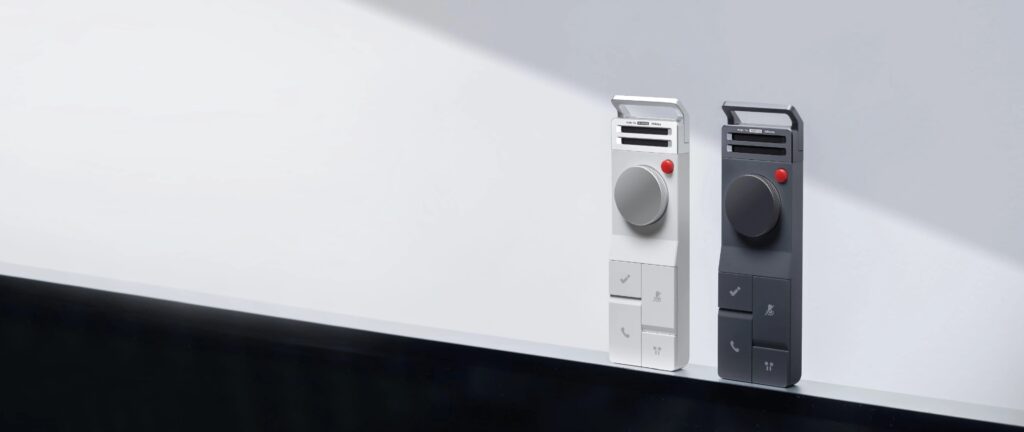
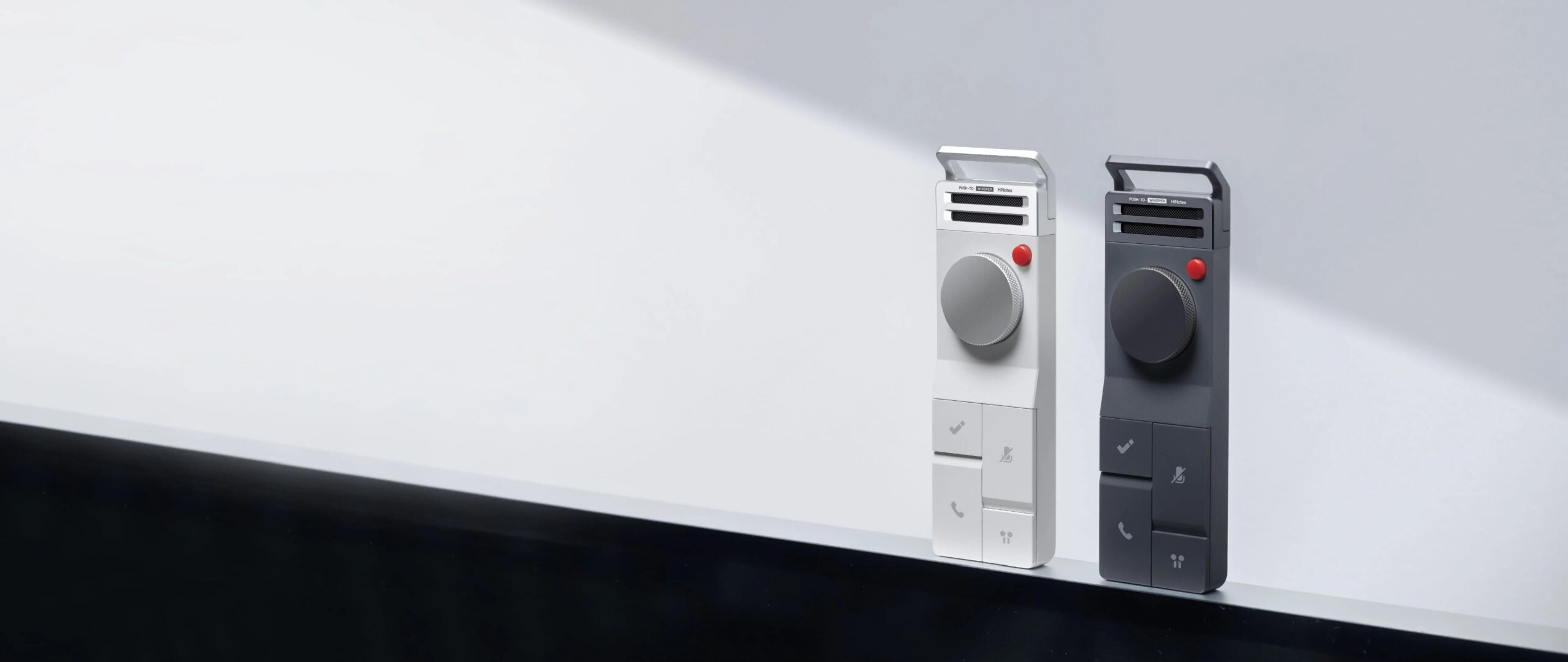
The HiDock P1 is a pocket-sized AI voice recorder built around one headline feature. HiDock says it can record a phone call, including the other person’s voice, while you stay on your usual Bluetooth earphones. The brand’s pitch is that an ordinary recorder cannot reach audio travelling over Bluetooth, and the P1 is designed to close that gap.
I haven’t handled one. This page works from HiDock’s published specs and policies, plus an independent hands-on review of the P1, and I say so whenever a claim comes from the brand.
The short verdict: it suits anyone whose calls run over Bluetooth earphones and who likes having written notes afterward. It is a weaker fit for loud rooms, for older iPhones, and for anyone who needs speaker labels without paying for a membership.
What the HiDock P1 Is
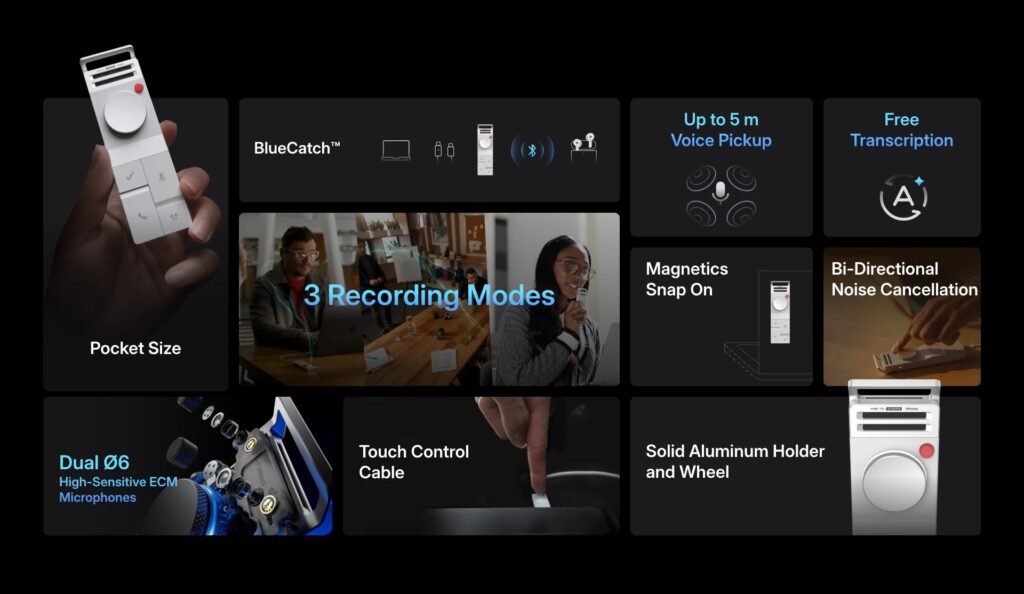
BlueCatch is the feature at the core of the P1. The recorder is paired with both your phone and your earphones and works as a go-between: HiDock says it saves the call audio as it passes, while you keep hearing the call normally.
For in-person conversations it relies on two studio-level microphones, with three modes to choose from: Call, Room and Whisper. HiDock also builds in bi-directional noise cancellation, which the brand says filters background noise at both ends of a call.
The body is metal, and a mechanical dial handles the controls instead of a touchscreen. Transcripts and summaries come from HiNotes, HiDock’s companion app, which also handles speaker identification.
Specs at a Glance
| Size | About 5 inches long, 1.5 wide and 0.6 thick (126 mm by 38 mm by 15.8 mm) |
| Weight | 0.16 lb (72 g) |
| Storage | 64GB, about 1,000 hours of audio by HiDock’s estimate |
| Battery life | Up to 8 hours of nonstop recording from a 600mAh cell |
| Wireless | Bluetooth 5.3 |
| Modes | Call, Room and Whisper |
| Microphones | Dual studio-level, with bi-directional noise cancellation |
| Compatibility | iPhone 15 or newer, Android phones that support OTG, macOS and Windows |
| Transcription | 75 languages, free for life on the standard tier |
Two of these figures need context. The 8-hour battery number is quoted for continuous recording, so treat it as a ceiling rather than a typical day. And HiDock says an hour of audio moves to a computer over USB-C in about a minute, which makes it easy to clear space often.
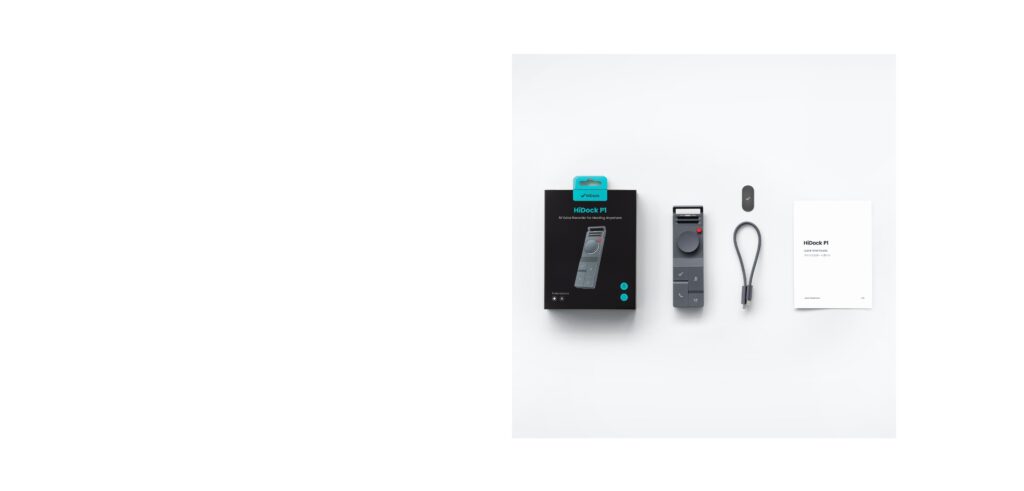
Inside the box are the recorder itself, a metal plate for mounting, a cable for the touch controls and a quick start guide. That is the complete kit.
What an Independent Review Found
One independent hands-on reviewer used the P1 and came away positive overall. The hardware drew the warmest comments: the reviewer called the metal body premium and liked the tactile click of the mechanical dial, which felt more solid than a typical plastic gadget.
On the main feature, the reviewer found that BlueCatch worked as HiDock describes it and called it something no other voice recorder offers. Turning a recording into a transcript took about a minute, and the reviewer rated the quality as good enough for everyday use in the supported languages.
The same review raised two real problems, and HiDock’s own compatibility list adds a third limit:
- In loud settings such as amplified talks or crowded venues, the mics can distort and add static.
- Speaker identification, which labels who said what, needs a paid HiNotes plan, even though HiDock markets lifetime free transcription. The free tier covers the transcript only.
- HiDock’s compatibility list starts at iPhone 15, so an older iPhone will not pair the way the P1 is designed to.
If you do end up in a noisy room, a sensible workaround is to use Whisper Mode, or to move the recorder nearer the person talking instead of trusting Room Mode to cover a large space.
P1 Versus Plaud Note Pro
Plaud’s Note Pro is a natural point of comparison for the P1, and the two are built on different ideas. Plaud’s is a thin, light card about the size of a credit card, with a small AMOLED display and a magnetic mount for the back of a phone. The P1 is a bigger standalone unit that you carry in a pocket and run with a physical dial.
| Feature | HiDock P1 | Plaud Note Pro |
| Records calls on Bluetooth earphones | Yes (BlueCatch) | No |
| Noise cancellation | Both directions | One side only |
| Recording modes | 3 (Call, Room, Whisper) | 2 (phone call, in person) |
| Transcription languages | 75 | 112 |
| Recording time per charge | Up to 8 hours | Up to 50 hours |
| Weight | 72 g | 30 g |
Plaud’s advantages are all about staying out of the way: a much longer battery, more transcription languages and a lighter, thinner body.
Where the P1 pulls ahead is Bluetooth earphone calls: of these two, it alone can capture audio that you listen to on AirPods or similar. Summaries are another difference, because the P1 offers a choice of AI models rather than one in-house system. Confirm Plaud’s current figures on its own pages before deciding.
Who Should Buy It and Who Should Skip
The P1 is a good match if most of these describe you:
- You take regular calls through Bluetooth earphones and want them transcribed.
- You prefer a physical dial and a metal body to a touchscreen and a plastic shell.
- You are happy with the free transcription tier, or willing to pay for speaker labels.
Pass on it if your recording happens mostly in noisy rooms, if you expect speaker labels at no extra cost, or if your iPhone predates the 15. A Plaud is the better pick when the slimmest body and the longest battery come first.
HiDock also makes models for other setups. The P1 mini is a smaller USB-C version for phone and tablet users, the H1 Lite is a desk companion for Mac mini setups, the H1E is a docking station with recording built in, and the O1 is aimed at meeting rooms. If the P1 sounds right, you can browse HiDock’s storefront on Amazon. The link opens Amazon in a new tab.
Returns, Warranty and Where to Buy
HiDock sells the P1 at hidock.com and also runs an Amazon storefront under the name HiDock Official. According to the brand, buying through either one keeps your returns and warranty intact.
The distinction matters because the written warranty policy leaves out anything bought from an unauthorized reseller. A genuine unit from an unknown marketplace seller could still be uncovered if it fails.
- Returns: a 30-day window that starts on delivery. The item has to be unused and unaltered, with its original packaging and every accessory.
- Return shipping: if the unit is defective, HiDock pays up to a capped amount; for a change of mind, the cost is yours and is not refunded.
- Warranty: 18 months from delivery, limited to manufacturing defects.
- Excluded: normal wear, water or fire damage, drops, accessories and cables, and any damage from opening or misusing the device.
Keep your order confirmation, since HiDock asks for proof of purchase on any return or warranty claim. Damage on arrival should be reported within 24 hours of delivery, the window set by the brand’s policy.
Frequently Asked Questions
Does the P1 work with any Bluetooth earphones?
According to HiDock, yes. BlueCatch links the recorder to your phone and to your earphones at once, so it can pick up both voices on a call.
Which phones and computers does it support?
iPhone 15 and later, Android phones with OTG support, macOS and Windows. Older iPhones are not officially supported for the full feature set.
Is the transcription really free?
The transcript is. HiDock’s free Member tier provides lifetime transcription with timestamps and no minute limit, while speaker labels and translation sit behind the paid HiNotes plans.
How much can it record before I need to clear it?
The 64GB of storage holds roughly 1,000 hours by HiDock’s estimate. The 600mAh battery lasts up to 8 hours of continuous recording.
What is the difference between the P1 and the P1 mini?
Size is the headline: the mini weighs 12 grams to the P1’s 72. It plugs into the phone by USB-C rather than bridging Bluetooth by itself, stores 32GB instead of 64GB and keeps the Call and Room modes. It is aimed at phone and tablet users.
The Verdict
The HiDock P1 is built for a narrow problem. If your calls happen on Bluetooth earphones and you would like notes without changing your routine, it is the model HiDock designed for exactly that, and the independent reviewer found no other recorder with the same feature.
The trade-offs are clear, too: speaker labels cost extra, loud rooms can trip up the microphones, and iPhone support starts at the 15. If none of those are dealbreakers, you can browse HiDock’s storefront on Amazon and check current prices there. The link opens Amazon.