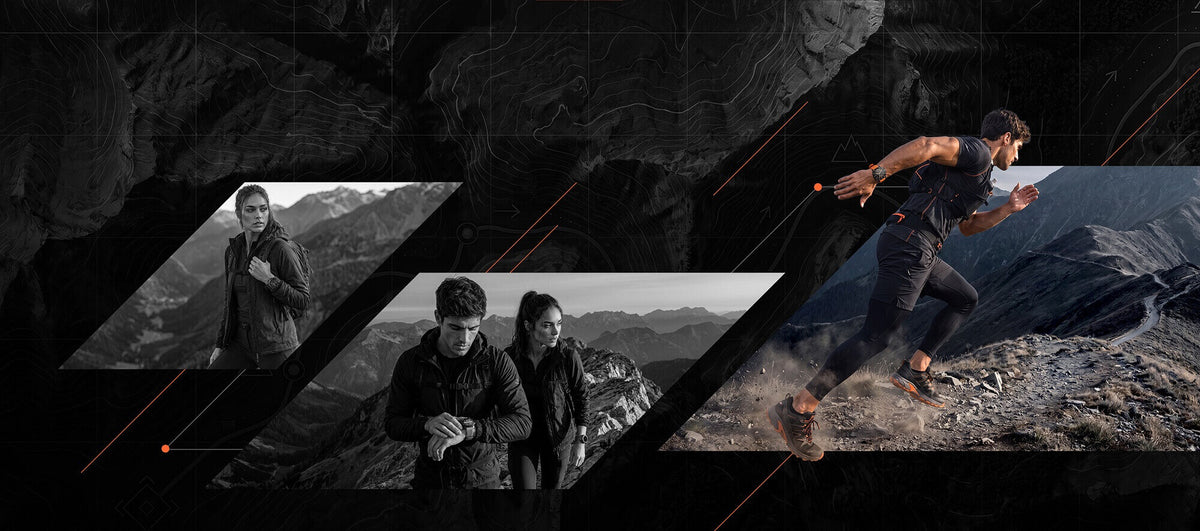
Choosing a Mibro means choosing a tier first. The range runs from rugged GPS models through slim everyday trackers to kids’ phone watches, and the spec sheets are dense enough that the right pick takes some work.
This guide covers the brand’s background, how the lineup is organized, the terms worth understanding and how to match a model to your routine. It also looks at how Mibro compares with Amazfit, where to buy safely, how returns and the warranty work, and the habits that keep a watch in good shape.
It is a research-based guide. It draws on Mibro’s published specs, policies and FAQ pages, plus the review data shown on its own store. Every figure is the brand’s claim, not a lab result.
The Brand Behind Mibro
Two brands share one parent. Zhenshi Information Technology has its headquarters in Shanghai and a worldwide sales hub in Shenzhen. It uses Xunkids for children’s devices and Mibro for sport and fitness wearables. Mibro itself dates to 2015.
That split follows the company’s history, and the milestones Mibro lists on its about page run like this.
- 2017: a kids’ phone watch under the Xunkids name becomes the first product.
- 2020: a sport watch called Air marks the move into fitness wearables.
- 2022: Mibro reports 500% sales growth.
- 2023: Mibro reports another 100% growth, and a Sports Science Laboratory opens.
- Later: the GS Explorer brings more advanced sports algorithms, which carry into the GS Explorer S.
Mibro’s press materials also describe an expansion into the U.S. market with performance-driven sports watches, building on work with athletes and sports clubs in Europe.
Backing and certifications
Xiaomi, NGP Capital and Morningside Capital are the investors named in reports about the brand. Mibro points to an R&D center in Shenzhen that opened in 2019 and a second one in Chongqing, along with more than 300 R&D engineers, over 200 patents and sales in more than 200 countries.
On the compliance side, Mibro cites CE, FCC, CB and TÜV certification for its products, along with an Applan Award in 2023 and a Baidu Maps partnership for mapping. Its stated mission is to inspire active, healthy lifestyles worldwide through technology.
None of this is an independent audit. It does describe a company that reports serious engineering resources, which is useful context when you read the durability claims later in this guide.
How the Mibro Lineup Is Organized
The catalog splits into four tiers, and each one is aimed at a different kind of buyer.
Professional Sport
Satellite accuracy, water protection and durability testing define this outdoor and GPS tier. The GS Explorer S sits at the head of it, pairing a 10 ATM rating with dual-band positioning and MIL-STD-810H certification. If that is the model you are leaning toward, our full verdict on the Mibro GS Explorer S goes through it in detail.
The GS Explorer S-Ti is the step up. It keeps the display, battery and water-resistance specs of the standard model and swaps in a case of aerospace-grade titanium alloy. It is offered in Standard and Premium versions.
Padel and racquet-sport players are the target for the GS Pro2, whose 6-axis motion sensor feeds stroke analysis. Runners get the GS Active2, which offers structured training plans for 5K through marathon distances.
Lifestyle
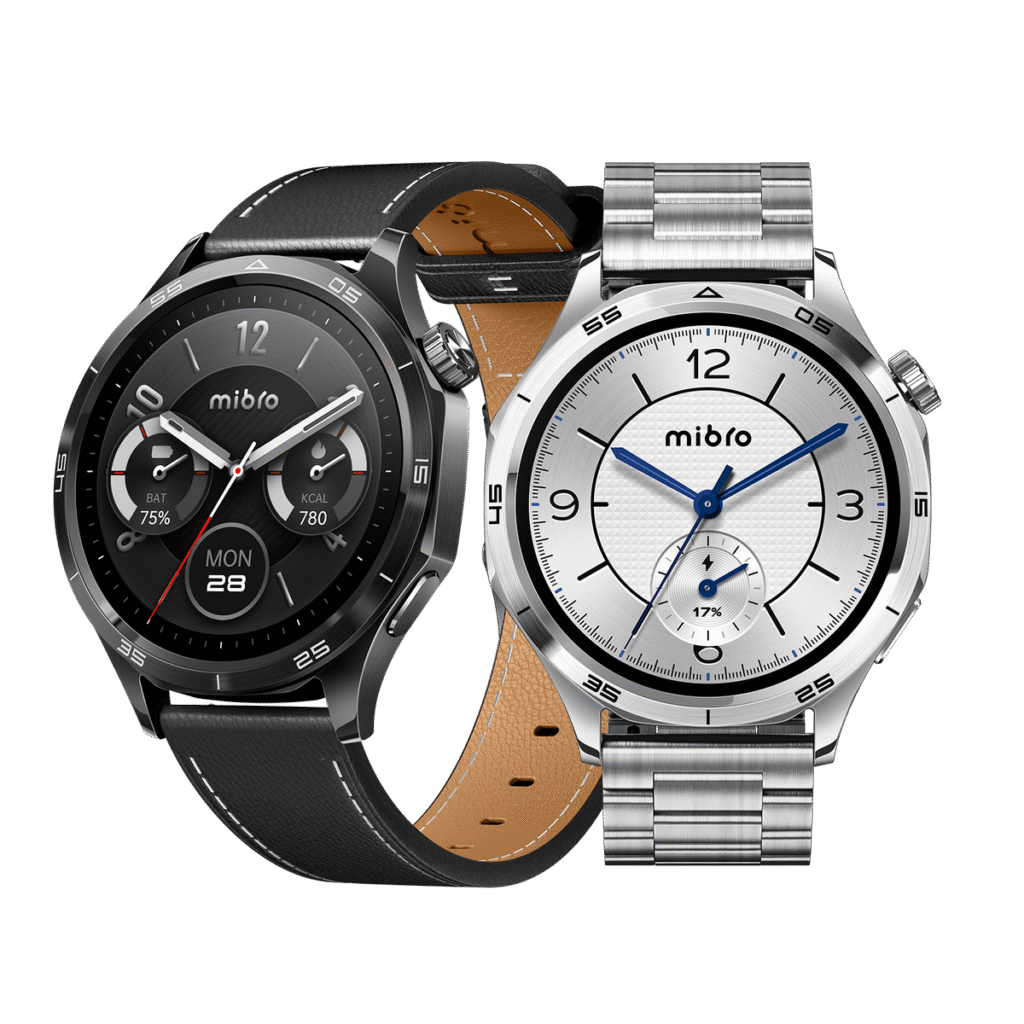
The GT leans toward style. Its case is 316L stainless steel, a built-in AI voice assistant rounds out the package, and it reads more like a daily-wear watch than a trail companion. Straps include a genuine leather option.
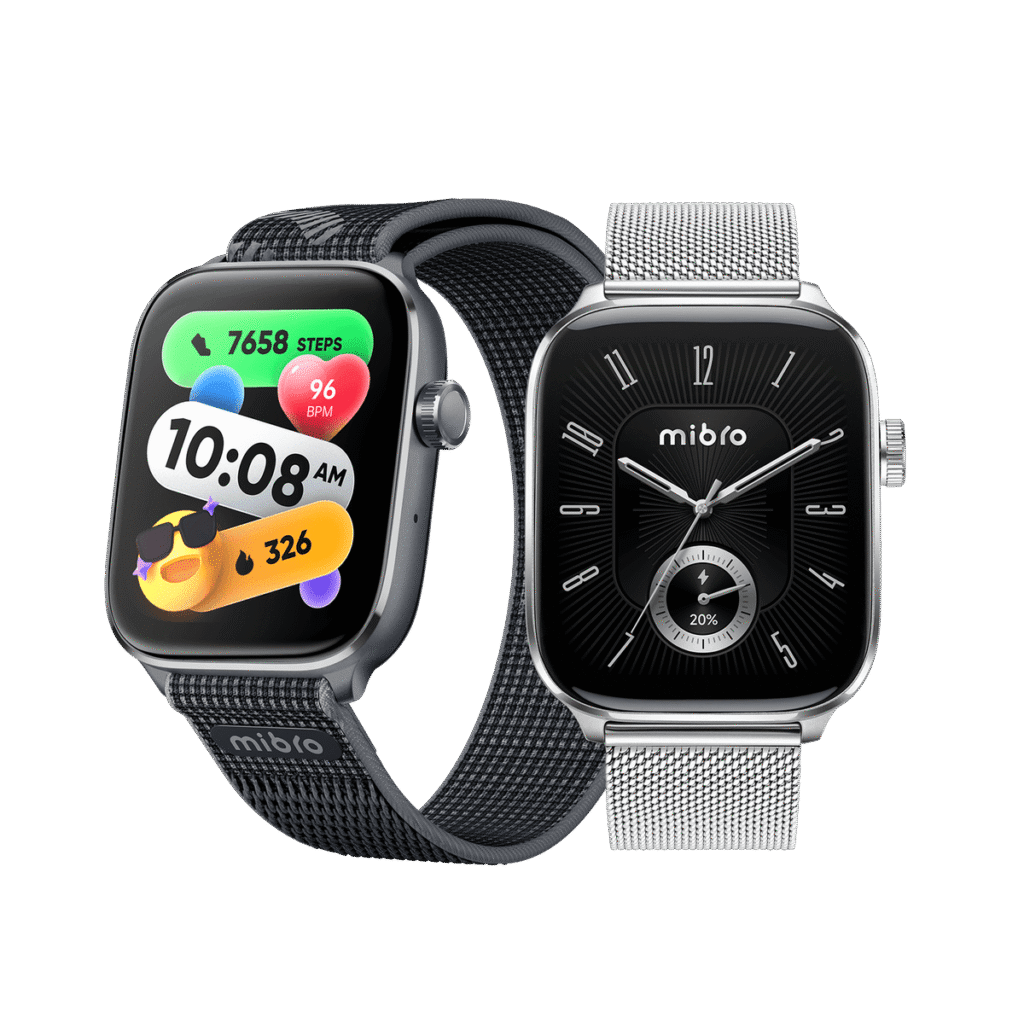
The FIT takes the opposite approach with a 1.75-inch square AMOLED screen and a featherweight 27.9g case. It is meant for anyone who wants a smartwatch they barely notice.
Both lifestyle watches include heart rate, SpO2 and barometer sensors, plus 5 ATM water resistance. What they skip is the 10 ATM depth and the military durability rating found in the Professional Sport tier.
Essential and kids’ models
The Essential series (A3, C4 and A2) targets shoppers who want basic fitness tracking and have no use for outdoor-grade parts. Take the A3: its screen is a 1.39-inch IPS panel, it has 2 ATM splash resistance and it offers 100+ sports modes. It still tracks heart rate and SpO2, logs sleep and supports multi-system GPS.
Mibro also makes kids’ phone watches (S1, P6, Z5 and Z3). They are built around calls and location tracking instead of sports data, so parents should check each model’s page for details. Mibro does not publish full spec sheets for the Essential models on its main storefront, so confirm specs there before you compare.
What the Spec Terms Mean
A handful of terms show up on nearly every Mibro page. Some describe meaningful hardware, and some are standard padding on budget wearables. Here is how to read them.
- Dual-band L1+L5 GNSS: the receiver reads two satellite frequencies rather than one, which is generally credited with steadier tracking among tall buildings, canyon walls and trees.
- MIL-STD-810H: a U.S. military standard made up of 17 tests, among them drops, vibration, temperature extremes and humidity. It is a recognized standard, not Mibro’s own label.
- ATM ratings: 5 ATM is the swimming-and-rain level. The GS Explorer line’s 10 ATM goes further, with freediving support to about 30 meters.
- Nits: how bright the screen gets at its peak. Both the GS Explorer S and the S-Ti reach 1500 nits, a level meant to keep the screen readable in direct sun.
- Sports modes: the count ranges from 100+ to 150+ by model, and extra modes only help if your own activity is on the list.
Sensors matter too. Even Mibro’s lower-priced watches are said to include heart rate, SpO2 and stress tracking, sleep staging and barometric altitude. The GS Explorer S also lists a compass and an altimeter.
Treat any spec as a starting point. A number on a product page tells you what the brand designed for, not how a watch behaves on your wrist after a year.
Matching a Watch to Your Activity
Two questions settle most choices. What will you use the watch for, and how much do you want to spend? Here is one way to sort the choice.
Hiking, camping and time off the grid
The GS Explorer S is built for this. Dual-band positioning, a 10 ATM rating and military-standard testing all point toward trails, stream crossings and unexpected dunkings. The S-Ti suits anyone who wants the same specs in a lighter titanium case, and you can look at the lineup on Mibro’s store before deciding.
Racquet sports
The GS Pro2 is the model aimed at this crowd. Mibro says a 6-axis sensor records stroke speed along with your playing patterns, something general-purpose watches rarely attempt. A 20-day battery rating and dual-frequency GNSS round out the package, so you give up little away from the court.
Running
The GS Active2 weighs 39.9g with its woven strap, noticeably less than the Explorer or Pro2 models. It adds structured training plans from 5K up to a full marathon, along with real-time running dynamics. Weight matters over a long training block, which is where the lighter case helps.
Everyday wear and light tracking
Pick the GT if you want health tracking in a watch that does not look like gym gear. Pick the FIT if low weight is your priority, but note that Mibro does not recommend it for diving or hot springs.
The lowest entry point
The Essential series sits below the main tiers. Check specs and pricing on the product page first, since availability and configuration can change.
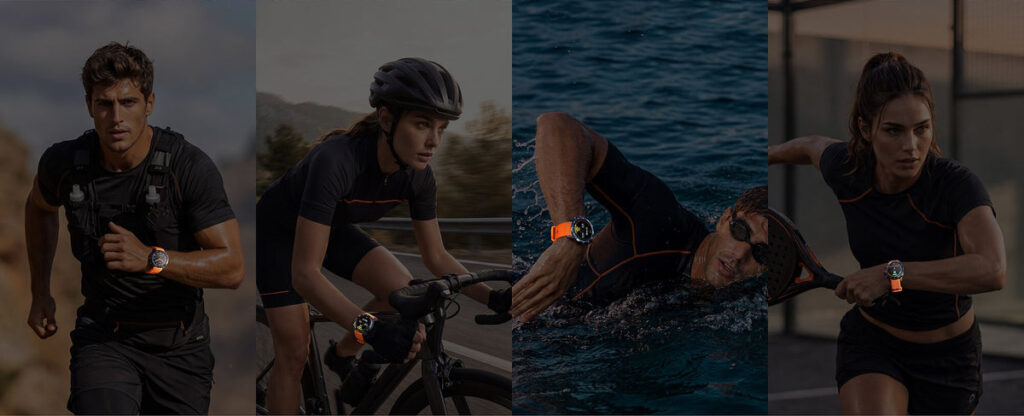
- Outdoor and off-grid: GS Explorer S
- Racquet sports: GS Pro2
- Running: GS Active2
- Everyday style: GT
- Ultralight tracking: FIT
Whichever model you choose, hold the case size up against your wrist before you order. The Explorer models are large, and a watch that feels oversized will stay in a drawer.
Mibro Versus Amazfit
Amazfit makes a natural comparison for Mibro, since both brands court buyers who want solid GPS and health tracking without a premium-brand price tag. Amazfit, which Zepp Health owns, has been competing longer and sells a wider range.
| Feature | Mibro GS Explorer S | Amazfit Active 2 |
| Water resistance | 10 ATM, freediving support | 5 ATM |
| Positioning | Dual-band, five systems | Single-band, five systems |
| GPS battery | 25 hours | 21 hours |
| Daily battery | About 20 days | About 10 days |
| Peak brightness | 1500 nits | About 2000 nits |
| Sports modes | 150+ | 160+ |
| Durability standard | MIL-STD-810H | Not published |
Mibro’s edge is hardware on the spec sheet. That means water resistance, dual-band positioning, battery life and a documented durability standard. Amazfit’s edge is a lower entry price, a more mature app with turn-by-turn map navigation and slightly higher peak brightness on the base model.
Amazfit’s reach is broader, stretching from budget models to higher-end GPS watches in its Balance and T-Rex families. The Mibro range is smaller, and it leans on durability certification and dual-band positioning in the middle of the lineup.
If water resistance, difficult terrain and multi-day battery matter most, the GS Explorer S makes the stronger case on paper. If you want the cheapest way into serious tracking and do not need 10 ATM, the Active 2 is hard to ignore. Neither brand is better across the board.
Buying a Genuine Watch
If a marketplace listing prices a watch far below Mibro’s own store, stop and look closer. Counterfeits and unauthorized resellers are what to watch for, and warranty coverage depends on where you buy.
The simplest route is Mibro’s own store, where the full warranty and return window apply without any doubt about where the watch came from. Mibro also names Takashimaya in Singapore as an authorized retail partner. A reseller application process for businesses suggests there is a vetting step for legitimate sellers.
Mibro’s intellectual property page says IP rights protect all products sold through its store. It points counterfeit concerns to its service email. The statement is brief, but it confirms there is a formal route for reporting suspected fakes. If you buy anywhere other than Mibro’s own site, make sure the seller is authorized.
The warranty policy excludes products from illegitimate sellers and asks for an order number or sales invoice with every claim. A genuine watch from an unauthorized seller can still be refused.
- Compare the price: a listing far under Mibro’s own store price deserves suspicion.
- Hold on to your order number: Mibro’s warranty process asks for it.
- Read the seller’s return policy: marketplace resellers do not automatically inherit Mibro’s 14-day return terms.
- Ask first: when a listing looks unfamiliar, email Mibro’s service team before you buy.
Returns and Warranty Basics
Mibro’s return window runs 14 calendar days from the moment the item reaches you. It must be unused and in original condition, with tags and packaging intact. You also submit photos of the outer package, the SKU and the waybill details.
Return postage is yours unless the item is proven defective. Refunds go back to your original payment method within 14 days after Mibro receives and inspects the package. Standard shipping costs are reimbursed only when the entire order comes back.
Products sold directly through Mibro’s store come with a 12-month warranty covering quality-related defects. The warranty applies to watches, earphones, chargers and straps. If an item is genuinely defective, Mibro will repair it, replace it or refund it, and it accepts responsibility for transit when you ship a covered claim with its prepaid label.
The exclusions are worth reading before you buy.
- Purchases from unauthorized sellers
- Repairs done by third parties
- Damage from drops, or from water beyond the rated limit
- Lost or stolen devices
- Claims with no proof of purchase
- Coverage periods that have expired
- Non-quality issues reported after 30 days
To file a claim, email Mibro’s service team with your order number, sales invoice and photos of the problem. Mibro’s shipping terms describe free delivery within the EU, with VAT included in displayed prices. Confirm shipping and taxes for your own address at checkout.
Care and Battery Habits
Reviews on Mibro’s own site mention strap wear, and one describes battery fade after nine months of heavy use. A few habits can help with both and take almost no time.
Charging
Charging is the one routine Mibro’s FAQ spells out step by step. The cable attaches magnetically to contacts on the back of the case. Before you connect it, dry both sets of contacts and set the watch on a level surface.
Sweat and moisture can collect on those contacts, and a slow charge caused by residue is easy to mistake for a tired battery. Wiping them after a swim or a hard workout takes a few seconds.
Battery life
Of everything Mibro documents, the always-on display costs the most, at up to 30% more battery per day. If you want the multi-day figures from the spec sheet, switch it off before anything else.
A power-saving mode sits in the settings on every current model, which helps on multi-day trips with little access to a charger. Ordinary lithium battery habits apply as well: store the watch away from extreme heat and avoid leaving it at zero for long stretches.
Water and rinsing
After swimming, Mibro’s FAQ recommends rinsing the case and, above all, the contacts on the back, on 5 ATM and 10 ATM models alike. Salt or chlorine left on the contacts can corrode them over time, which is the reason to make rinsing a habit.
Ratings differ by model, so check yours. The FIT is rated 5 ATM, but Mibro does not recommend taking it diving or into hot springs. Hot water and sudden pressure changes ask more of the seals than a pool does.
Straps
Strap durability is one of the concerns raised in reviews of the GS Explorer S on Mibro’s own site. The box holds two silicone bands, so swapping them on alternate days gives each a break from sweat and sunlight.
The 22mm width is standard, so a worn strap does not mean replacing the whole watch.
Firmware
Firmware arrives through the Mibro Fit app, in the watch’s settings menu. An update can bring more than new features, such as quicker GPS locks or better battery handling, so check for one when the watch is new and every so often afterward.
Frequently Asked Questions
Which phones work with Mibro Fit?
Android 5.0 and later and iOS 10.0 and later are supported, and the app is on Google Play and the App Store. An email-based account comes before the first pairing.
Can one phone manage more than one Mibro watch?
Yes. A dropdown beside the watch name in the app switches between paired watches.
Does Mibro Fit connect to other fitness apps?
Mibro’s FAQ lists Strava, Google Fit and RQrun for data sharing.
Which satellite systems do the watches use?
Mibro’s watches draw on GPS, Beidou, GLONASS, Galileo and QZSS, and the Professional Sport tier adds dual-band L1+L5 reception.
Can the watch find a GPS fix without my phone?
Mibro says it is not dependable on its own, because the watch carries no ephemeris data. Staying paired to your phone gives faster, more accurate locks.
What works while the watch is charging?
The screen wakes and the settings stay available. Health tracking has nothing to read while the watch sits on its charger, so it pauses.
Which health metrics does Mibro Fit track?
According to Mibro’s FAQ, the watch tracks heart rate and stress, blood oxygen, training load, and sleep with naps included. Treat the readings as general wellness information, not medical advice.
How many sports modes are there?
Between 100 and 150-plus, depending on the model. Running, swimming, cycling and hiking are all covered, along with many other activities.
Where do I get help?
Mibro publishes one service email for after-sales and warranty questions and a separate address for general inquiries, both listed on its site.
Final Thoughts
The right Mibro depends on where you spend your time. Trails, water and long days away from a charger point toward the Professional Sport tier. Everyday wear and low weight point toward the GT or FIT, and a tight budget points toward the Essential series.
Whatever you pick, confirm the specs on the product page, buy from a seller that honors the warranty and keep your order number. Those three habits protect you more than any single feature on the spec sheet.