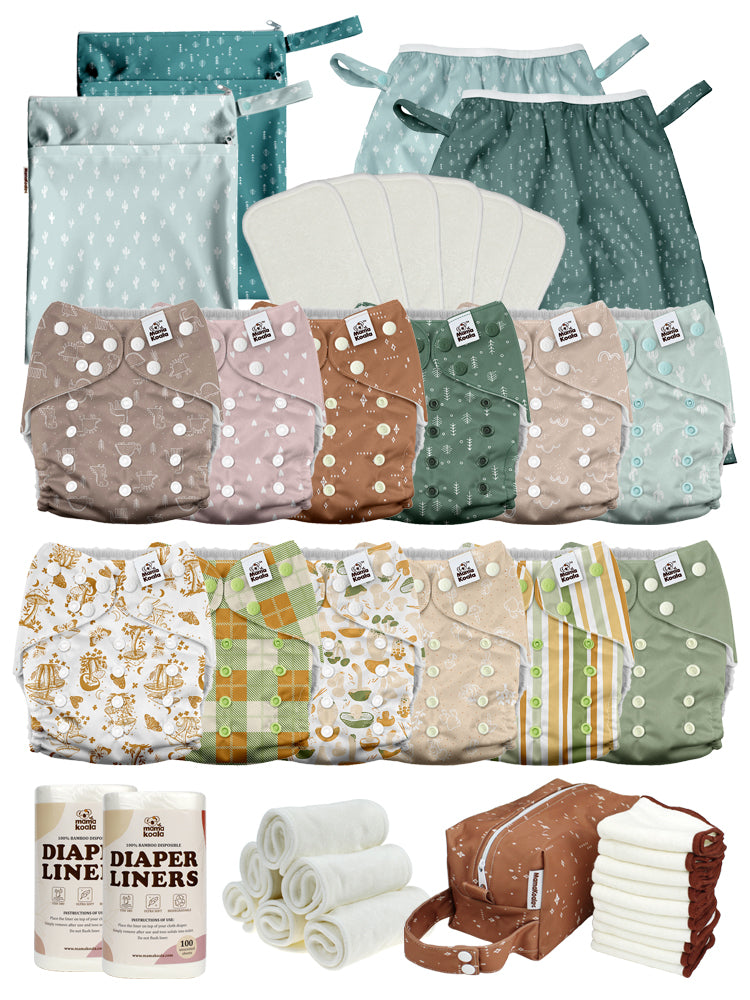
Before you pick a brand, settle how many diapers you plan to own. A stash that is too small means washing every day, and that routine can wear down even good intentions.
Mama Koala is a budget pocket diaper brand that, by its own account, adds new prints every week. This guide pulls together what the brand publishes along with a few independent test results. It covers who stands behind the company, how the diapers work, what the fabrics and inserts do, how many to buy, how Mama Koala compares with AlvaBaby, how to care for the stash and what shipping, returns and the warranty cover.
It is research, not a hands-on report. Prices are the regular prices at Mama Koala, so check the current figure before you order.
The Brand Behind the Diapers
Mama Koala’s About page leads with a statistic instead of a person: 90% of its employees are mothers. The brand presents that staffing as the reason its products suit real family routines, from leg-edge design to late-night laundry questions. Whether that is more than marketing is for you to judge.
There is no founder to name. The page gives no founder and no founding year, describing the company as a group of parents who started it after welcoming their own children. Cloth diaper blogs date the launch to 2017, but that is a third-party date the brand has not confirmed.
How the price stays low
The brand says design, production standards and after-sales support are all handled in-house, and parcels leave from its own warehouse in China. A single Pocket Diaper 3.0 costs about $8.75 at Mama Koala. The cost of that arrangement is a long wait for delivery, covered further down.
Prints, certification and packaging
The print catalog grows weekly, with themes such as dinosaurs, farm animals and camping, and the brand hosts a VIP Facebook group plus a separate buy, sell and trade group.
Mama Koala also backs its green claims with a few specifics, all of them the brand’s own statements:
- Every product carries CPSIA certification, and the certificates are posted on the brand’s site.
- The print inks are described as non-toxic and water-based.
- Packaging is a compostable, corn-based material.
- Returned items in sound shape go to a US diaper charity called The Cloth Option.
With no founder to point to, the paper trail stands in. Posted certificates, spelled-out warranty exclusions and a defined return policy can all be checked by a buyer.
Pocket Diapers in Plain English
Think of a pocket diaper as two parts. A shell and lining are stitched into a sleeve, and an absorbent insert slides into it before each change. The shell blocks leaks, the lining is meant to feel dry against the skin and the insert does the absorbing. Since the insert comes out for laundry, drying is quicker than with an all-in-one, and layers can be added as your baby’s needs shift.
Covers are the alternative route. A cover skips the pocket entirely. It is just a waterproof shell with absorbent cotton laid inside, and a cover that stays clean can serve for more than one change. That means fewer shells to buy and faster drying, in exchange for more fiddling at each change. Pockets go on in a single step but take longer to dry and need stuffing every time.
Beyond pockets, the brand sells diaper covers at about $6.75, cotton preflats from about $10.99 to $12.99 in sizes S and M, potty training pants at about $6.49 and swim diapers at about $15.98 for a 3-pack. A swim diaper is designed to contain solids rather than absorb water.
Linings, Snaps and Other Hardware
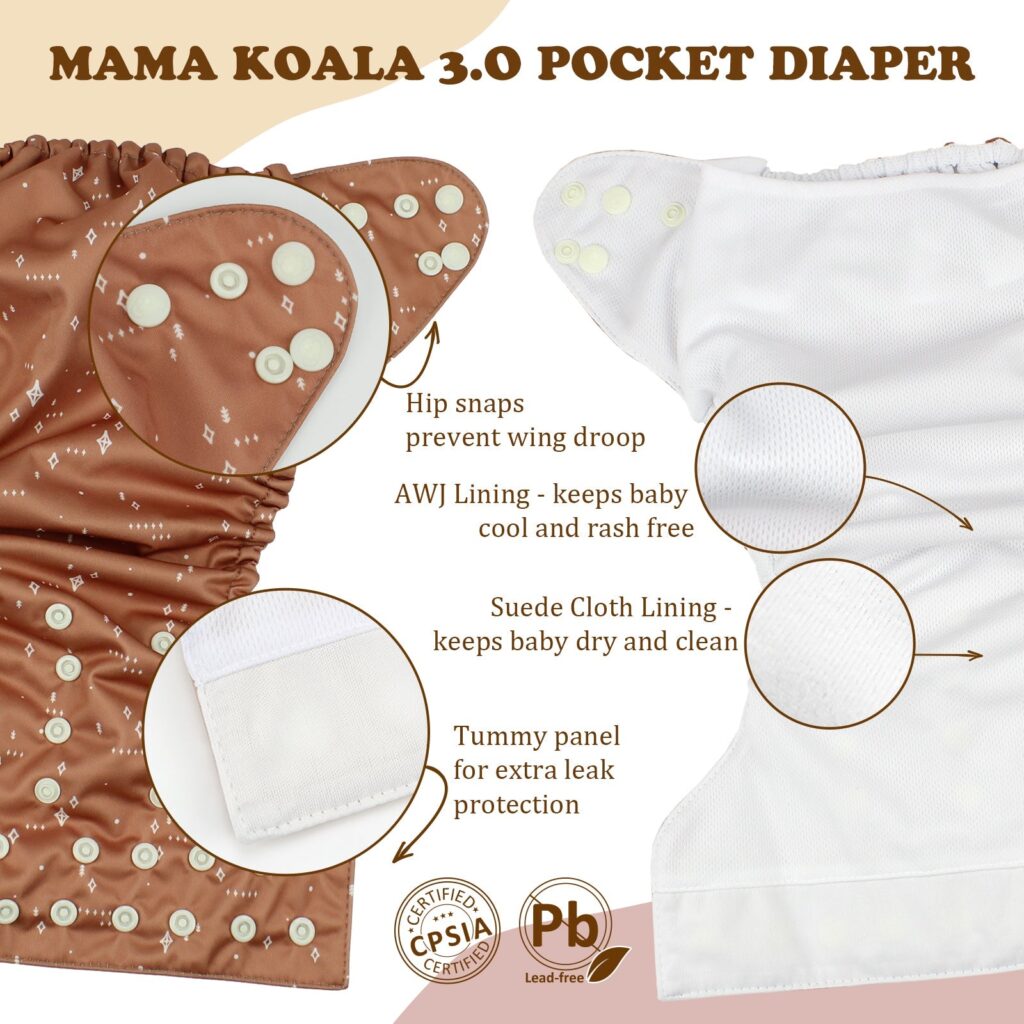
Every pocket diaper comes with one of two linings. AWJ, short for Athletic Wicking Jersey, is a fabric type used in athletic shirts and is meant to draw moisture from the skin into the insert. Mama Koala says it keeps a baby dry and cool, and it recommends AWJ for babies who are sensitive to heat and wetness.
Suede cloth is a soft polyester microfleece with a plusher feel, and it is meant to do the same stay-dry job. On the 3.0 both linings carry the same price, so preference decides.
Under the fabric, the outer shell is laminated with TPU, a thin waterproof film. The brand’s warranty covers TPU failure, but it voids the claim if heat, bleach or fabric softener were used on the diaper.
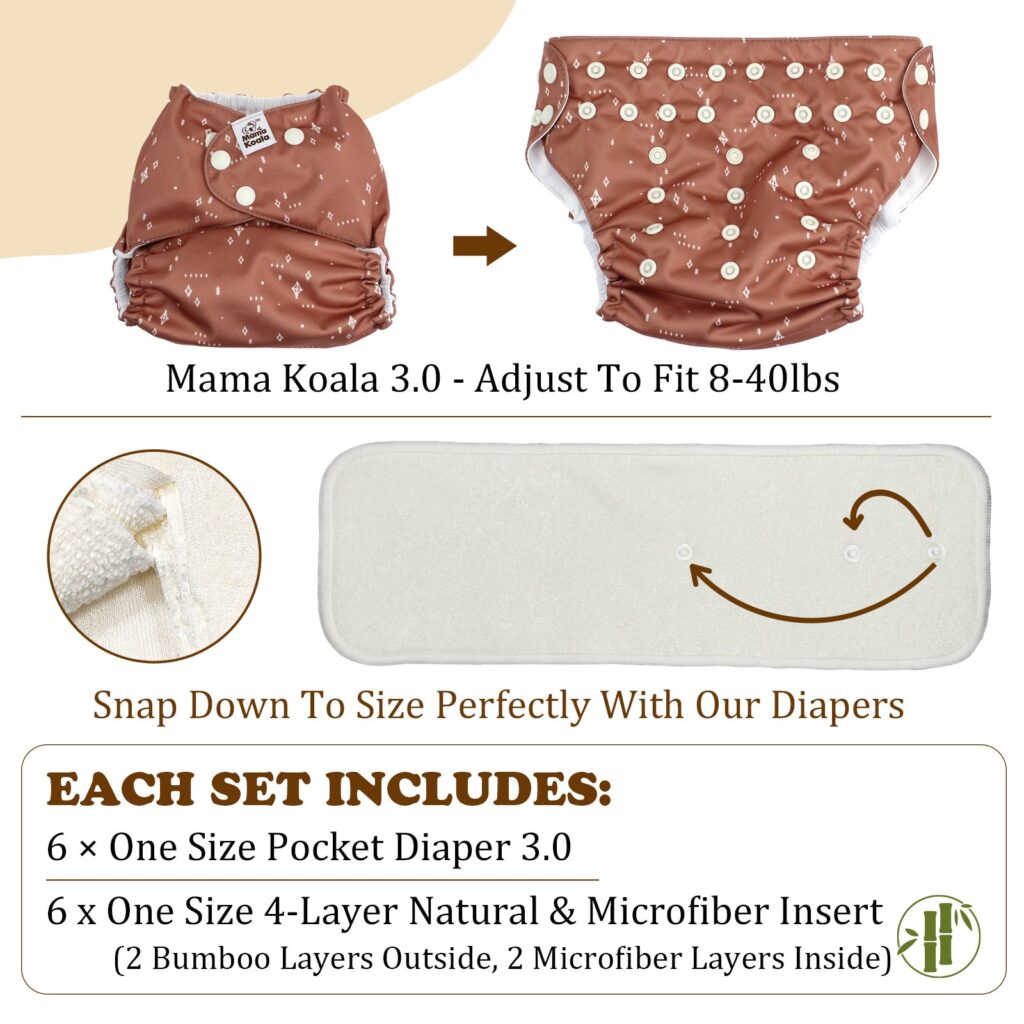
- 3×4 rise snaps: twelve settings spread across the 8 to 40 lb range
- Hip snaps: designed to keep the waist wings from flaring outward
- Crossover snaps: pull the front in for a newborn-sized fit and can wrap up a soiled diaper
- Water-resistant tummy panel: a band across the belly, meant to limit moisture reaching clothes at the waistband
One warning applies to embroidered prints. The brand says to keep them away from hook-and-loop fasteners in the wash, and it does not cover broken thread.
Inserts and Absorbency
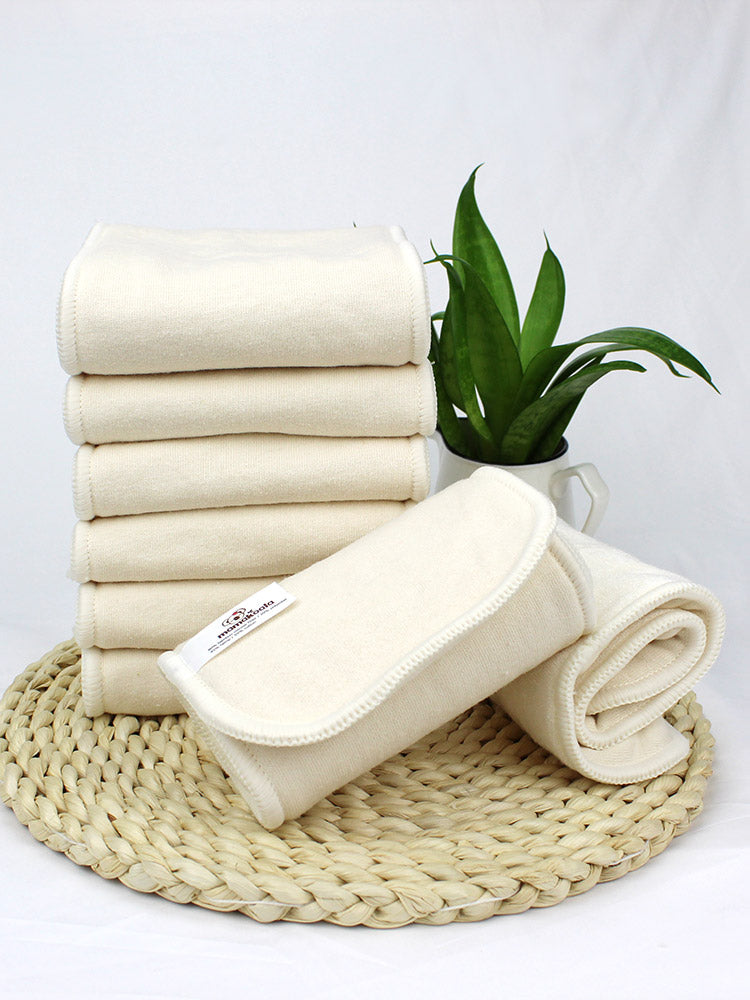
Two jobs get mixed up here: the shell keeps liquid in, and the insert holds it. Treating them as one leads to blaming the shell for what an insert should handle. The brand offers three kinds of insert, and the choice matters most overnight.
- 4-layer bamboo microfiber with snaps: about $2.45, the standard insert for daytime changes
- 5-layer bamboo without snaps: about $3.75, aimed by the brand at heavy wetters
- 6-layer bamboo hemp cotton without snaps: about $4.95, the thickest blend, positioned for nights and long gaps between changes
As the line-up is described, bamboo takes up liquid fast, hemp holds more but drinks more slowly, and the 6-layer blend aims to do both. Microfiber is the budget option and wears out with use, so inserts will likely need replacing before the shells do.
Independent results on absorbency are mixed, so both sides are worth a look. An independent cloth-diaper tester judged the 3.0 adequate for ordinary daytime wear, meaning the usual 1.5 to 2 hours between changes with 5-layer bamboo inserts, and reported no leaks at the legs or back. Her caveat was that overnight performance is not guaranteed.
An independent testing site reached a harsher verdict on the older 2.0 generation, scoring it 31 out of 100, placing it 11th of 12 diapers and criticizing its absorbency and gusset design. That is not the current diaper, yet the result is public and a fair reminder that these are budget diapers. A baby who wets heavily will probably need a booster right away, and a second stacked insert helps at night.
How Many Diapers You Need
The brand gives concrete numbers, which makes a sensible starting point. Twelve diapers is a bare minimum that means washing almost every day. For full-time use the brand sees 18 as the practical floor, with a wash every one to two days. Its ideal sits at 24 to 30 diapers, which stretches the wash to every three to four days and leaves little risk of running out.
Anyone building around covers and preflats should plan on eight to twelve covers at minimum, according to the brand. Newborns use up more diapers per day than toddlers do.
Fit depends on the baby, and no review can say whether yours has sturdy or slim thighs. The Pocket Diaper 3.0 Trial Pack costs about $12.99, which makes it the cheapest way to find out before you commit to a stash.
The arithmetic for a full build is simple. Four six-packs at about $42.99 each give you 24 diapers, the point where washing every three or four days becomes realistic, for roughly $170. The New Parent Starter Pack, at about $129.99, bundles diapers, inserts and accessories into one box, which suits a parent who is tired of making choices.
Put those numbers beside the brand’s own comparison. It says disposables for one child cost around $3,500, against under $500 for 30 of its diapers. That ignores water, detergent and electricity and presumes a washer is already at home, but the gap is wide.
Add-Ons Worth Having
A pocket diaper is only half a system, and the brand sells a few extras that change how a day goes.
- Wet dry bags: a 2-pack costs about $15.99, with one zippered side for clean diapers and the other for soiled ones. A hanging style, about $20.99, hooks onto a crib rail or a door handle in the house.
- Pail liners: about $20.99 for two. A washable liner goes into the machine along with the diapers, so nobody has to scrub a pail.
- Bamboo wipes with a travel pod: about $19.99, and they can be washed in the same load as the diapers.
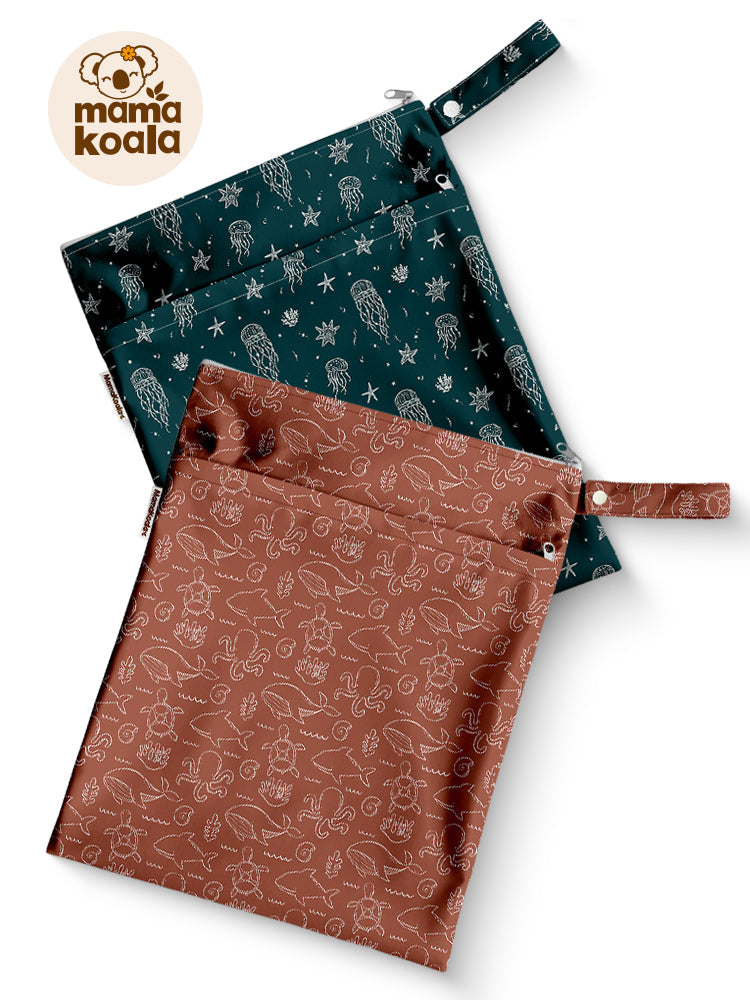
Matching products to the stage helps too. A baby of 8 to 12 lbs relies on the crossover snaps, and a smaller baby needs a newborn-specific solution at first. When potty training begins, the training pants are pull-up style, made for the phase when accidents are occasional.
For a closer look at the diaper at the center of all this, here is our full verdict on the Mama Koala Pocket Diaper 3.0, including how it holds up in the independent results.
Mama Koala vs AlvaBaby
AlvaBaby is a comparable budget pocket diaper at a similar price, which makes it a handy yardstick for Mama Koala. On paper the gaps are small, and they show up in handling, size range and coverage.
Handling comes first. Mama Koala closes at the waist with two vertical snaps, while AlvaBaby fastens with a triangle of three. A reviewer who owns both diapers found the two-snap layout quicker on a wriggling baby, while the triangle took more effort to line up. She also found AlvaBaby’s elastic-heavy opening harder to stuff than Mama Koala’s larger back opening, which has a flap.
She reported fewer major leaks with Mama Koala, said AlvaBaby soaked through more often and named Mama Koala her favorite among the cloth diapers she owns. Both brands ship microfiber-based inserts that wear down with time, so neither avoids the usual budget trade-off.
Size range is the next split. AlvaBaby starts at 6.6 lbs, which matters for a very small newborn, and tops out at 33 lbs. Mama Koala runs from 8 to 40 lbs, and for a one-size diaper the upper limit sets how long it lasts.
Choice and coverage come last. AlvaBaby offers suede cloth only, while Mama Koala sells the same diaper with either suede cloth or AWJ at one price. Mama Koala adds new prints weekly against roughly monthly for AlvaBaby, and it backs its diapers with a one-year warranty against manufacturing defects, with a 90-day satisfaction guarantee on top for unwashed items. The research behind this guide found no published warranty for AlvaBaby.
On those points the comparison favors Mama Koala, though AlvaBaby remains a low-cost pocket diaper that suits smaller newborns. Whichever you lean toward, Mama Koala’s Trial Pack costs about $12.99 and tells you more about your baby’s fit than any comparison can. You can browse Mama Koala’s range at its own store to find it.
Care and Troubleshooting
A diaper that seems to leak may simply be repelling, which the brand treats as a care issue rather than a defect. A few habits and one simple test cover the basics.
Repelling, a fit leak or a full insert?
Three problems look alike from the outside but call for different fixes. Repelling means water beads on the surface instead of sinking in. Drip some onto a dry insert, and if it sits there for several seconds, residue is the likely cause, usually from built-up detergent or a diaper cream, so washing is the fix.
A fit leak means the insert absorbs normally but moisture leaks out around the legs or waistband, which points to the rise snaps and hip snaps. A full insert simply needs a thicker one or a second one.
The brand counts both repelling and leaks from poor fit as care issues, so neither is a warranty claim. Hard water is another factor it will not cover.
Prepping new diapers
Fabric straight from the factory carries natural oils that make it repel liquid. The brand says to pre-wash before the first use, so that repeated washes flush those oils out.
Everyday habits
- Rinse soiled and overnight diapers soon after use.
- Keep the pail somewhere cool and dry, with some ventilation.
- Wash on a schedule that matches your stash: every three to four days with 24 diapers, or every one to two days with 18.
- Measure the detergent, since too little leaves waste behind, while an overdose leaves residue, and residue is what makes fabric repel.
The brand also recommends sunlight for stains and lingering odor, describing it as a natural disinfectant and whitener, and it points out that staining is normal.
Diaper cream
The brand says many creams leave a waterproof coating on the fabric, and that coating blocks absorption. It names petroleum, panthenol, zinc oxide and sesame seed oil as ingredients to avoid or use sparingly. If you need a cream, pick one labeled cloth diaper safe.
Shipping, Returns and Warranty
Shipping
Everything is dispatched from the brand’s warehouse in China, after roughly 3 business days of processing. For US standard delivery the brand’s estimate is 15 to 20 business days. Standard shipping is free over $50 to the US, Canada and Mexico, but Alaska, Hawaii, P.O. Boxes and APO, FPO or DPO addresses are not served.
The brand backs the long wait with a guarantee. If a parcel is still missing 30 business days after it ships, the brand says you can file a dispute and get a full refund, though it usually proposes a reshipment first.
Returns
A return can be started up to 90 days after purchase under the brand’s satisfaction guarantee, provided the item is brand new, unused and unwashed, with its tags and packaging. The brand may refuse a refund on anything that looks stained, damaged, altered, abused or heavily soiled.
A change of mind means you pay the return postage, and the original shipping is not refunded, whereas a faulty item is on the brand. For a faulty, wrong or missing item, contact the brand’s support team within 7 days of delivery, a far tighter deadline than the 90 days.
Warranty
Apart from returns, the brand covers manufacturing defects for one year from purchase. Covered parts are the waterproof TPU layer, sewn seams, snaps, elastics and pilling. Left out are shrinkage, staining, odor, repelling, normal wear, snags, wear holes in natural fibers, diaper rash and leaks that come from improper fit.
The brand also lists what voids coverage: fabric softener, bleach, vinegar, scented detergent, extreme heat, constant stripping and hard water. A stash smaller than the brand recommends counts as improper use too, since overused diapers wear out their elastic early.
Only the first buyer is covered, with a receipt from the brand’s own website or another official Mama Koala store. Coverage does not pass to later owners, so secondhand diapers carry none. Anyone who purchased through an authorized retailer should contact that retailer first.
If you buy anywhere other than Mama Koala’s own site, make sure the seller is authorized. Wherever you shop, check who the seller is, whether the listing names the 2.0 or 3.0 generation, which lining it has and whether inserts are included. The 3.0 is the current diaper, while the 2.0 is a genuine older generation without the full 3.0 snap hardware. To see what is on offer, browse Mama Koala’s range at its own store.
FAQ
Which baby sizes does it fit?
The 3.0 is a single size for babies weighing 8 to 40 lbs, roughly 4 to 18 kg. The rise snaps set the size, with the crossover snaps handling the smallest settings.
Are the diapers certified?
Mama Koala says its products hold CPSIA certification and that the compliance certificates are posted on its website. It also describes the print inks as non-toxic and water-based.
Can I return diapers that do not fit?
Yes, as long as it is within 90 days and the diapers are still new, unused and unwashed. You pay the return postage, and the original shipping is refunded only when the item was faulty.
How long does delivery take?
Expect about 3 business days of processing, then 15 to 20 business days for US standard delivery by the brand’s estimate. Order well ahead of when you need the stash.