Fotopro sells a lot of tripods, and the series names do not help much. Origin, X-Go, X-Aircross, Eagle, UFO and Digi say little on their own about who each one is for.
This guide sorts the lineup by how you shoot. Along the way it covers the company behind the brand, how its carbon fiber models compare with Manfrotto, how to look after the legs, where to buy safely and what the return and warranty terms say.
Everything here is research-based. It draws on the brand’s own pages and a long independent review of the X-Go Max, not on tests of my own, and the text says so whenever a claim comes from Fotopro itself.
Who Is Behind Fotopro
Start with what the company says it has built. Fotopro holds patents on two ideas: a quick-lock leg design that the brand says extends in about a second, and a 2-in-1 portable tripod meant to serve both cameras and phones.
Both ideas show up in the range. Quick-lock legs run through the X-Go and X-Aircross families, while the mini and flexible tripods carry the camera-and-phone concept.
The catalog as a whole follows the brand’s US slogan, “Gear Up for Adventure.” Carbon fiber travel tripods that fold small sit beside flexible mounts that can grip a bike frame or a tree branch.
The full company name is Fotopro Guangdong Image Industrial Co., Ltd. Its headquarters are in Tanzhou Town, Zhongshan, a part of Guangdong province known for photography and electronics manufacturing. The brand says it has designed and built tripods, monopods and other support gear for more than two decades.
By Fotopro’s own history, the story runs outward from there. It was already building overseas distribution when it entered the Chinese domestic market in 2009, and it later opened a US branch, Bosma USA, in Livermore, California.
The brand also lists distribution rights in Kuwait and across Asia, including Japan, South Korea, Taiwan, Hong Kong and India.
Years in business and international distribution are facts worth knowing. They do not replace checking the specific model you plan to buy.
The Fotopro Lineup at a Glance
Fotopro’s catalog stacks in tiers. Gimbal kits for professionals sit at the top, carbon fiber travel models fill the middle, and plain aluminum or tabletop designs start things off at the bottom. Each series has a different job.
Eagle Series: the professional tier
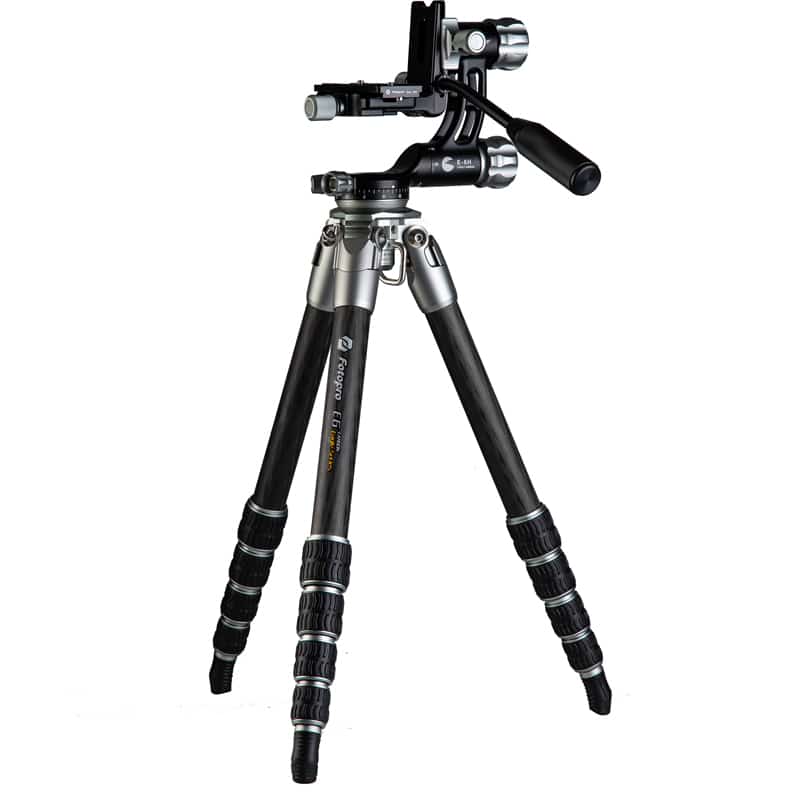
Eagle kits are meant for wildlife and sports photographers who put heavy telephoto lenses on gimbal heads. Models such as the E-6 and E-7 bundle carbon fiber legs with the gimbal head.
The natural comparison points are dedicated gimbal setups from names such as Gitzo and Really Right Stuff. This is a series for specialists, not casual buyers.
X-Go and X-Aircross: the travel core
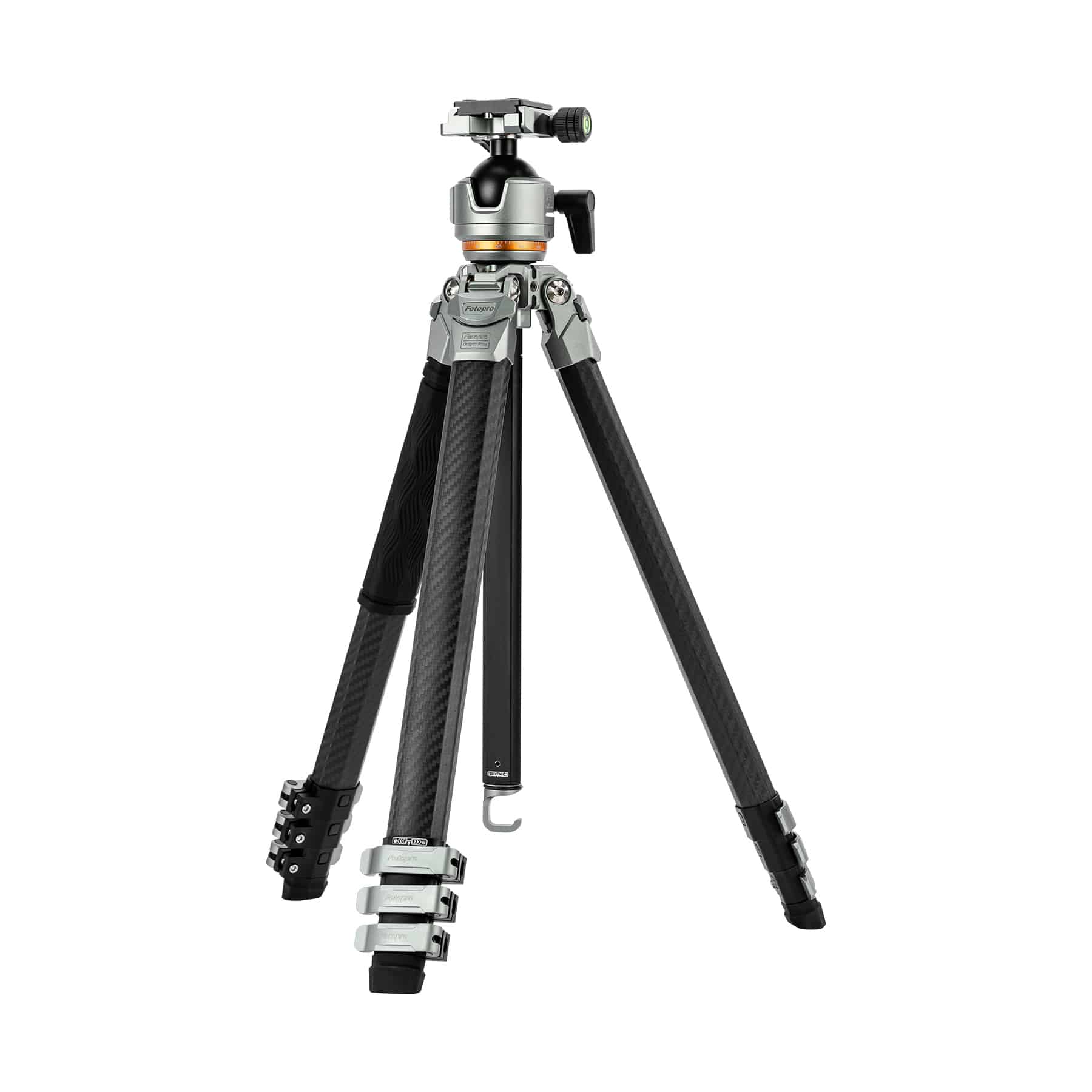
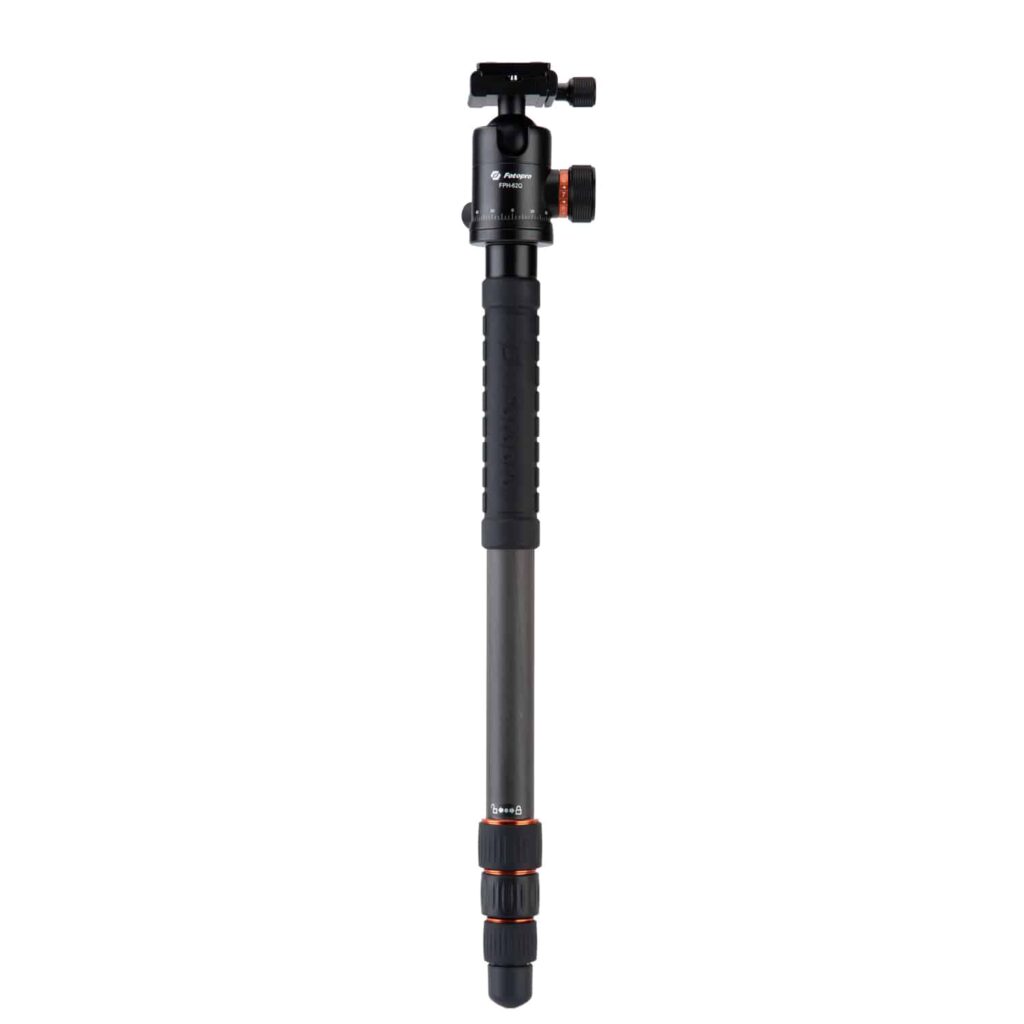
The X-Go Max has four carbon fiber leg sections, a leg that detaches into a monopod and a 26.5 lb load rating. The standard X-Go keeps the tripod-to-monopod idea with five carbon fiber sections and a 17 lb rating.
The X-Aircross 3 family is built to be lighter, at the cost of some capacity. Its Lite version is under 2 lbs and carries 22 lbs. Both families use the quick-lock leg system and aim at travelers and content creators.
Origin and Origin Plus: lighter travel models
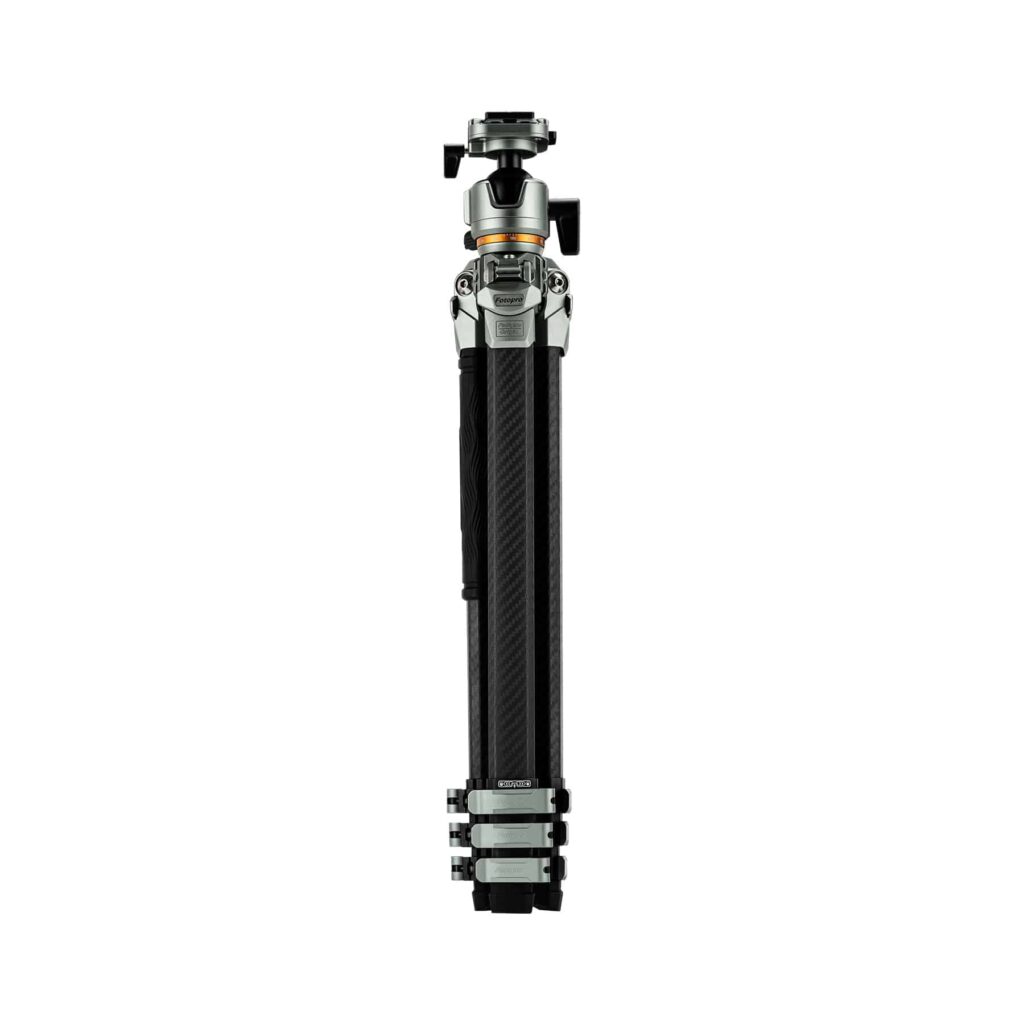
The Origin line drops the monopod leg and concentrates on size and weight. Origin Plus measures about 19.6 inches folded and about 3.4 lbs, with a 44 lb rating when used with its bundled ball head.
Its legs use 28.5mm carbon fiber tubes. Toray 3K carbon fiber appears on some Origin models, and other makers also choose that material family for higher-end tripods.
Mid-range: S Series, T-Roc and AK
Beneath the carbon fiber travel lines, these models mix aluminum with lower-grade carbon builds. They are aimed at people who set a tripod up in one place and rarely carry it far.
Entry level and flexible: Digi, PD, M-5 and UFO
The bottom tier covers plain aluminum tripods in the Digi and PD lines, plus small tabletop models like the M-5 Mini, which give a phone or compact camera basic support.
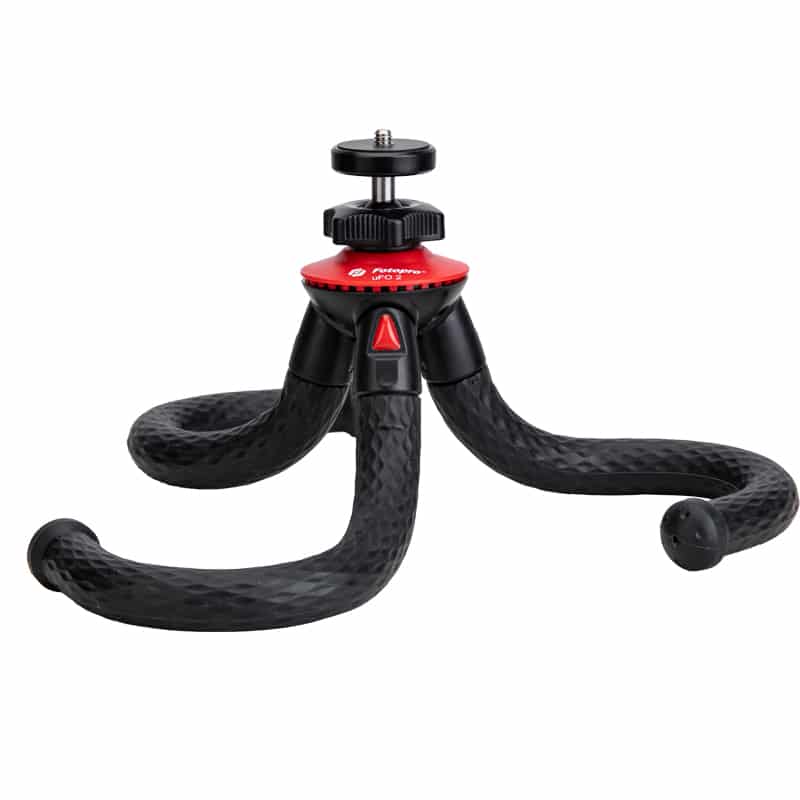
The UFO2 is different from the rest. Its legs bend and are waterproof, so it can wrap around a railing, a bike frame or a tree branch instead of needing flat ground. That design targets phone vloggers and action camera users.
How to Choose by the Way You Shoot
Which Fotopro tripod suits you depends on what you shoot and how far you carry it. Start from the case below that sounds most like you.
Your camera is mostly your phone
The UFO2 flexible tripod is aimed at this case. Its bendable legs can grip railings, poles and branches, which is the point of the design for vlogging and action cameras. For plain desk or tabletop use, a small model like the M-5 gives basic support without the bulk.
You shoot from one spot and want it simple
The aluminum Digi and PD models give up the weight savings of carbon fiber in exchange for simplicity. They make sense if you rarely carry the tripod far.
You travel light and shoot on foot
Look at the Origin and X-Aircross 3 lines first, since both put weight ahead of nearly everything else. On long hikes or city walks, that is where carbon fiber is meant to pay off.
You want a tripod that doubles as a monopod
The X-Go Max is built for this. Its removable leg becomes a 52.75 inch monopod, handy at crowded events or on narrow trails where a full tripod is awkward. If you are unsure which line fits, it is a reasonable place to start.
For the detailed breakdown, read our full verdict on the Fotopro X-Go Max. To browse Fotopro’s range and check current prices, open Fotopro’s storefront on Amazon.
You photograph wildlife or sports with a long lens
Skip the travel lines and go to the Eagle series. Those kits are made for tracking moving subjects with heavy glass, which puts them in the premium tier and makes them more than landscape or portrait work needs.
Still undecided? Ask three things: how far the tripod travels with you, how heavy your lens is and whether a monopod matters. The answers usually narrow the field to one series.
What the Specs Actually Mean
Spec sheets look dense, but only a few numbers decide how a tripod feels in use. Here is how to read them.
Load rating
The load rating is the most gear the maker designs the tripod to hold. It varies by line. Entry travel models start near 17 lbs, the X-Go Max is rated for 26.5 lbs and Origin Plus reaches 44 lbs.
Add up your camera body, lens and accessories, then compare the total with the rating of the exact model you are considering.
Weight and folded length
A light tripod is easier to carry, and a short folded length fits more bags. The X-Aircross 3 Lite shows the trade: it is under 2 lbs, with a lower capacity than the X-Go Max. Origin Plus is the compact pick, folding to about 19.6 inches.
As a general rule, more leg sections mean a shorter folded length but more locks to look after. Check the section count when two models look similar.
Material
Carbon fiber is the lighter choice compared with aluminum, which is why it anchors the travel lines. Check that a listing names the material outright, and look closer if the description is vague.
The head and quick-release system
Check whether a head is included and what kind of plate it uses. The X-Go Max pairs its legs with an FPH-62Q ball head and an Arca-Swiss quick-release clamp.
The long independent review of the X-Go Max rated that head average, a step below the legs. If you pan a lot, plan on an upgrade down the line.
Fotopro Compared With Manfrotto
Manfrotto also makes travel tripods for travelers and content creators, so it is a natural brand to hold up against Fotopro’s carbon fiber lines.
Material and weight
The core difference is material. Many of Manfrotto’s travel tripods are built mainly from aluminum, which adds weight. Fotopro’s X-Go, X-Aircross and Origin families use carbon fiber, the lighter option.
Material is only part of the story, so compare the weight and folded length on the spec sheet of each model you are weighing up.
Strength and stability
Lighter does not automatically mean steadier, so look at the load rating and the way the legs lock, not the material alone. The X-Go Max is rated for 26.5 lbs, and the long independent review praised the strength of its carbon legs for their weight.
Accessories you already own
If you already own Manfrotto heads, plates or quick-release accessories, check that they work with a Fotopro tripod before you switch. The X-Go Max uses an Arca-Swiss quick-release clamp, so compare it with the plates you have.
Which one to pick
If cutting pack weight is your main goal, Fotopro’s carbon fiber lineup deserves serious thought. If keeping the accessories you already own matters more, staying with Manfrotto is a low-risk choice.
Care Tips for Carbon Fiber Legs
Most of your attention belongs on the moving parts: the leg locks, the threads on the head and the quick-release plate. These habits help keep them working.
Set up without overtightening
Tighten each leg lock until the leg holds when loaded, then stop. Cranking it harder can wear the collar inside the lock sooner than normal use would.
Treat the head’s locks separately
On a ball head with a panning base, the panning lock and the ball lock are two controls. If the head drifts after a panning shot, check both. The independent review of the X-Go Max singled out the panning base as the weaker part of its head, so start there.
Check the detachable leg
On a tripod-monopod hybrid, the detachable leg locks in less often than the main legs do, so wear or grit at that joint is easy to miss. Look at it now and then.
After sand or dust
Wipe the legs down after beaches or dusty trails. Every so often, extend each section fully and look around the twist or flip locks for grit, which can make them stiff or sticky.
After salt
Carbon fiber does not corrode, but the metal hardware in the locks and head can. If the tripod has been splashed by salt water or sea spray, wash the legs with fresh water, then let them dry completely before packing.
In storage
Fotopro includes a carrying bag with most of its tripods, so keep the tripod in it between trips and out of long, direct sun. Heat and sunlight can stiffen rubber grips over time.
Buying Safely and Spotting Fakes
Camera gear can attract counterfeit and gray-market stock. Tripods with detachable heads and plates are easy to repackage, so it pays to know where the real ones come from.
The brand’s own web stores are fotoprostore.com, fotopro.com and fotoprousa.com, and Bosma USA is its US arm. Newegg, Walmart, Adorama and B&H Photo Video are also named as authorized retailers.
On Amazon, look for a listing sold or shipped by the Fotopro or FOTOPRO US storefront rather than a seller you do not recognize. You can start from Fotopro’s storefront on Amazon and check the seller name before you order.
Watch for these red flags on any third-party listing.
- An unfamiliar seller name. Compare it with the brand’s own storefront before you buy.
- Specs that are missing or vague. A listing that leaves out load capacity, folded height or material, or reads like copied text, deserves a second look.
- No warranty backup. The brand’s returns and warranty apply to purchases from Fotopro stores and authorized sellers, so a seller who cannot confirm coverage may be moving gray-market stock.
Returns and Warranty Explained
Where you buy decides who handles it
Fotopro’s return terms apply to purchases made directly from its own stores. An order placed on Amazon follows Amazon’s own return policy instead, and Amazon administers it, not Fotopro.
What a direct return requires
- The item must be undamaged and sent back within 30 days to get your money back.
- All original accessories go back with it. If extra items came in a bundle, the whole order returns together.
- The policy covers items shipped from Fotopro’s warehouses in the US and Germany.
- Corporate and bulk orders of ten or more identical units fall outside the standard terms.
How the process runs
You start by emailing Fotopro support with your order details, plus pictures or a video of the item and its box. The company says replies usually arrive within one to two business days, and it supplies a prepaid return label.
Once the item has been inspected, the money goes back to your original payment method in roughly three to seven business days.
Who pays for shipping
The reason for the return settles it. You cover shipping for returns unrelated to quality, accidental returns and items taken out of the country of purchase. Fotopro covers it when a quality or defect problem is verified within the warranty period.
Warranty coverage
The public warranty page does not spell out exact terms for each product line, so confirm what applies to your model with Fotopro support if warranty length decides your purchase.
What the brand does advertise is a warranty of up to six years on its tripods and camera accessories. It also says after-sales support continues once coverage has expired, and for claims outside the US it points customers to regional support centers.
Frequently Asked Questions
Which Fotopro tripods convert to a monopod?
The X-Go family. The X-Go Max has a detachable leg that becomes a 52.75 inch monopod, and the standard X-Go keeps the same idea in a five-section carbon fiber build.
What separates Origin from X-Go?
Origin concentrates on packing small and light, with no monopod conversion. The X-Go models include a leg that detaches and works as a monopod.
What else does Fotopro make besides tripods?
It also builds monopods and gimbal heads, along with mounts that hold cameras, phones or action cams. The range runs from entry-level aluminum models to professional carbon fiber gimbal kits.
Does Fotopro make phone tripods?
Yes. The flexible, waterproof UFO2 and small tripods like the M-5 are both aimed at phone and vlogging use.
What are the legs made of?
The X-Go Max legs are 100 percent carbon fiber, and Toray 3K carbon fiber is used on some Origin models. The entry-level Digi and PD tripods are aluminum.
How good is the ball head that comes with the X-Go Max?
The long independent review rated it average, with an imprecise panning base and a ball lock that needs extra turns to clamp down. If panning precision matters to you, plan on swapping it for another head.
Who makes Fotopro tripods, and where?
Fotopro Guangdong Image Industrial Co., Ltd., headquartered in Zhongshan, in China’s Guangdong province. Bosma USA in Livermore, California handles the US side.
Does Fotopro sell outside the US?
Yes, through distributors in places like Japan, Taiwan, South Korea and parts of Southeast Asia.
Can I return a Fotopro tripod that I bought on Amazon?
Amazon’s return policy covers that order. Fotopro’s 30-day direct policy applies only to purchases from its own stores.