
ChoiceQuill is reader-supported. When you buy through links on this page, we may earn a commission. You pay the same price either way.
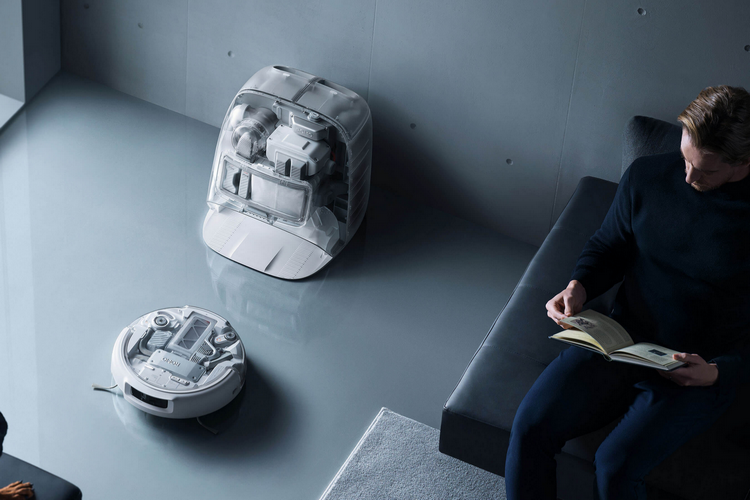
DJI built its name on drones, then branched out into cameras, gimbals and power stations. That growth made sense, because people might use all of those products while shooting footage in the field.
The newest move is a real curveball. DJI is entering the robot vacuum market with the DJI Romo.
A drone maker building a robot vacuum is less of a stretch than it sounds. Both machines rely on cameras, navigation algorithms and obstacle-avoidance tech, just in different places.
How the Romo Spots Obstacles
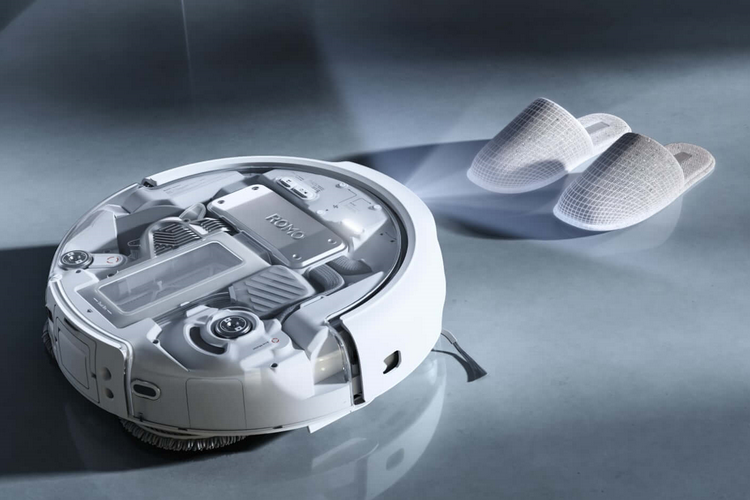
Up front, the Romo carries two fisheye cameras. It also has three wide-angle laser sensors.
DJI uses the readings from these sensors to detect, identify and avoid anything in the robot’s path. According to the company, the system can pick out objects just 2mm in thickness.
That lets it move efficiently around a room, whatever furniture, cables and other clutter lie on the floor. It adjusts its cleaning patterns dynamically in real time.
Dark corners, shiny objects and even see-through surfaces are handled well too.
Different Objects, Different Tactics
The Romo picks a cleaning strategy based on what it detects.
Near wires and furniture legs, it gets as close as possible and cleans around their edges.
With socks or pet droppings, it keeps a safe distance. That way, it will not get stuck or smear the mess around.
When it meets a pile of small particles, such as pet food, it slows its movement and brush speed. Doing so avoids scattering the smaller bits.
Suction and Brushes
Suction power reaches 25,000 Pa, which is among the highest ratings in the category.
Underneath, there are two spinning mop pads and a double roller brush. The mop pads rise up when the robot moves from hard floors to carpet.
A pair of sweeping brushes sits on short robotic arms. The arms extend the brushes’ reach, so corners and edges get a thorough clean.
Dust Bag, Battery and Base Station
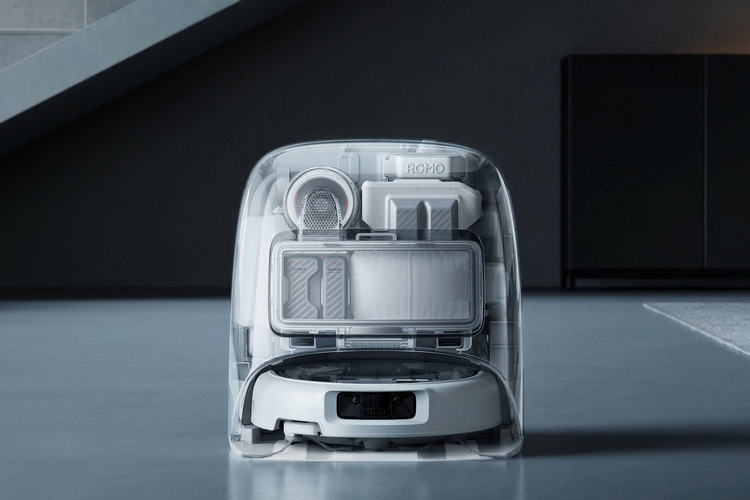
The dust bag holds 2.4 liters, so it takes quite a bit of cleaning to fill it up. The built-in battery runs for up to three hours between charges.
After a cleaning run, the Romo parks itself in a base station. The station charges the robot quickly, with a full charge in 2.5 hours, and it cleans the robot too.
While it cleans the robot, the station collects the dust and scrubs the mop. Silver ion tech and UV light then sterilize the whole unit.
The robot ships with an app that lets you control it remotely, monitor it by video and give voice commands. Video and voice calls are possible as well, if needed.
Three Models: A, S and P
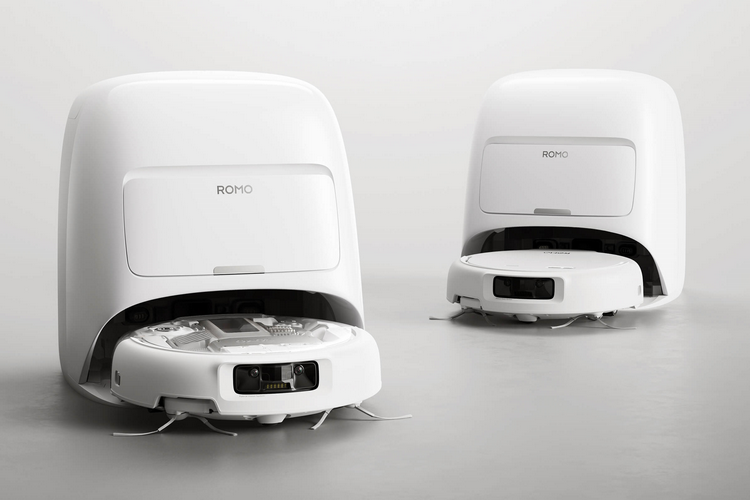
Buyers can choose from three models, called A, S and P.
The S is all white, both the chassis and the base station. The P goes transparent on both.
The A blends the two looks: a white vacuum paired with a transparent base station.

Ethan Brooks
A decade in digital publishing has taught me one major lesson the best articles are the ones that respect your time. I cut straight to the chase with well structured, punchy pieces designed to give you the exact answers you need without the runaround.