
ChoiceQuill is reader-supported. When you buy through links on this page, we may earn a commission. You pay the same price either way.
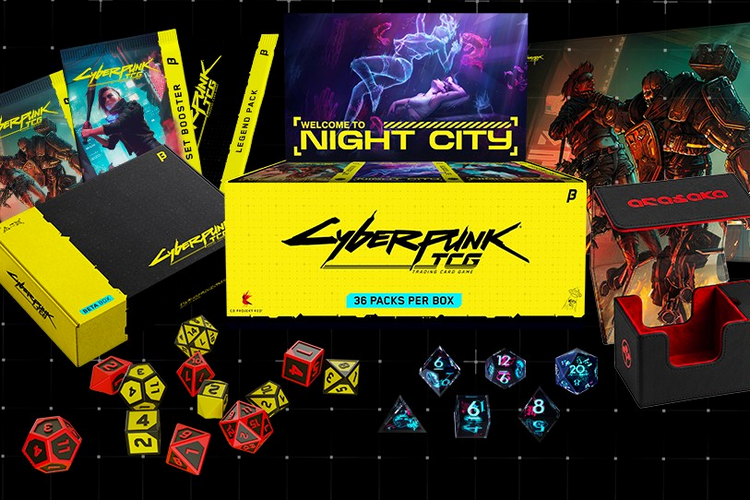
CD Projekt Red’s Cyberpunk franchise had a rocky start. It has since earned a place among the best games of recent memory.
Fans who want more of Night City can also watch the animated series on Netflix. For a more hands-on visit, there is now the Cyberpunk TCG.
Night City Comes to the Tabletop
A trading card game based on Cyberpunk is on the way, and it lets you revisit Night City in a fresh tabletop adventure. It could appeal to fans of the game, fans of the anime and anyone new to trading card games.
On paper, it sounds like it could bring plenty of tabletop fun.
How a Game Works
You play as the leader of a crew, going head to head with a rival crew. Your goal is to become a Night City Legend.
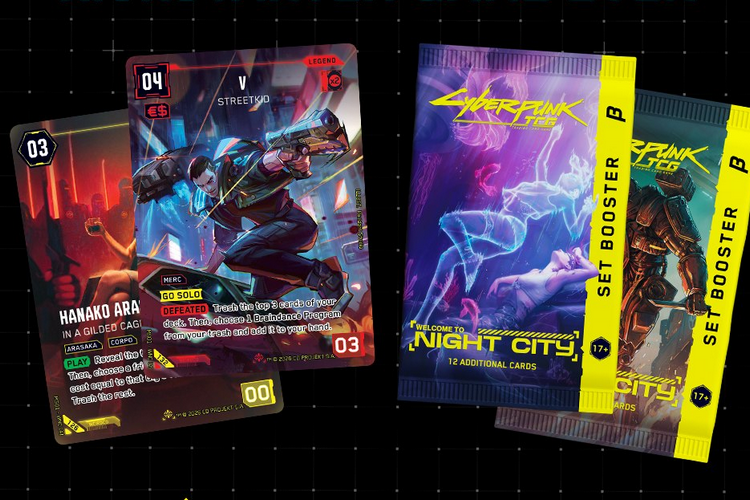
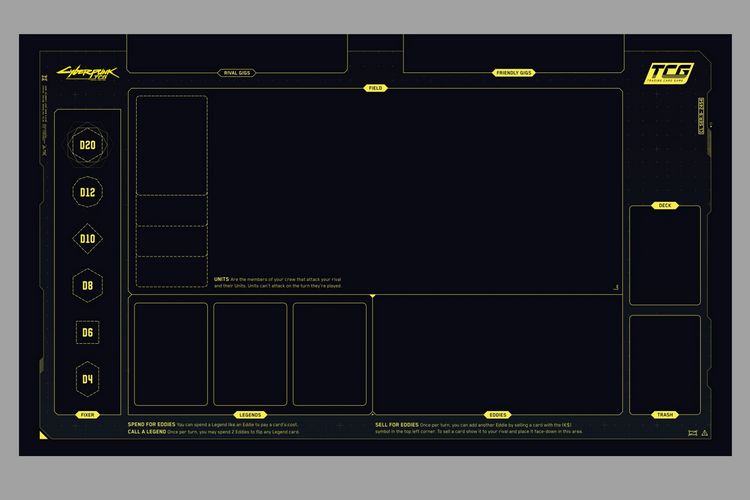
Every match begins with a deck of cards plus six dice. The dice are a d4, d6, d8, d10, d12 and d20.
Rolling a die lets you take on a gig. The number that comes up is the street cred that job earns your crew.
Every die can be used only once per game, and the values add up to build your legend.
Gigs do not have to come from your own rolls. You can also steal a gig from your opponent and collect the value of their die roll.
The first player to complete six gigs wins. That makes every roll matter, both for your own gigs and for the ones you might take from your rival.
The Four Card Types
The deck is made up of Legends, Units, Programs and Gear. Each type plays a different role for your crew.
Legend cards are the leaders of your crew. They sit at the center of any deck, and their abilities largely define its direction and playstyle.
Legends start each game face down in a random order. To use one, you pay two Eddie (short for Eurodollars, for the unfamiliar).
Units are the crew members who attack rival crews. Think of them as the muscle of your outfit.
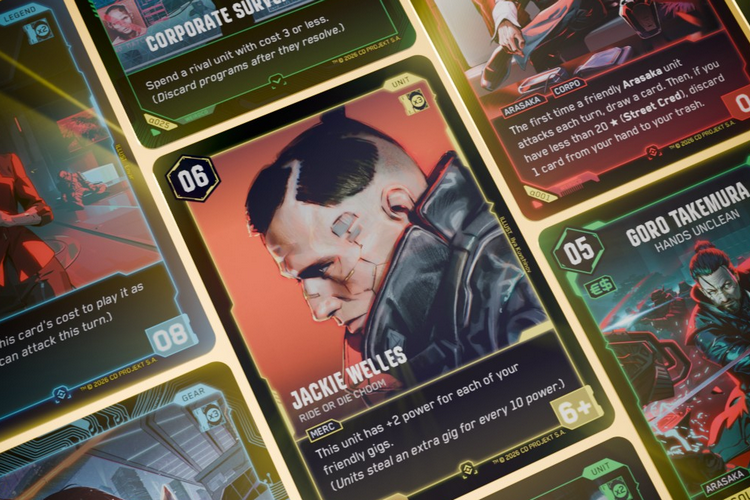
Program cards work like the hacks in the video game. You play one to get the result you want, then discard it. Programs can be played on any turn, so think of them as one-shot hacks.
Gear cards give your crew special advantages. These can be a weapon or a cyberware upgrade, much like the ones you can pick up in the video game.
Each piece of gear costs Eddies to use.
Other details also shape every turn, including timing triggers and keywords. That covers the basics of how everything fits together.
Short Rounds and Quick Play
Every round revolves around pulling off a gig, so rounds end quickly. The company behind the game says a round takes about seven turns.
If a game is still tied after that, it goes into overtime. The first player to land an extra gig die wins.
That speed makes the game easy to play. It may also feel less immersive than games like Magic Arena, which can run around 45 minutes.

Olivia Vance
Believing that a great blog post should feel like an ongoing conversation rather than a lecture shapes everything I write. I lose track of time digging into the finer details of a topic just to ensure you leave the page with a fresh, reliable perspective.