Screen protectors all make the same promises: hard glass, an easy install and no bubbles. Those phrases only help once you know what sits behind them. This guide walks through what to look for, using AACL as the example.
AACL is a brand that concentrates on screen protection. Its range stretches across Samsung Galaxy phones, Google Pixel models, tablets and a gaming console, which makes it a handy lens for the whole buying process.
Everything below comes from the brand’s own product details and one independent review roundup, not from a test bench of my own. Where something is AACL’s claim, the text says so.
Pick the Right Material First
AACL sells four kinds of protection, and each is aimed at a different kind of screen. Settling the material first narrows the field faster than any other choice.
- Flat or gently curved flagship: tempered glass, which is what the Galaxy S26 Ultra pack uses.
- Foldable: PET or TPU film, because rigid glass has trouble with a fold.
- Older phone with strongly curved edges: soft glass, since full glass can lift at the edges there.
The detail behind each of those matches is below.
Tempered glass
Tempered glass is ordinary glass that has been heat-treated. The point of the treatment is how it fails: pushed past its limit, it is meant to crumble into small, dull fragments and not sharp splinters.
Think of 9H as a hardness grade. AACL’s glass listings carry it, and it sits near the ceiling for everyday protectors, with only sapphire going higher. The brand pitches it at pocket hazards such as keys and coins.
PET film
PET, short for polyethylene terephthalate, is a thin plastic that bends where rigid glass might crack. That makes it a fit for curved and folding screens. Scratch resistance is the price, since it falls short of glass.
TPU film
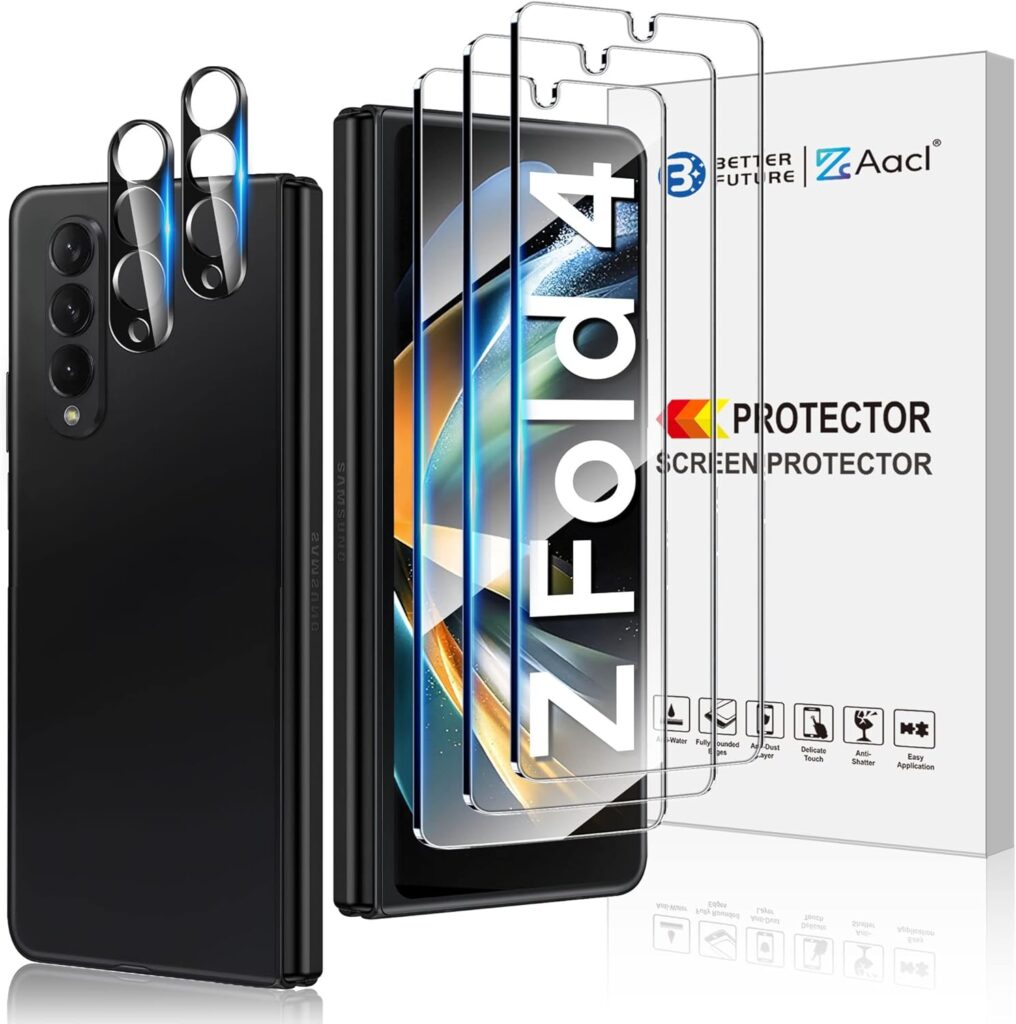
TPU, short for thermoplastic polyurethane, goes a step beyond PET in flexibility. It is described as self-healing, meaning light surface scratches are said to fade over time. Foldables such as the Z Fold family are its usual home, since their screens bend again and again.
Soft glass
Soft glass is the in-between option, a thinner and more bendable glass composite. It keeps more of glass’s clarity and touch feel than film does, yet it still flexes enough for curved-edge displays. On hardness it lands between the films and full tempered glass.
Think about how the phone lives, too. A pocket shared with keys and coins is a rougher home than a desk, so weigh that before you settle on one of the softer materials.
Match the Exact Phone Model
Take the Galaxy S26 Ultra pack as an example. It is the wrong choice for the standard S26 or the S26 Plus, and the same goes for an S22 Ultra protector on an S22 Plus. Each protector is cut for a single model, because curve depth and camera cutout position differ even between phones from one generation.
This check matters more than any other in the guide, and the range makes a slip easy. AACL covers the S and Note ranges from Samsung, reaching back to the S10, plus the Ultra line through several generations up to the S26 Ultra, the Z Fold family and Galaxy tablets. Pixel phones from the 6 series to the 10 series, Fire tablets and Nintendo Switch consoles are covered as well.
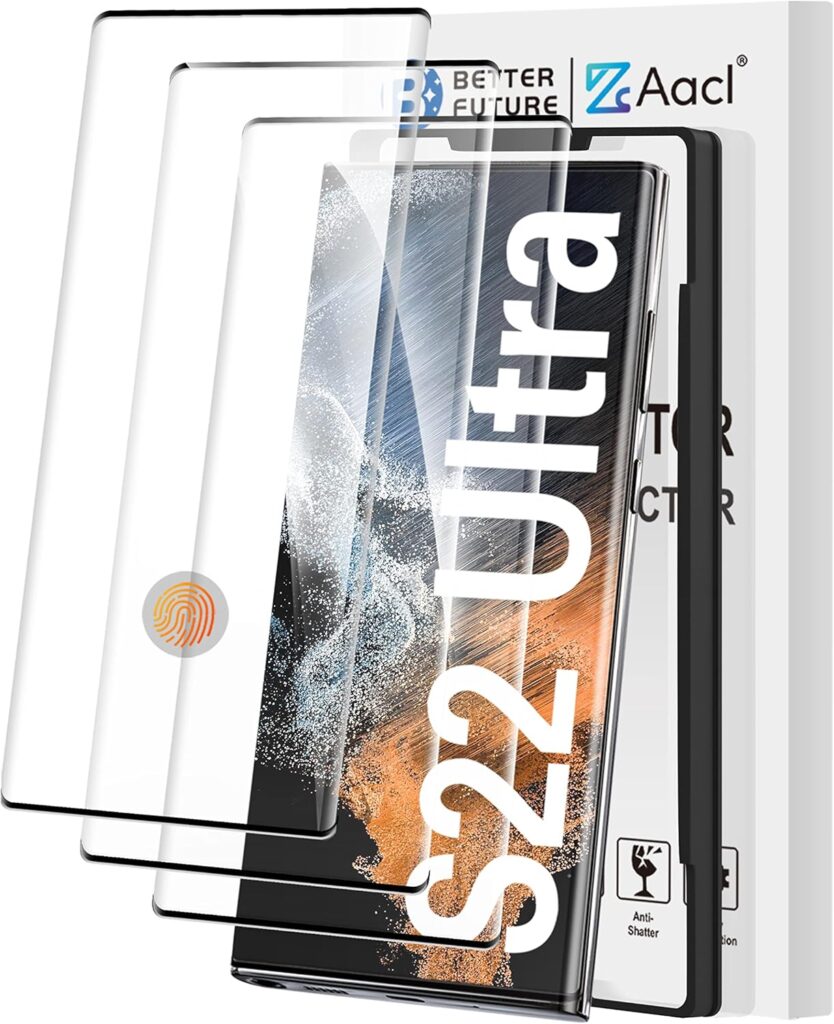
Some phones get two options from AACL. A 3D curved cut follows the display edge closely, while a simpler, non-curved cut matches the very edge a little less precisely.
Before ordering, put the full listing name next to the model name in your phone’s settings. If the two differ at all, keep looking.
Check Your Case Before You Buy
The glass is deliberately a touch smaller than the display. AACL’s stated reasoning is that a thin border of screen stays bare so a case rim sits beside the glass and does not catch on it.
That cut suits slim cases. Heavy-duty cases are the open question, since a tall, raised lip can press against the glass edge. An independent roundup reported that thicker cases do not always sit well with the Galaxy S26 Ultra pack.
Look at the inside lip of your own case and picture it meeting the glass border. The product photos on a listing help here. If you want coverage that runs right to the edge, this style of cut is not the one for you.
How the Alignment Tray Works
Placing glass by hand on a big curved display leaves plenty of room for error. Edges that curve away from your finger can trap air, and a shifted tray can leave the glass slightly off-center. AACL’s answer is an alignment tray that holds the glass at a set position above the screen, so the placement is decided before your fingers get involved.
The steps that follow are short. You peel off a backing sticker and let the glass settle onto the screen.
The brand puts the tray’s first-try success rate at 99.99%, which is a marketing claim. The outside check comes from an independent roundup of Galaxy S26 Ultra protectors, which called the AACL install quick and bubble-free.
A typical pack gives you three sheets, with one waiting in the tray and two in reserve. If you want the S26 Ultra pack picked apart in detail, here is our full verdict on the AACL Galaxy S26 Ultra screen protector.
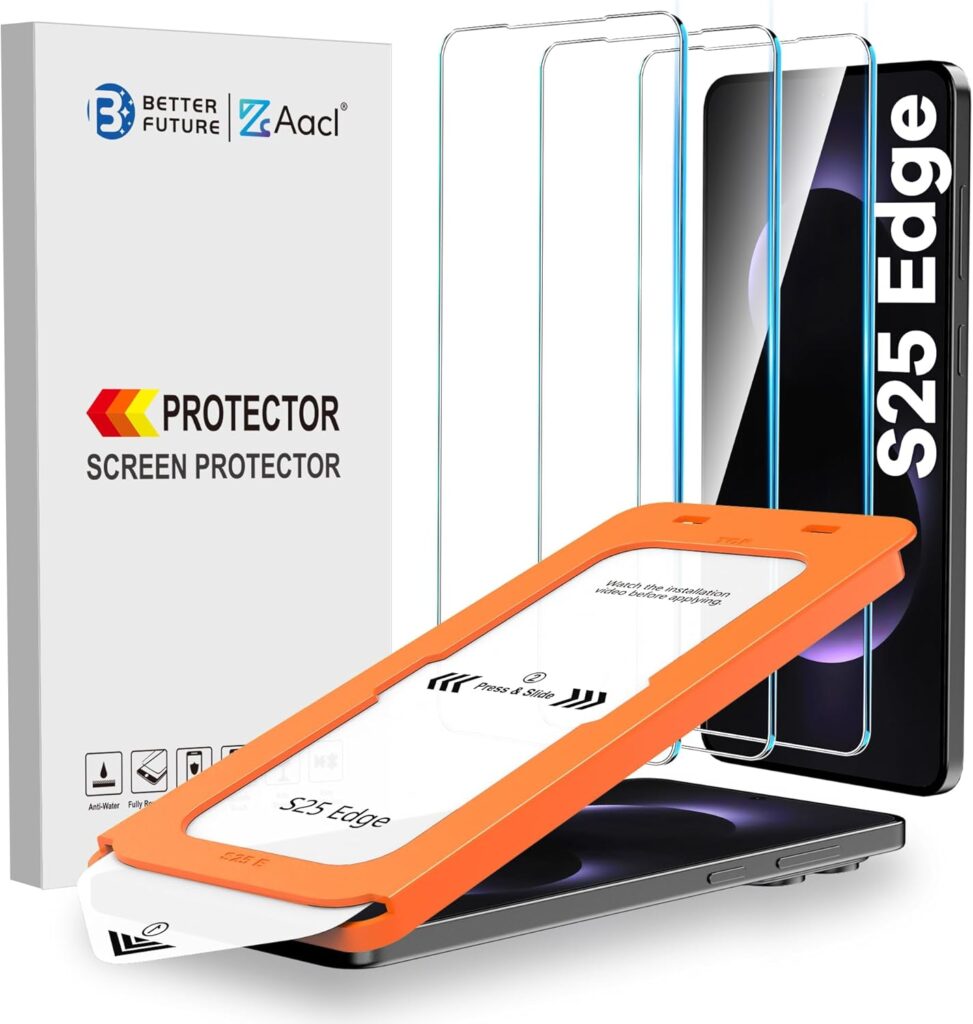
A tray cannot fix everything. Dust, a poorly judged placement or pressing from a single corner can still trap air, which is why the install habits further down matter.
Extras Worth Considering
Camera lens protectors
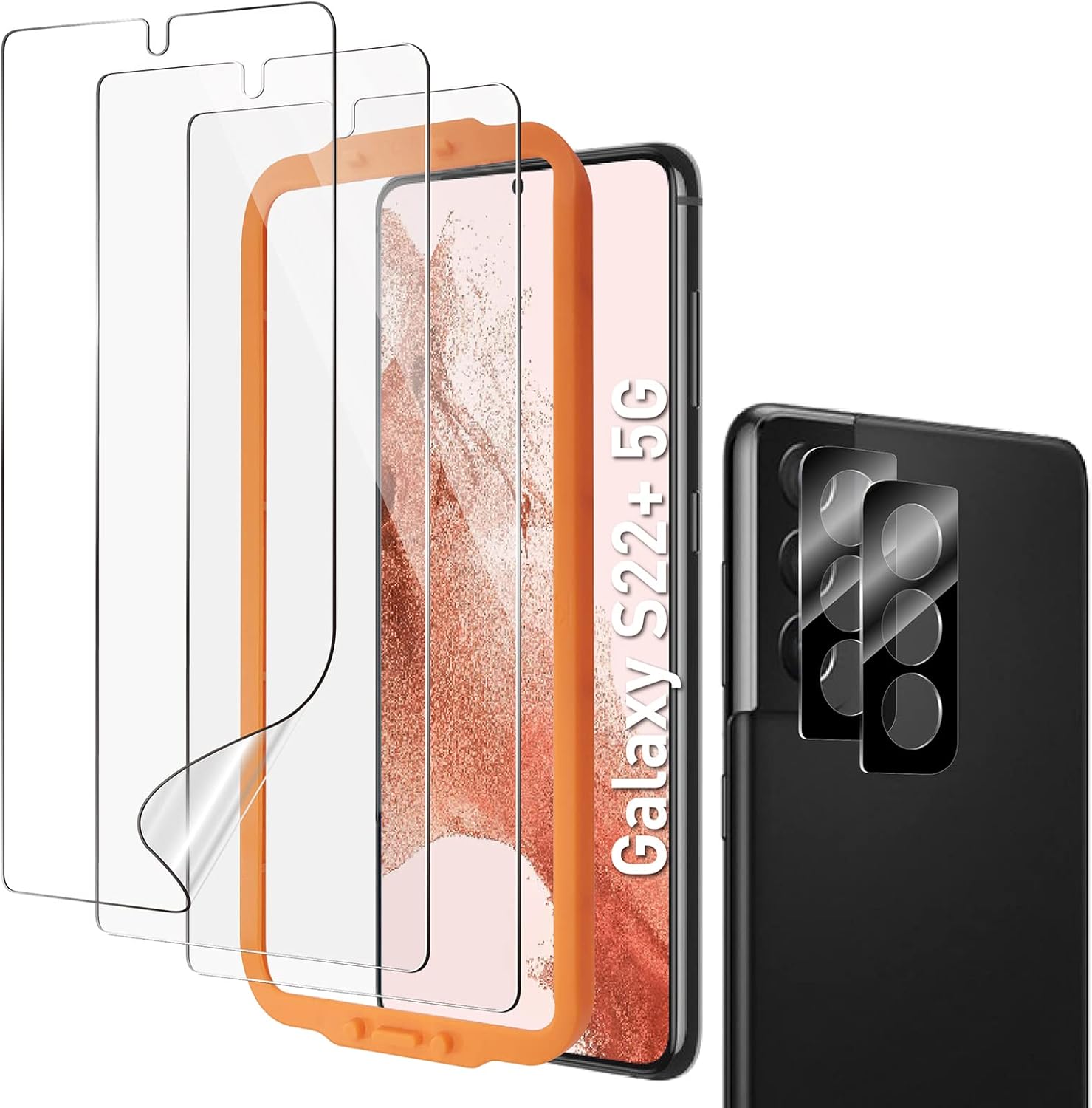
A few AACL listings, such as the earlier S22 and S24 Plus versions, add a camera lens protector to the box. That extra matters most on phones whose camera module stands proud of the back panel, the Plus models for example, because a raised lens is the part that meets the table first.
The standard Galaxy S26 Ultra pack covers the screen only, so check the listing for your model if a lens set matters.
Fingerprint sensor support
AACL markets certain listings as compatible with the in-display fingerprint sensor, and the S22 Ultra three-pack is one of them. If you unlock your phone through the screen, look for that claim on the page for your exact model.
Pack size
Packs of two or three are AACL’s usual format, not single sheets. A spare earns its keep the first time dust spoils an install or a corner chips, because you can swap at once and skip the wait for a replacement order.
Installing Without Trapped Bubbles
Even with a tray, a few habits decide whether the result is clean. These are the slips to avoid, along with the fix for each.
- Working in moving air. Floating dust causes more trapped bubbles than the tray ever will, so choose a spot away from fans and vents.
- Pressing from one corner. It is the classic way to trap an air pocket. Ease the backing sticker away gradually and let the glass lower itself instead.
- Skipping the clean. Wash and dry your hands, wipe the display with the cleaning wipe from the pack, and leave it a few seconds to dry before you open the tray.
- Rushing the tray. Hold it against the phone’s edges or camera cutout first, and look all the way round for gaps before you touch the sticker.
- Leaving the air in. Once the glass is down, push air outward with the squeegee or a soft cloth, working from the middle to the nearest edge.
Judge any bubble that remains by where it sits. One near the rim often works itself out over a few hours while the adhesive settles. One in the middle of the display will not, so deal with it straight away.
Fixing a stubborn bubble means starting the install over. Peel the glass back gently from one edge, wipe the screen and the back of the glass again, and set it down through the tray a second time. Scraping at the bubble with a card or a fingernail only risks marking the coating, and the spare protectors in the pack are there for exactly this situation.
Care, Cleaning and Replacement
Cleaning goes wrong mostly through the choice of supplies. A microfiber cloth, used dry or lightly damp, is the safe option. Paper towels are a poor choice because they can leave fine marks on the oleophobic coating over time.
Strong cleaners deserve the same caution. Alcohol-based products wear the coating faster than water does, so plain water or a spray made for phone screens is the better route.
Two signs say a protector is due for replacement. The first is touch response. Taps that feel duller after months of use more likely point to a worn coating than to failing glass. The second is damage. A hairline crack in a corner after a drop can wait, but one that creeps toward the middle of the display or catches your finger cannot.
Tempered glass is designed to take the knock so your screen does not have to, and a cracked sheet does that job less well. Once the damage spreads, switch to a spare. Keep the spares flat and clean, in the original box for example, so they are ready when you need them.
AACL’s Background and Ailun
The brand’s own site dates AACL to 2012 and gives the founding idea as design: a protector ought to be thoughtfully made, not merely functional.
That idea shows in how the range is built. Each phone gets its own line, tuned to that model’s screen curve, camera opening and case clearance, in place of a single glass sheet sold for every device.
The company has also stayed narrow. Screen protection is the whole focus, with no side trips into cases or chargers. It calls itself user-oriented and says customer suggestions feed into refinements of its products.
Ailun sells a comparable pack for the Galaxy S26 Ultra. It was founded in 2014 as Ailun Technology Co. Limited, a broader accessory brand with iPhone and Samsung lines among others, and Amazon is its main sales channel.
Set side by side, the packs differ in a few details. Ailun’s listing adds two camera lens protectors, describes a 0.25mm profile with fingerprint-unlock compatibility, and fits the Ultra only. AACL’s pack is screen-only at 0.26mm. To see what AACL itself offers, browse AACL’s storefront on Amazon.
Buying a Genuine AACL Protector
Look-alike listings that borrow a known brand’s name are a risk in any busy online category, and screen protectors are no exception. A few habits keep you on the real thing.
The seller is the first thing to check. AACL runs its own storefront, so use AACL’s storefront on Amazon and confirm that the seller shown is AACL and not a generic name. The brand also has its own site at aacl.vip.
Next, read the whole title and look at the packaging photos, not only the thumbnail. A genuine listing names AACL and your exact phone model, and the branded alignment tray is part of the product. These are reasons to be wary of a listing:
- A short or vague title.
- AACL’s photos paired with a different brand name in the title.
- A plain glass sheet with no tray in the pictures.
- A tray that looks different from one photo to the next.
Once the pack arrives, compare it with the official photos. A different tray, glass that feels clearly off from the stated 0.26mm, or packaging with no AACL branding are all worth raising with AACL at [email protected] before you decide the unit is simply faulty.
Warranty and returns
The brand’s site refers to a “Lifetime Warranty Project”, yet it gives no published terms for coverage, duration or conditions. Read that as an unknown, not as a guarantee.
Where you buy matters here. A purchase from an unauthorized reseller is one the brand cannot trace, which puts any warranty claim in doubt. Hold on to your order confirmation in every case, because it is your proof of purchase.
Returns on Amazon purchases fall under Amazon’s standard terms. Check the listing and the checkout page for the window and any exceptions before you order.
Frequently Asked Questions
When was AACL founded?
In 2012, according to the brand’s own site. Screen protection has been its focus ever since.
What materials does AACL use?
It uses four protection types: tempered glass, two plastic films (PET and TPU) and soft glass. The material section above explains which suits which phone.
What devices does AACL cover?
Mostly Samsung: Galaxy S and Note models going back to the S10 era, plus Z Fold models and Galaxy tablets. It also makes protectors for Pixel phones, Fire tablets and the Switch.
Is there an AACL protector for the Galaxy S26 Ultra?
There is: a trio of 9H tempered glass protectors, supplied with an alignment tray and sold through the brand’s storefront.
What does 9H mean?
It is a hardness grade, and 9H sits close to the ceiling for everyday consumer protectors. AACL pitches it as suited to keys and coins carried in a pocket.
Does the glass cover the entire screen?
No. The glass stops a little short of the display edge by design, leaving a thin bare border. AACL says this gives case rims room.
Will it work with a rugged case?
It might not sit ideally. Cases with a tall, raised lip can press against the glass edge, so test the fit first.
How many protectors are in a typical pack?
Three is the usual count, with one loaded in the alignment tray and the other two as reserves.
Do any listings support the fingerprint sensor?
Some do. AACL markets the S22 Ultra three-pack that way, for example, so read the page for your exact phone.
What is the best way to avoid bubbles?
Dust control matters most, so pick a still room and clean the screen first. After that, trust the tray for placement and sweep the air out from the middle.