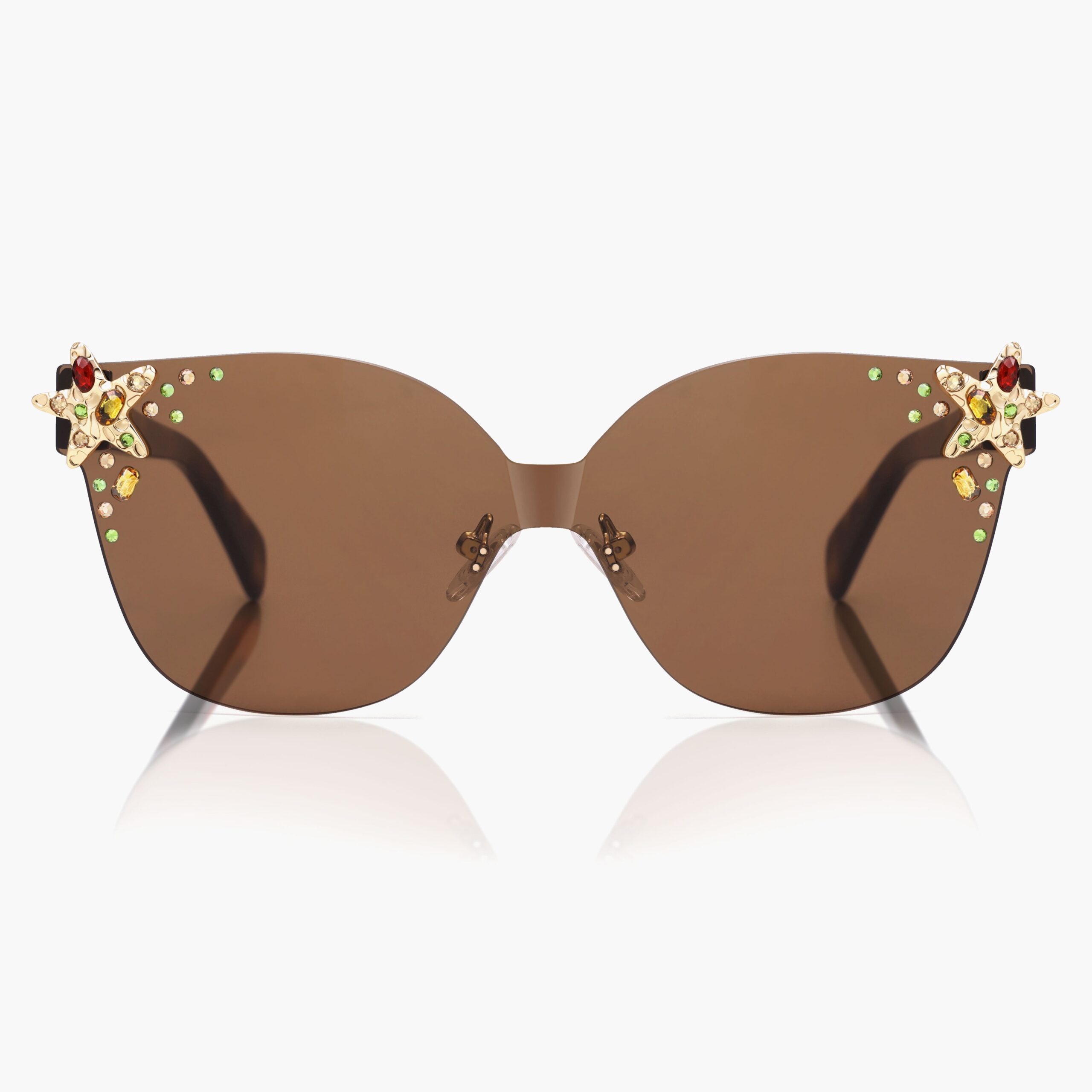
SOJOS carries a wide catalog, and it shifts with the seasons. That is great once you know what you want and a little dizzying if you do not. Eight shapes, four frame materials, a handful of lens features and a wide price spread can turn a quick sunglasses search into an evening of open tabs.
This guide sorts it out in plain English. It covers where the brand comes from, what it sells, how to match a frame to your face, what the material and lens terms mean, how the price tiers work, how SOJOS compares with Zenni Optical, where to buy, and what the shipping, return and warranty rules say.
It is built from the brand’s published product details, policies and history. When a detail is the brand’s own claim, the guide says so. When the sources go quiet, it does not guess.
Who Is Behind SOJOS
SOJOS began operating in 2011, but not under its own name. Its first work was preparing eyewear for businesses in Europe and the United States, so the production and sourcing side of the company existed before any consumer label did.
Its trademark carries the company name Wenzhou JT Sojos Imp. & Exp. Co., Ltd, which points to the same export and manufacturing background.
A consumer storefront under the SOJOS Vision name followed in 2015, and the brand’s own website arrived in 2019. The company is based in Chino Hills, California, and offers sun, prescription and blue light eyewear through its own online store.
The brand describes its mission as crafting accessible, vibrant and inspiring styles for meaningful moments. In practice that shows up as trend-forward shapes and seasonal collections, with most sunglasses priced at about $30 to $50 and the premium collaboration pieces reaching about $150.
What SOJOS Sells
You will find sunglasses for women, men and children, along with prescription eyeglasses, reading glasses and blue light pairs. Parents shopping for a child can browse the kids’ sunglasses in the same catalog as the adult styles.
Shape options include round, square, oval, rectangle, aviator, cat eye, polygon and oversized styles. Collections rotate by season. The lineup the brand lists includes Tropic, Coral Bloom, Ocean, Lumina, which is its premium acetate line, and the SOJOS x Oceanus collaboration. The brand’s site also has a page it calls Best Sellers, which can serve as a quick starting point.
One practical note: collections come and go. Some styles are retired for production reasons, according to the brand, so a pair you loved a while back may no longer be listed. Customer service is the contact for tracking down a past model.
To see what is in the range, browse the catalog on SOJOS’s own store, where each product page carries a sizing and material guide under Details.
Choosing a Frame Shape for Your Face
Shape is the fastest way to narrow the field. The usual styling logic is to pick a frame that contrasts with your face rather than repeating it, so it helps to start from the frame shapes and ask which face each one suits.
- Square and rectangle frames: they give a round or oval face some contrast.
- Round and oval frames: they take the edge off a square or angular jawline. Aria and Lustre are two oval styles to look at.
- Cat-eye and aviator frames: they even out a heart-shaped face, with its wider forehead and narrower chin.
- Oversized and polygon frames: they add visual width to a long or narrow face.
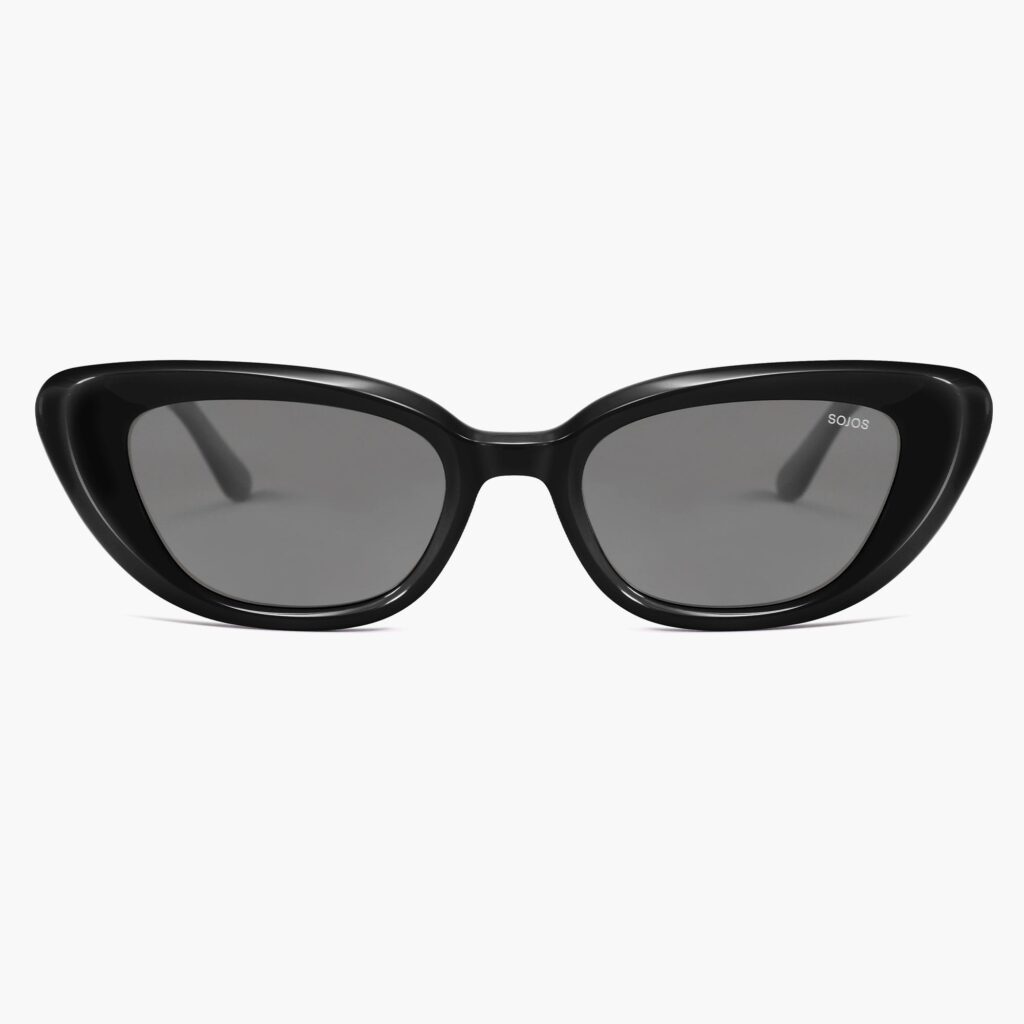
Size matters as much as shape. Cat-eye and oversized frames read larger on the face than round or square ones with identical measurements, so compare the listed frame width with a pair you already wear. The sizing details sit on each product page.
A simple try-on habit helps too. If you can, look at yourself in daylight rather than under shop lights, and check that the temples sit comfortably behind your ears for a full day of wear.
Materials and Lens Types Explained
Frame materials
Four materials do most of the work across the lineup, and one frame often blends two of them.
- Acetate: a plant-based plastic known for deep color and a slightly heavier, more premium feel. It runs through the Lumina line and appears in hybrids such as metal-core acetate temples.
- TR90: a flexible, lightweight, nylon-based polymer that bends more easily than acetate. It is the material to look at for sport or all-day wear.
- Plastic: the budget material, found on the cheapest styles such as several Ocean Collection frames at about $30.
- Metal: appears in temples, hinges and internal cores, and sometimes backs up acetate for added hold.

Lens features
UV400 is the baseline across nearly the whole sunglasses line. The label refers to light up to 400 nanometers, and it is the protection level the brand lists on its sunglasses.
Polarized lenses target glare, the harsh shine that bounces off water, wet roads and windshields. Because only some SOJOS styles are polarized, read each product page before you decide.
Blue light filtering is its own feature, meant for screen time instead of sun. The brand mostly puts it on eyeglasses and reading glasses.
Putting it together
Planning to drive a lot or spend time by the water? Pair polarized UV400 lenses with a TR90 or acetate frame. If budget is the priority, a plastic frame with UV400 lenses covers the basics. If your day is mostly spent at a screen, shop the blue light eyeglasses and skip the sunglasses section.
Price Tiers and Example Styles
SOJOS splits into three bands. Casual Ocean Collection styles in plastic and metal sit at about $30. Next comes the core lineup at about $50, where acetate construction and finer detailing appear. At the top, the SOJOS x Oceanus collaboration reaches about $150 for premium acetate frames.
A simple rule of thumb: lose or scratch sunglasses often, and the lower two bands make sense. If one pair does daily duty, the premium band is easier to justify.

A few styles the brand lists give the tiers some shape.
- Staghorn Coral (Coral Bloom): a metal-and-acetate cat-eye with UV400 lenses, about $50.
- Daybreak: a core-tier style at about $50.
- Lustre (Tropic Collection): an oval built in premium metal with UV400 protection, about $50.
- Reign: about $40, between the Ocean tier and the standard tier.
- Apex RX: a prescription-ready frame from about $30 before lens upgrades.
- SJ2610 RX: the higher-priced prescription option, from about $70.
- SJ2390 value pack: three pairs sold under the brand’s buy-more-save-more program. Check the current price at SOJOS.
For one style in detail, read our full verdict on the SOJOS Staghorn Coral, which walks through its measurements, lenses and return rules.
SOJOS Compared With Zenni Optical
Zenni Optical is another online eyewear seller that targets budget-minded shoppers. The two are built on different products, so the headline prices tell only part of the story.
Start with the range. Zenni is the far larger catalog, with more than 2,000 frame styles, support for progressive and bifocal lenses, and contact lenses on top. That suits someone shopping mainly for a prescription. SOJOS leans toward seasonal, trend-driven sunglasses, with rotating collections and a smaller but growing prescription line.
Prices follow the same split. Zenni’s most basic frames start around $7, and most complete pairs end up near $75 once lens upgrades such as a blue light coating are added. SOJOS sunglasses mostly run about $30 to $50, and its prescription frames begin near $30 and reach about $70 for the RX styles. Zenni has the lowest floor for basic prescription glasses, while SOJOS pricing is steadier across a narrower, more curated range.
The backgrounds differ too. Zenni started in 2003 under the name 19dollareyeglasses.com, later rebranded, and is based in Novato, California. It ships to more than 80 countries and has sold more than 25 million pairs. SOJOS began in 2011 as a supplier to other eyewear businesses and launched its own website in 2019.
Which to pick depends on the job. For the cheapest prescription pair and a huge library to browse, Zenni’s scale is hard to match. For trend-led sunglasses from a tighter selection, SOJOS is the better fit. Nothing stops you from using both, with Zenni for everyday prescription glasses and SOJOS for sun.
Where to Buy Real SOJOS Frames
Where you buy affects your return rights and sometimes what you pay. Buying from SOJOS’s own store gets you the full catalog and the brand’s stated return window on eligible non-prescription items.
If you buy anywhere other than SOJOS’s own site, make sure the listing names SOJOS or SOJOS Vision as the seller. Look-alike frames can appear under confusingly similar names, so check the seller before you pay.
An unofficial reseller may charge more than the brand’s listed price and may not honor SOJOS’s return or warranty terms. Buying from the brand, or from a listing you have confirmed is the brand’s, keeps those protections in place.
A few habits help you avoid overpaying.
- Combine items into one order that clears the free-shipping threshold instead of paying shipping on two small ones.
- Compare a value pack with buying several single pairs, since the cost per pair drops in a pack.
- Read the return rules before buying a marked-down item, because sale items are excluded from returns.
Shipping, Returns and Warranty
Getting it to you
Free standard shipping applies automatically to orders above $35, with no code needed. The brand’s estimates are 10 to 15 business days for free or standard orders, as for international parcels, and 5 to 10 with Business Express. Stock can sit in more than one warehouse, so a single order may be split into separate packages.
If you change your mind
You have 30 days from the day the order arrives, and only non-prescription products qualify. Send the item back unworn and in its full original packaging, and attach one product photo to the request. Two costs stay with you: the original shipping charge is not refunded, and the postage for sending the item back is yours. Anything bought on sale or from the sale page cannot be returned or exchanged at all. When the parcel reaches the SOJOS warehouse, the refund is processed within 1 to 3 business days.
If you order prescription lenses
Prescription lenses cannot be returned or exchanged. The single exception is a free lens redo, available once, when the prescription changes inside the first 60 days after ordering. Depending on the lenses, making up a prescription frame takes roughly 3 to 15 business days, and the online prescription service is not offered once a frame-only purchase is complete.
If something is defective
The standard warranty lasts one year on defective products, with 3 extra months for rewards program members, and orders older than a year are not eligible. Loose screws and nose pads are not sent out by SOJOS, so repair questions go through customer service.
Caring for Your Frames
Wear on sunglasses usually builds up over months instead of arriving in one accident. The brand’s care notes focus on four things: heat, oil and moisture, the wrong cleaner, and careless storage.
Heat and acetate
Acetate is the heat-sensitive material in the lineup. The brand’s notes say long stretches in direct sun or on a hot dashboard can warp the frame over time, so a shaded, cool spot is the better home for an acetate pair. An occasional wipe with microfiber stops the surface from clouding.
Oil, sweat and moisture on metal
After long contact with oil or moisture, metal parts can show plating corrosion or peeling. If you often rest your sunglasses on oily hair or skin, that applies to you. Wipe metal gently and keep it somewhere dry, not in a damp bag or a beach tote.
Cleaning the lenses
The brand warns that alkaline substances can harm lenses, so soap or detergent with alkaline ingredients should stay away from them. A microfiber cloth and light pressure do the job. Rough fabric or heavy pressure can scratch coatings and even bend the frame slightly around the lens.
Storage habits
- In the case: put a microfiber wrap around the glasses first, so the lens never rests on a hard lining.
- In the car: take them with you, because interior heat can deform acetate.
- After the beach or pool: dry the frame straight away, so salt water and chlorine do not linger on the metal.
If a pair fails despite sensible care, the one-year warranty may cover a defect. Ordinary wear is a separate matter, so read the terms above before counting on it.
Frequently Asked Questions
What is SOJOS?
An eyewear brand that sells sunglasses, prescription glasses, blue light glasses and readers, including through its own online store.
Where should I start?
Pick a shape that suits your face, decide between plain UV400 and polarized lenses, and choose a price tier that matches how hard you are on sunglasses. When you are ready to compare real frames, browse the range at SOJOS and keep the return rules above in mind.
Can I add prescription lenses after buying only the frame?
No. The service cannot be added once a frame-only order is complete, so pick the Buy with RX lenses option during checkout if the frame offers it.
How long does prescription frame processing take?
Roughly 3 to 15 business days, with the lens type deciding where in that range an order lands.
Why did my order arrive in more than one package?
Different items can leave from different warehouses, depending on what is in stock, so they may reach you in separate boxes.
Can SOJOS mail me a spare screw or nose pad?
Not directly. SOJOS does not send out small parts like these, so ask customer service which repair options exist.
A style I owned has vanished from the site. Why?
Styles come and go. SOJOS pulls some from the catalog for production reasons, and customer service is the contact for tracking down an earlier model.
Do SOJOS gift cards expire?
No. The brand states that gift cards stay valid indefinitely and carry no purchase restrictions.
Where do I find sizing and material details for one pair?
Look under Details on the product page, where SOJOS keeps its sizing and material guide.