Smartravel builds fat-tire electric bikes, and its catalog can feel like a maze on a first visit. Eight product names compete for attention, many with overlapping numbers, and the real differences sit in details such as battery size, motor layout and one distinguishing feature.
This guide sorts it out. It covers who the brand is, how the models differ, what the spec sheet terms mean, how to match a bike to your route, how it stacks up against a rival, how to look after the battery and what the returns and warranty policies say.
It is built from the brand’s published specs and policies, plus owner feedback with its source named. Where the brand does not publish something, the guide says so instead of guessing.
Who Smartravel Is
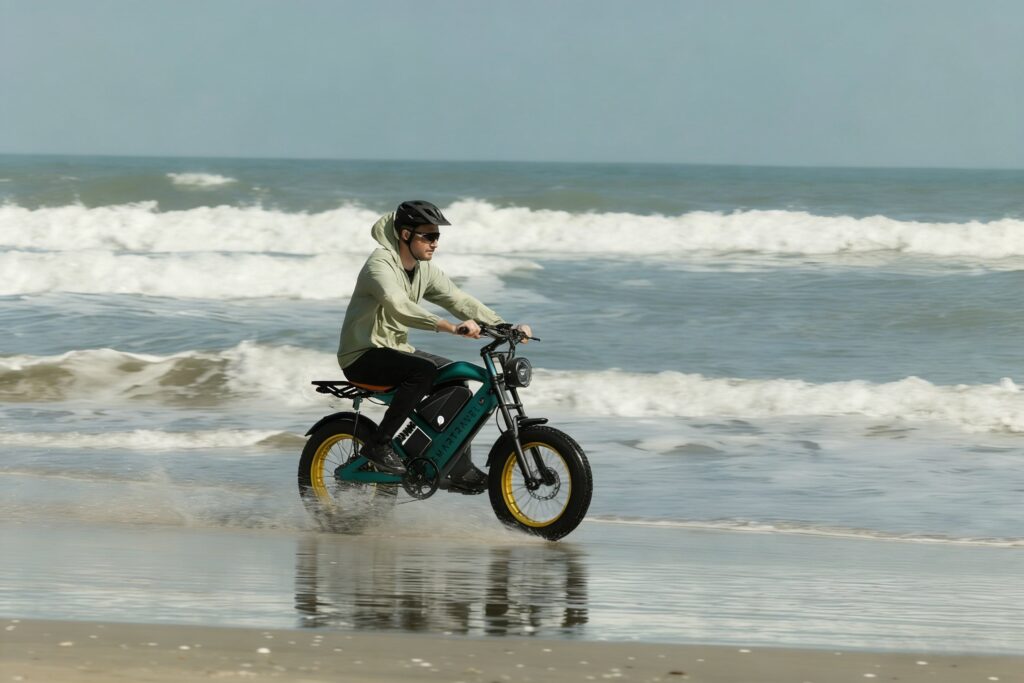
Smartravel is a direct-to-consumer brand, and its own online store, Smartravelor, is where this guide points. The range spans fat-tire e-bikes in moped and mountain styles, an off-road electric dirt bike and electric tricycles.
On its own pages the brand talks about bringing some joy to everyday routines through electric bikes and new technology, and about becoming a leader in reliable, eco-friendly transport. Mission statements like that say little about a product, so the certification claim below is the more useful detail.
The brand states that its bikes hold TUV certification to UL 2849, which deals with e-bike electrical and battery systems. That is the brand’s own statement. Because it names a specific standard, a buyer can look it up, and a listing that cites UL or TUV without naming one deserves a second look.
For history, the brand’s site offers a City of Industry, California address and support contact details, but no founding year, founder or team size. With none of that verified, this guide skips the origin story, and any founding tale you read elsewhere deserves caution.
The brand’s review pages add a little context. The flagship model shows about 30 reviews on the site, and some other product pages in the store show hundreds. A few reviewers there mention distances from a couple of hundred miles to more than 500.
The Lineup at a Glance
Here are the core numbers for every model in one place. Speeds and ranges are the brand’s claims. Prices are left out because they change, so check the current price at Smartravelor before you decide.
| Model | Claimed range | Battery | Motor | Claimed top speed |
|---|---|---|---|---|
| Explorer DK400 | 45+ miles | 48V 18.2Ah | 1000W | 28 mph |
| Raptor ST202 | 60 miles | 48V 27Ah | 1500W peak | 32 mph |
| Raptor ST202 Pro | 80 miles | 52V 50Ah | 3000W dual motor | 35 mph |
| Rocket ST201F | 60 miles | 48V 25.6Ah | 1500W | 32 mph |
| Rocket ST201F Pro | 70 miles | 52V 29Ah | 3000W dual motor | 35 mph |
| M21 and M22 | 45+ miles | 48V 18.2Ah | 1000W | 20 mph |
| ZonMen M23 dirt bike | 65 miles | 60V 30Ah | 6500W | 50 mph in sport mode |
The M21 and M22 look and ride like a classic mountain e-bike and are held to a lower top speed, which suits short, relaxed outings. The Raptor and Rocket bikes belong to the moped-style group: bigger frames, higher speeds and fat tires for roads and light trails. That style gap is the first of two splits in the table.
Tier is the second. Each moped-style family comes in Standard and Pro versions, and the Pro step means dual motors totaling 3000W, a larger battery, a longer claimed range and a claimed 35 mph.
Set the ZonMen aside when comparing the rest. Its badge differs from the Smartravel-branded bikes, it targets off-road riding and it lists a 6500W motor with a 50 mph sport mode, so measuring it against a Raptor or Rocket for road use mixes two different kinds of bike.
One more detail sets the Raptor ST202 apart. Of the bikes covered here, only this one offers GPS tracking, geofence alerts and an anti-theft alarm in the brand’s app.
How to Match a Model to Your Ride
Terrain and spending limit decide most of this choice. Terrain narrows the field faster, so start there.
Hills and long daily rides
Steep routes and heavy daily mileage are what the Pro tier is for. The Raptor ST202 Pro and the Rocket ST201F Pro each carry dual motors totaling 3000W and claim 80 and 70 miles. Owner threads describe weaker climbing on the standard Raptor, so the extra motor power is worth weighing if your route goes uphill.
Heavier riders and cargo
The Raptor ST202 carries a 350 lb rating, one of the higher ones in the range. Reviews on the brand’s site include riders above 300 lbs who report that it handles their weight. Close to that figure, the Raptor and Rocket families make more sense than the lighter M21 and M22 frames.
Power plus tracking
The Raptor ST202 combines a 1500W peak motor, a claimed 32 mph and a claimed 60 mile range with the app tracking covered earlier. It is the model examined in depth on this site, and you can read our full verdict on the Smartravel Raptor ST202.
Short, flat commutes
For a short, flat ride that does not need moped-level power, the M21 and M22 fit best. Both are limited to 20 mph and claim more than 45 miles, so the choice between them comes down to looks.
A first e-bike on a budget
The Explorer DK400 is the brand’s entry-level bike, with a 1000W motor and a claimed range above 45 miles. The 30-day trial and 12-month warranty apply to it just as they do across the range, which keeps the commitment low.
Off-road riding
The ZonMen is the one to consider only if off-road riding is the goal. It is not designed for commuting.
Before ordering any of them, think about where the bike will live. A removable battery can come indoors, but the frame itself is heavy. The Raptor ST202 weighs 113.9 lbs, so picture the steps, hallways and parking space you will actually use.
What the Specs Actually Mean
Spec sheets repeat the same handful of numbers, and each one affects the ride in a different way.
Motor wattage
Wattage describes motor output. Smartravel quotes a peak figure and, for the Raptor ST202, a sustained one as well: 1500W peak and 1200W sustained. Peak is what the motor can deliver briefly, such as when you pull away or start up a slope. Sustained is closer to what it can hold.
Torque
Torque, measured in newton-meters, is the twisting force at the wheel, and it is the figure to watch if hills or heavy loads are part of your plan. The Raptor ST202 lists 86 N·m, while the Ariel Rider Kepler lists 110 N·m.
Battery size
Battery capacity comes from two numbers, volts and amp-hours. Multiply them and you get watt-hours, the real measure of how much energy the pack stores. The Raptor ST202 pack is 48V 27Ah, or 1296Wh, and the Pro models carry larger packs.
Range and top speed
Both are claims, not guarantees. Range depends on rider weight, terrain, assist level and weather, so treat the listed figure as a ceiling. Top speed has the same caveat.
The supporting parts
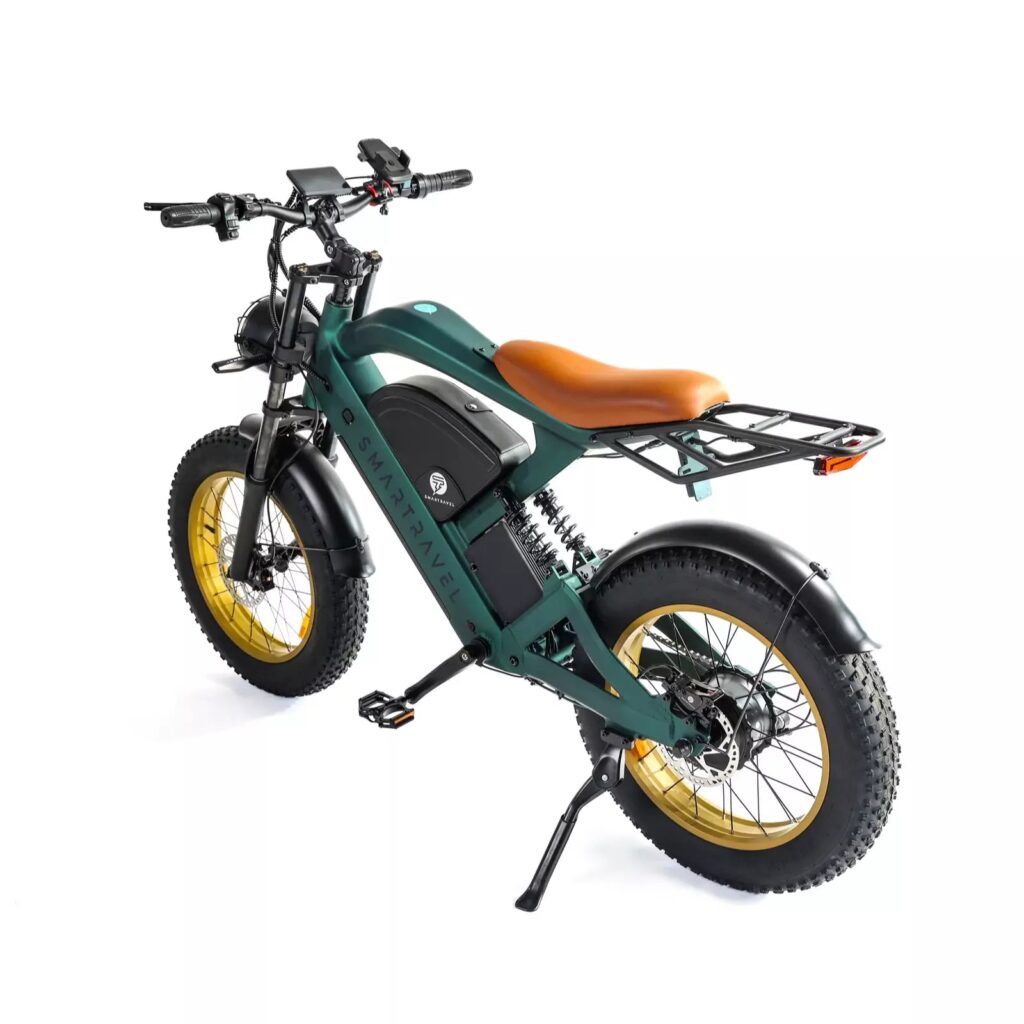
Around the motor, the Raptor ST202 has an aluminum alloy frame, a battery that lifts out, fat tires measuring 20 by 4 inches, a hydraulic fork up front with a shock at the rear, hydraulic disc brakes at both wheels and Shimano 7-speed gearing. It ships roughly 90 percent assembled, with a charger and a simple set of tools included.
Smartravel Against Ariel Rider
The Ariel Rider Kepler is a fair match for the Raptor ST202, since both chase the same moped-style look and the same blend of commuting and power.
| Spec | Raptor ST202 | Ariel Rider Kepler |
|---|---|---|
| Built-in GPS | Yes | Not standard |
| Weight | 113.9 lbs | 118 lbs |
| Battery | 1296Wh (48V 27Ah) | 1.82 kWh (52V 35Ah combined) |
| Range | Up to 60 miles | 85 to 105 miles (claimed range) |
| Top speed | 32 mph | Class 3 limit of 28 mph |
| Torque | 86 N·m | 110 N·m (brand claim) |
| Motor | 1500W peak with 1200W sustained | Rear hub, 750W |
The Kepler brings the larger numbers for torque, battery capacity and claimed range, plus four-piston hydraulic brakes with large rotors. The Raptor answers with more peak wattage, a quicker top speed and GPS built into the bike.
An independent reviewer described the Kepler as confident off the line and capable on hills. Owner threads about the Raptor point the other way, citing weaker climbing and less punch under hard acceleration. For steep routes or maximum range, the torque and battery gap counts.
Flat to moderate riding plus a wish for tracking favors the Raptor. Look up both brands’ current prices before deciding.
Care, Charging and Storage
Smartravel rates its batteries to retain up to 75 percent of their original capacity over as many as 300 charge cycles. How fast those cycles get used depends on how you charge and store the pack, so the habits below are worth adopting early.
Charging
Every Smartravel model ships with its own matched fast charger, and that is the one to keep using. The brand warns that a charger meant for another model, or one from a third party, puts both the battery and the warranty at risk.
Lithium-ion packs generally wear faster when they sit fully drained or fully charged for long stretches. A top-up after most rides is gentler than running the battery down to zero before every charge.
Storage
If the bike will sit unused for a while, carry the battery indoors and keep it at room temperature. Extreme heat and cold are hard on lithium-ion cells, and every model has a removable pack, so there is little reason to leave it on a bike parked outside.
Riding habits and upkeep
Because owner threads bring up power loss under hard acceleration and weak climbing, it makes sense to ride with that in mind. Roll the throttle on gradually and change down a gear before a slope starts, not halfway up it. Gentle throttle use and an early downshift are a common way to take strain off the motor and the Shimano drivetrain.
Wet and muddy rides call for a wipe-down of the hydraulic disc brakes and the fat tires afterward. Owner threads add that traction drops off quickly on snow, mud and sand, which is one more reason to check tire pressure regularly on a heavy bike.
Buying Direct, Returns and Warranty
The most direct route to a genuine bike, with the full warranty attached, is to order from Smartravelor, the brand’s own store. Doing so also places you under the brand’s stated trial and warranty terms, and any claim goes straight to Smartravel’s support team instead of a middleman.
E-bikes attract counterfeit and mislabeled listings, and the stakes are higher when battery and certification claims are involved. UL has taken legal action against several e-bike and e-scooter sellers over false use of its certification marks. Smartravel was not named in that case, but the same cautions apply to any e-bike purchase.
If you buy anywhere other than Smartravelor’s own site, make sure the seller is authorized and watch for these red flags:
- A price far below the brand’s own store. A steep discount is more likely a warning than a bargain.
- A certification mention with no standard named. UL and TUV marks can be looked up, so vague wording deserves a closer look.
- No return window stated. The brand’s own store allows 30 days, so a listing with no return terms at all is a poor sign.
- A seller name unrelated to the brand. Anonymous accounts can reuse official product photos without any authorization.
Returns
The trial runs for 30 days after delivery, and what happens next depends on why the bike is going back.
- Change of mind: the bike must be unused, return shipping is on the buyer, and a repackaging fee may be charged if the original box is missing.
- Defective, damaged or wrong item: report it inside the same 30 days with photos or video. The brand then pays return shipping and offers a free replacement or a refund.
One trap to avoid: returning the wrong item, or failing to send back a defective one as instructed, voids the warranty on the replacement. After a return is approved, the money goes back to the original payment method in a few business days.
Warranty
Coverage lasts 12 months from delivery. It applies to manufacturing defects in the frame, fork, electrical parts and battery, and it does not extend to normal wear, abuse, modifications, water damage or unauthorized repairs. Read that exclusion before trying a repair yourself, since a fix the brand has not approved could cost you the rest of your coverage.
Shipping
Orders go out by FedEx at no charge, and the brand says they leave within two business days. Delivery is limited to the continental U.S., so PO boxes and APO addresses cannot be used.
Frequently Asked Questions
Which Smartravel e-bike has GPS?
Only the Raptor ST202. Live tracking, geofence alerts, an anti-theft alarm and a week of ride history all run through the brand’s app.
Which model is the fastest?
Two bikes tie for the quickest claim among the standard models: the Raptor ST202 Pro and the Rocket ST201F Pro, both at 35 mph. The ZonMen dirt bike lists 50 mph in sport mode, though it belongs to a separate category.
How far will a Smartravel bike go per charge?
Claimed range rises through the lineup, starting above 45 miles for the Explorer DK400 and reaching 80 miles on the Raptor ST202 Pro. Terrain, rider weight and throttle use will move the real number, so read it as an upper limit.
Can I try it before committing?
Yes. The brand’s 30-day window applies to every model, and it describes the policy as a way to buy with confidence.
What ships with the bike?
Roughly nine-tenths of the assembly is already done. The battery, its fast charger and a few basic tools are packed with the bike for the remainder.
Does the brand sell anything besides e-bikes?
Yes. An electric dirt bike and electric tricycles sit in the catalog alongside the moped-style and mountain-style e-bikes.
The Bottom Line
Smartravel’s pitch is real power in a fat-tire e-bike with clearly stated policies, and the spec sheets back it up. The right model depends mostly on your terrain. Flat commutes point to the M21 and M22 or the Explorer DK400, mixed riding and tracking point to the Raptor ST202, and hills or long daily distances point to a Pro.
Whatever you pick, buy from the brand’s own store, keep the charger and battery habits above and read the warranty terms before something goes wrong. When you are ready, browse Smartravel’s range at Smartravelor, check current prices there and compare them with your shortlist.