Home espresso machines come with a lot of numbers on the box: bars, watts, ounces, millimeters. None of it is much help until someone explains what each figure changes in the cup and on your counter.
SECPOEDR works well as an example, because its range is small and its spec sheets give actual figures. It offers espresso machines in a few clear tiers, plus drip coffee makers for people who would rather skip the steam wand altogether.
This guide covers how to read those specs, how to match a model to your routine, how the range stacks up against a familiar appliance maker and how to keep a machine running well. It rests on published specifications and general good practice, not on hands-on testing.
What the lineup covers
The material behind this guide lists seven models in two categories: espresso machines and drip coffee makers. The espresso machines sort into three tiers, each aimed at a different kind of buyer.
- Entry, 20 bar: a 1350W boiler, a 45oz tank, touchscreen controls and a rapid cold-brew mode.
- Retro, 20 bar: a manual pressure gauge, PID temperature control and a 50oz tank.
- Step-up, 15 bar: the biggest tank at 68oz, an 1800W pump, a 58mm portafilter, OPV regulation and a display that reads out both pressure and temperature.
Outside espresso, the catalog adds 12-cup programmable drip makers, and several machine sets arrive with a stainless steel milk pitcher. To see everything the brand sells, open the SECPOEDR storefront on Amazon, which opens Amazon.
One honest caveat belongs here. Public information about the company is thin: no founder profile and no long history to read. That does not make the machines poor, but it does mean the spec sheet carries most of the decision.
Pressure, temperature and portafilters
What bar pressure tells you
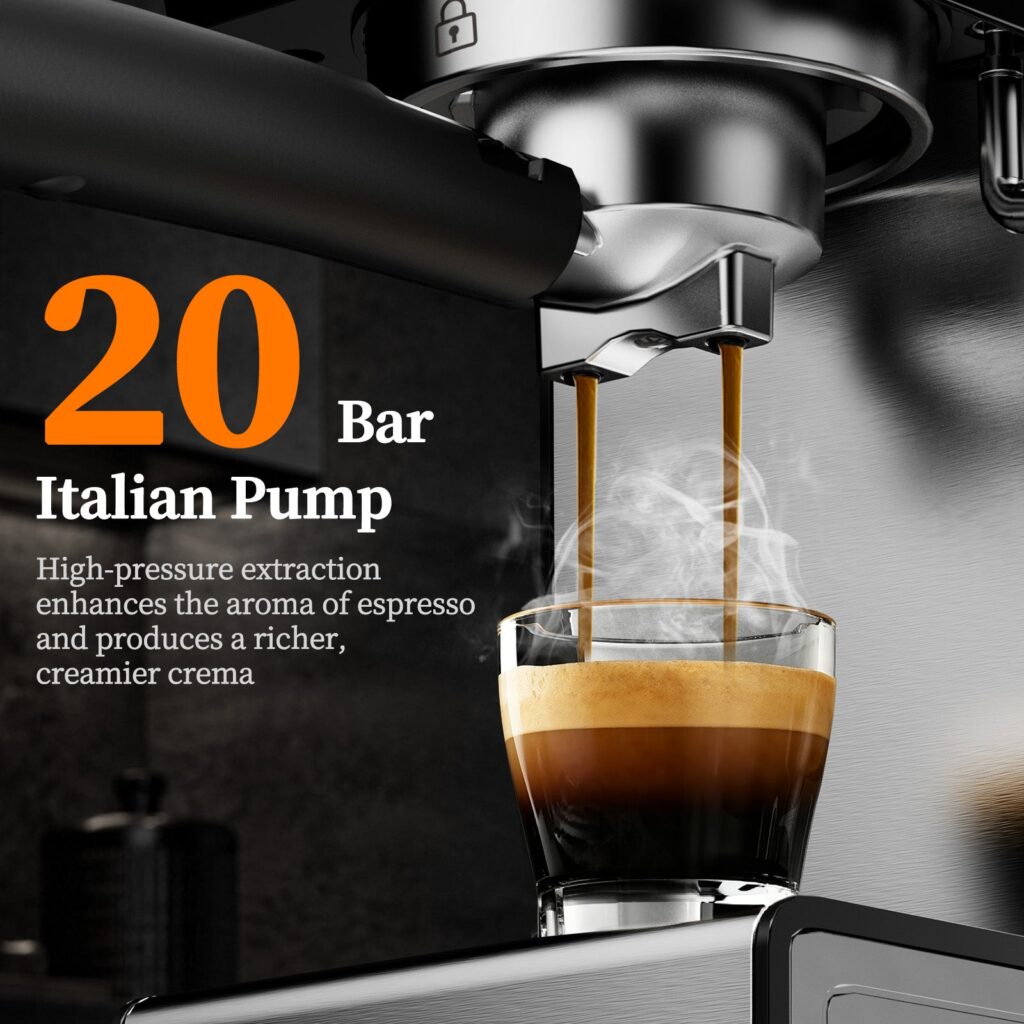
Bar is the unit for how hard water is pushed through the coffee. Espresso is generally pulled at about 9 bars where the water meets the grounds, so a pump rating describes what the motor can do, not what reaches your cup. A 20-bar pump has plenty of room above that figure.
The likely payoff of that room is more even pressure from one shot to the next, not a punchier shot. The 15-bar models trade some of it for a larger portafilter and a more hands-on setup.
Why the 58mm portafilter matters
Portafilter size is listed only for the 15-bar machines, at 58mm. That is the diameter cafe equipment uses too, which helps if you plan to upgrade later, because baskets and tampers in a standard size are not limited to the brand’s own accessories.
The 20-bar line lists no portafilter size, which hints at a sealed-off design that favors ease of use over tinkering. For plenty of people that is a sensible trade.
PID and OPV in plain English
Two abbreviations come up on the step-up models. PID is a temperature controller: it aims to hold the water at a set temperature instead of letting it drift between shots, which helps one shot resemble the next.
OPV is the over-pressure valve, which caps how high brewing pressure can climb so an extraction is less likely to be pushed too far. The spec sheets list both on the 15-bar machines, and PID alone on the retro model.
Tank size and counter space
Tank capacity is one of the clearest differences inside the range: 45oz on the entry machine, 50oz on the retro model and 68oz on the 15-bar machines.
The gap only matters if you brew a lot. One cup a day makes 45oz plenty, but a household that makes several drinks each morning will refill far less often with the 68oz tank.
Space is the other side of the deal. The entry model stands roughly 12 in tall on a 13.2 by 6.7 in footprint, and a larger tank usually brings a larger body. Measure the spot first, and leave clearance to lift the tank out and slide the drip tray free.
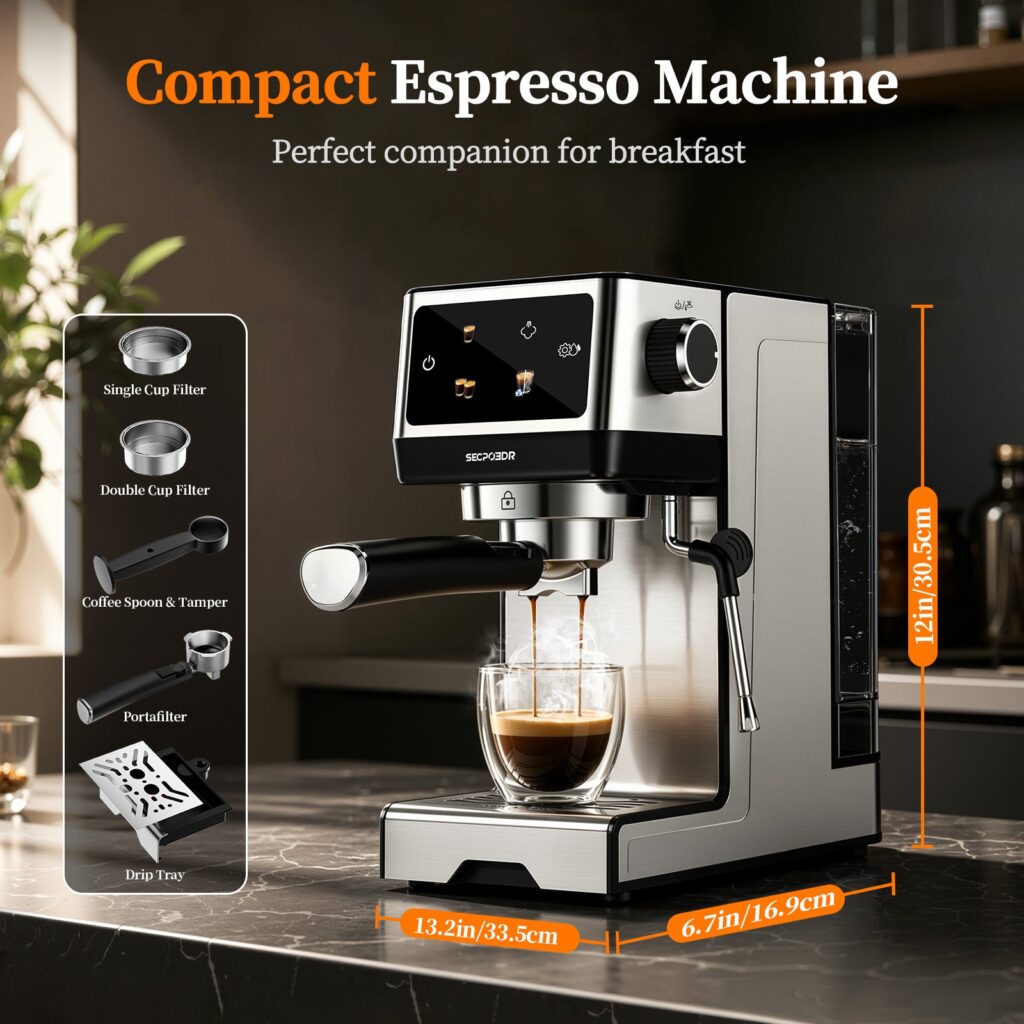
Every machine in the espresso range has a detachable drip tray, so emptying it should be a routine habit rather than a rescue job. The entry model also comes with single-cup and double-cup filters, a tamper and a portafilter, which means no extra shopping before the first drink.
Milk frothing and drink range
With a manual steam wand, the foam is your job. That means a learning curve, but also the chance to decide how thick or airy the milk becomes. If you want zero fuss, ask yourself whether that appeals before you buy.
Most of the espresso models combine a frother with a 360-degree steam wand, and the brand says that combination delivers dense, silky microfoam suited to latte art.
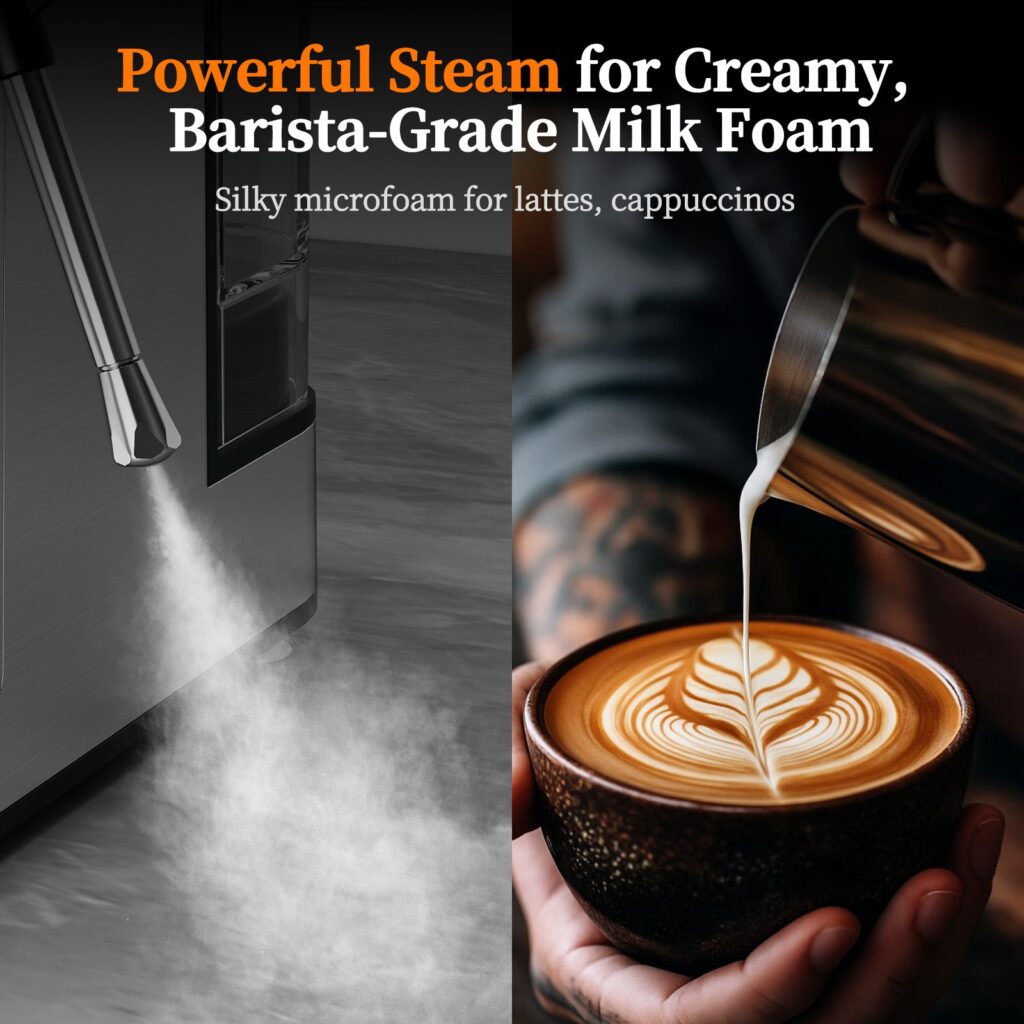
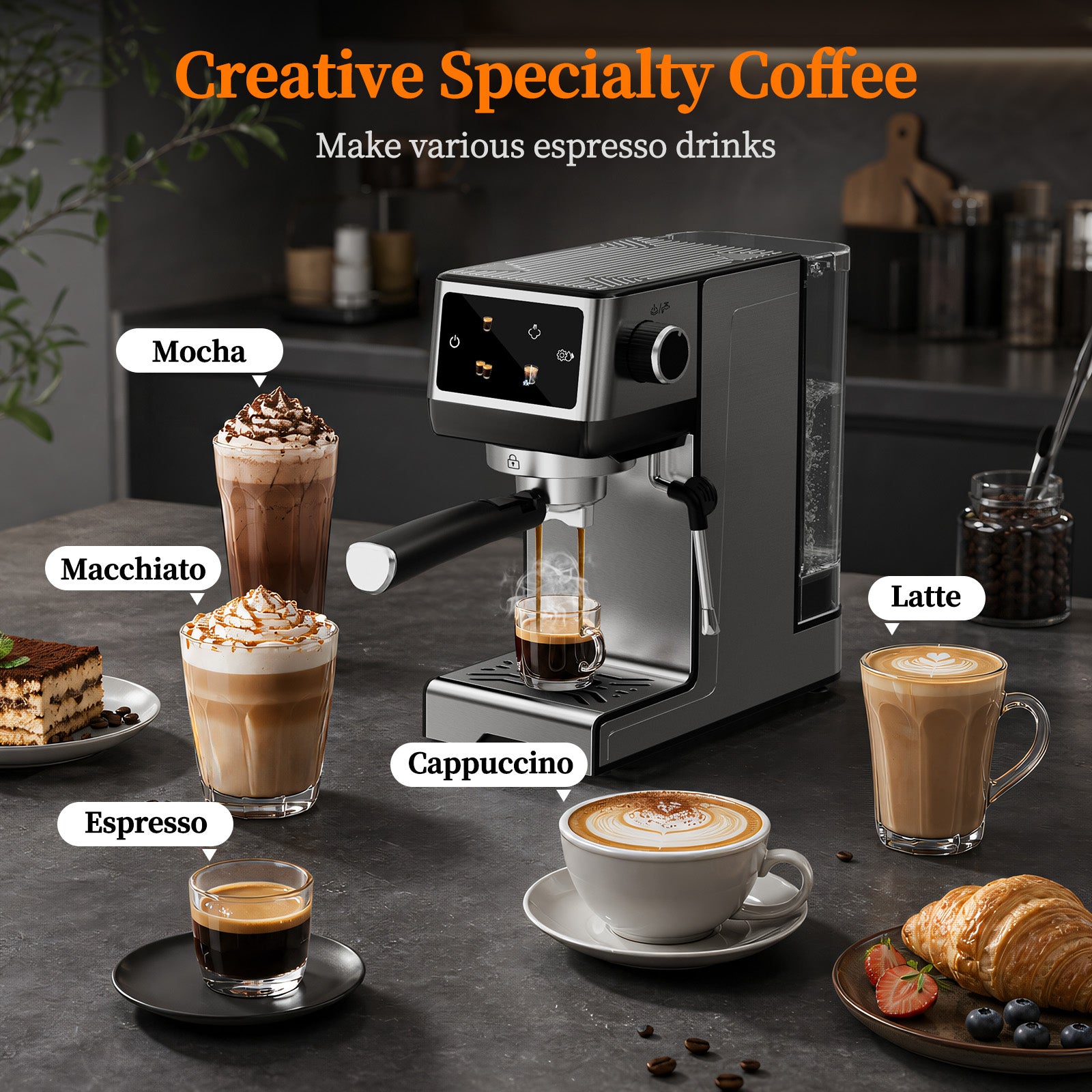
The drink menu is wide. The brand shows espresso, Americanos, lattes, cappuccinos, macchiatos and mochas, and the entry 20-bar machine adds a rapid cold-brew mode for iced coffee.
A few habits help whatever the model. Start with cold milk in a cold pitcher, keep the wand tip near the surface while the foam builds, and warm your cups before pulling a shot. Fresh beans and a grind that suits your basket matter as much as any pump rating.
Matching a model to your routine
A quick way to decide
If two models still look equal, four questions usually settle it.
- How many drinks a day? A busy household benefits from a bigger tank.
- Milk or black? Frequent milk drinkers should care about the steam wand more than the pump rating.
- How much counter? Measure first, then compare it with the size of the machine.
- Learn or press a button? Choose a portafilter model if you enjoy tinkering, and a touchscreen model if you do not.
If you are new to espresso
The 20-bar touchscreen machine is the simplest way in. A preset coffee volume replaces trial and error, and its 45oz tank is sized more for a small household than for a crowd. Our full verdict on the SECPOEDR 20 Bar Espresso Machine goes through that model spec by spec.
If you want room to grow
The 15-bar machines suit anyone who has pulled shots on a real portafilter before, or intends to. PID and OPV are there to keep results steady, so you can concentrate on grind size and dose.
If it is a gift
Some 20-bar sets come with a 12oz stainless steel pitcher in the box, which makes an easy present because the recipient does not have to hunt for one. The brand describes the pitcher as food-grade 304 stainless steel and dishwasher-safe.
If looks matter most
The retro 20-bar model dresses the machine in a vintage style, with a manual pressure gauge in place of the touchscreen, PID temperature control and a 50oz tank.
If you make a lot of drinks
Compare tank sizes first. At 68oz on the 15-bar line and 50oz on the retro model, both hold more than the entry machine’s 45oz, so there are fewer trips to the sink during a busy morning or when guests are over.
If you only want drip coffee
The 12-cup programmable drip makers are for people who never plan to steam milk. The stainless steel body is compact, and the feature list covers a 24-hour clock, auto shut-off, a keep-warm plate, a reusable filter and a water-level window.
How it stacks up against a known name
Black+Decker, an established small-appliance company, is the obvious benchmark. Its entry 15-bar semi-automatic espresso machine lists a published 2-year manufacturer warranty, accepts ground coffee or ESE pods, and has a cool-touch steam wand that rotates 360 degrees. Its removable tank holds 1.5L, about 50oz.
Where SECPOEDR leads is the spec sheet. Its entry machine pairs a 20-bar pump with a touchscreen volume control, neither of which Black+Decker’s entry model advertises, and the 15-bar machines add PID control and a 58mm portafilter on top.
So the choice comes down to paper protection versus feature count. Black+Decker offers a stated warranty, pod flexibility and an established company standing behind the machine. SECPOEDR offers a longer feature list from a brand with a shorter public history, which leaves more of the checking to you.
A fair price comparison is not possible from the material behind this guide, so check the current price on Amazon for each machine before choosing.
Care and cleaning habits
No care manual is part of the material behind this guide, so these are general habits for any tank-fed machine with a steam wand, not brand instructions. If your own manual says otherwise, follow it.
Daily habits
Make wiping the wand a reflex. A damp cloth while it is still warm, then a quick burst of steam to clear the tip, keeps dried milk from building up and blocking it.
The drip tray needs a routine too. Water and coffee grounds left sitting in it turn musty, so empty and rinse it on a regular rhythm instead of letting it fill to the brim.
Water and descaling
Hard tap water builds scale faster inside any machine. Using filtered or bottled water is optional, but it can stretch the gap between descaling sessions and may make the coffee taste better.
Slow flow and strange noises often trace back to scale, so descaling belongs on the calendar. Every two to three months suits regular use, with shorter gaps if your water is hard. Use a product sold for coffee machines, follow its directions, and flush the system with clear water afterward.
Portafilter and pitcher
If you choose a 58mm model, add one more task: run an occasional backflush using a blind basket to clear built-up coffee oil from the group head. Between shots, keep the basket wiped dry so wet grounds are not left sitting in it.
Some sets include a stainless steel pitcher listed as dishwasher-safe. Even so, rinsing it by hand soon after steaming keeps milk from drying in the spout.
Buying from the right place
A good starting point is the brand’s storefront, since it shows the whole lineup and lets you check that a product really belongs to the range. That beats arriving from a random search result.
Then look at who is selling. The name beside the buy button should be SECPOEDR spelled exactly that way, not a variation or a generic reseller. If it is something else, stop and double-check before ordering.
Look-alike names can turn up in inexpensive appliance categories, so type the brand name carefully and compare the page against the numbers in this guide. If the pump pressure, wattage or tank size is different, you have found another product.
Finally, think about returns and warranty. Orders placed on Amazon fall under Amazon’s own return policy, usually a 30-day window from delivery for unused items in their original packaging. Policies change, so go by the terms shown when you order. No manufacturer warranty is described in the material behind this guide, so check the product page and the box for one.
Frequently asked questions
Which models are 20 bar and which are 15 bar?
The entry touchscreen machine and the retro machine are 20 bar. The machines built around a 58mm portafilter, PID and OPV are 15 bar.
What does PID do?
It keeps water temperature close to a chosen point, so one shot is more likely to match the next.
Does every machine froth milk?
Most do. Across the espresso range, a frother usually comes with a steam wand that rotates 360 degrees.
Which model needs the fewest refills?
The 15-bar portafilter machine, whose 68oz tank is the largest in the range. The smallest is 45oz.
Do the machines take ESE pods?
No model is described as pod-compatible. The brand talks about ground coffee, so assume that unless a product page says otherwise.
Is there a cold brew setting?
On the 20-bar touchscreen machine, yes. A rapid cold-brew mode sits next to its hot espresso functions.
Can the milk pitcher go in the dishwasher?
The brand lists the stainless steel pitcher in some sets as dishwasher-safe. A quick hand rinse after steaming is still a good idea, so milk does not dry in the spout.
Can I buy a pitcher on its own?
Not according to the material behind this guide, where the pitcher is only ever part of a machine set rather than a separate product.
Final thoughts
SECPOEDR keeps the choice simple. The 20-bar touchscreen machine is the easy start, the 15-bar line is the step toward a more hands-on routine, the retro model is the one built around looks, and the drip makers cover everyone who skips milk.
Whichever you lean toward, let the specs guide you: tank size for your daily drinks, a portafilter if you want room to grow, and PID if consistency is the goal. Check the seller and the return window before you order.
When you are ready to compare current options, SECPOEDR’s storefront on Amazon is one click away, and the link opens Amazon.