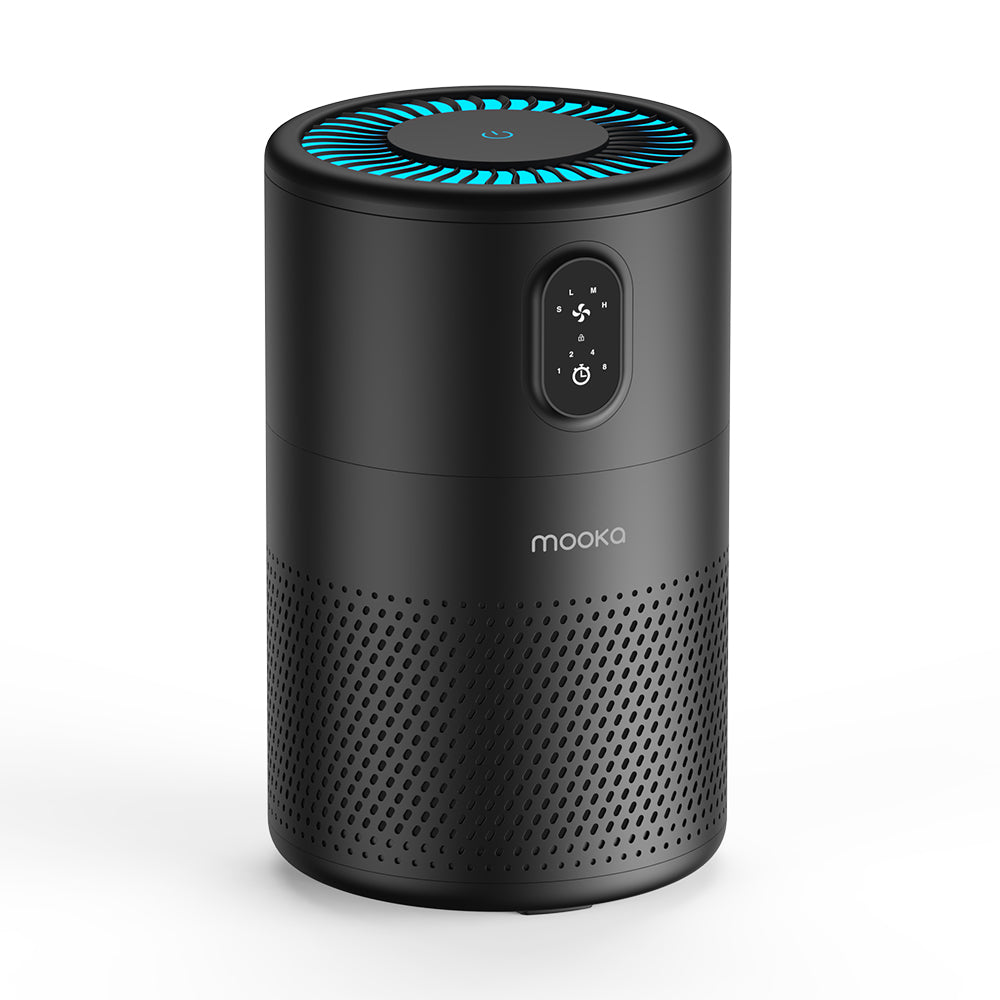
Air purifier shelves are crowded with look-alike cylinders and big claims. MOOKA is a good example: its range is wide, its coverage numbers are eye-catching, and many of its models look alike in photos.
This guide narrows things down. It covers how to size a purifier to your room, which MOOKA model fits which need, how the filters and test numbers work, and what to know about upkeep, returns and buying safely.
Everything here comes from the brand’s published specifications and policies plus independent testing, so it is research rather than a home test. If you want one model in depth, read our full verdict on the MOOKA B-D02L.
The MOOKA Story in Brief
Start with what the brand sells. MOOKA makes HEPA purifiers and the filters that fit them, and the catalog stops there: no humidifiers, fans or smart home accessories.
Its origin story comes in two versions. A company press release dates the founding to 2017 and credits a founder identified only as Monica, who is said to have started the business after poor indoor air affected her household. That release ran as a paid placement, so read the date and the name as the brand’s own account. The About page tells a looser tale of a humble workbench and a mission of honest filtration.
Some practical details are easier to pin down, and all of them come from the brand’s own policies and store.
- Return address: a warehouse in City of Industry, California, according to the refund policy.
- Warehouses: the shipping policy names four regions: the US, Japan, Europe and China.
- Support: live chat and email through the brand’s store.
Ownership and the factory that assembles the units are not stated on the brand’s store, so those two questions stay open.
On certifications, the About page names CARB, ETL, FCC, CE and RoHS. CARB is California’s standard for air cleaners with low ozone output, and the brand says its purifiers are CARB certified. An independent tester also found no ionizer or ozone-generating feature on the B-D02L.
MOOKA’s own pitch is honest filtration without the markup. Its models leave out apps, and the airflow figures it quotes are its own, with the tester unable to confirm the 135 CFM stated for the B-D02L. An independent side-by-side test sets the B-D02L against Levoit.
How the Lineup Is Organized
The brand’s store carries manuals for 18 models, from a palm-sized desk and car unit up to machines for big rooms rated at 2,200 sq ft and above. Most reuse one three-part filter design, and newer models add extras the B-D02L lacks, such as PM2.5 sensors, an Auto mode and pre-filters you can wash for pet hair.
Here are the main models, using figures the brand publishes. Coverage ratings are the brand’s own and do not all rest on the same assumption.
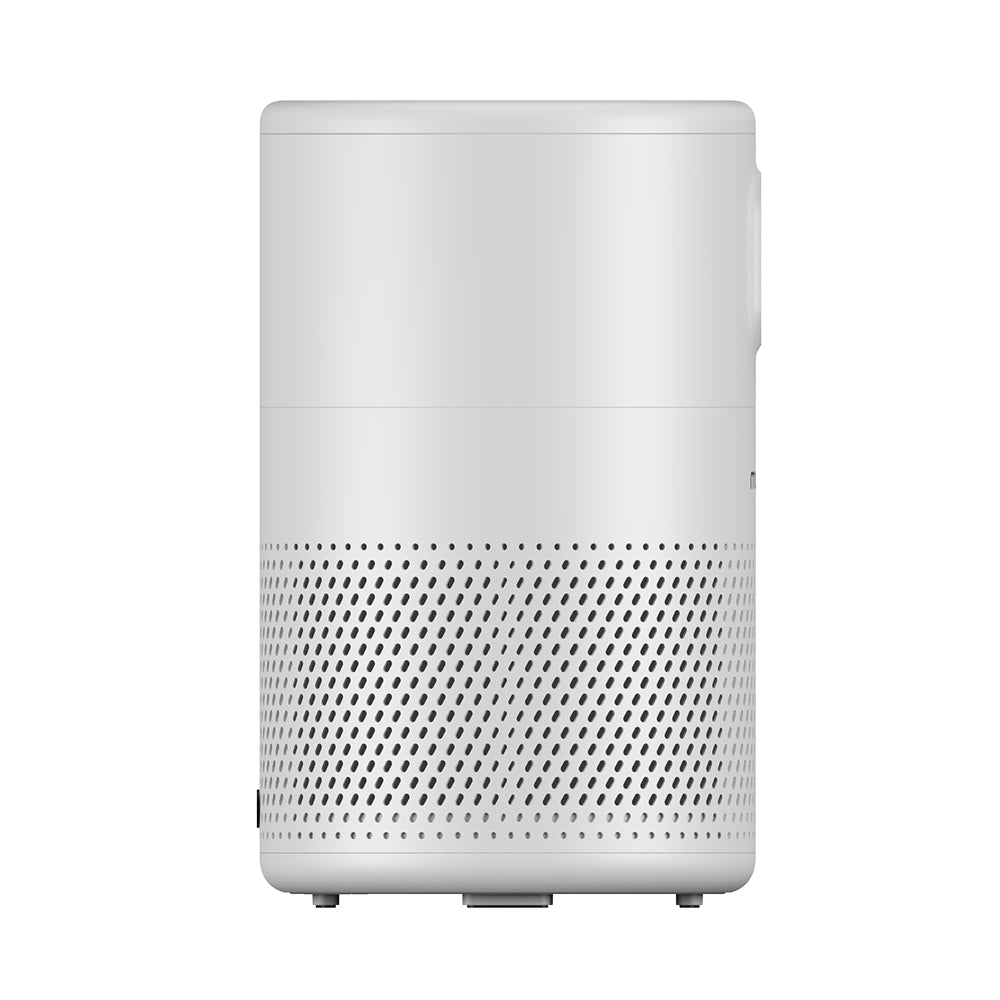
- B-D02L: the compact bedroom model, rated for up to 1,076 sq ft at one air change per hour, or 215 sq ft at six.
- M01: the smallest, rated for up to 430 sq ft. It draws air from all around, uses a three-stage H13 filter, offers four fan speeds and runs from any USB-C source such as a power bank or car charger, with no battery inside.
- KJ067L: rated for up to 500 sq ft. The intake is heart-shaped, there is a 360° top outlet, and it adds a child lock and a filter reminder, in white, black or gray.
- M05: a larger, boxier model rated for up to 1,250 sq ft, with a night light and a reminder for changing the filter. The brand claims a Sleep mode of 15 dB.
- KJ190L: rated for up to 2,200 sq ft, drawing air from the front and both sides. The pre-filter washes clean, and there are a child lock and a filter reminder.
- PR1: also rated for up to 2,200 sq ft. It has a PM2.5 display, Auto and Pet modes, a washable pre-filter, six fan settings and four color options.
- KJ217: rated for up to 2,500 sq ft, the highest in this group. A PM2.5 sensor drives the Auto mode, and the display shifts to yellow or red when the air gets worse.
The M05’s 15 dB Sleep figure is the brand’s claim only. The B-D02L is advertised at 20 dB, and an independent tester recorded 40.7 dBA on its Sleep setting, so quoted sleep-mode numbers read best as targets rather than measurements. The brand’s claim that the KJ217 can turn over the air in a 200 sq ft room within five minutes likewise has no independent test behind it here.
Measure Your Room First
Begin with the room instead of the box. Multiply length by width to get floor area; a 12 by 14 foot bedroom, for example, is 168 sq ft.
Next, read the coverage figure closely. The brand’s B-D02L page headlines 1,076 sq ft, yet that assumes only one air change an hour. Move to six changes an hour and the brand’s own figure falls to 215 sq ft, about one fifth of the big number.
The coverage ratings for the brand’s other models come without that explanation in the material covered here, so for any large number, ask what rate of air changes it assumes.
A purifier only treats the room where it stands. In a home with several bedrooms, a compact unit in each can be more practical than one large unit in the hall, and a note of each room’s floor area makes model comparisons easier.
Match the Model to Your Needs
With the floor area known, choose by the job the purifier must do.
Light sleepers and bedrooms
Prioritize a low Sleep setting and a light that can be turned off. The B-D02L suits that brief, and the independent tester recorded 40.7 dBA at its quietest speed. Another bedroom option is the KJ067L, rated for 500 sq ft, which includes a filter reminder missing from the B-D02L.
Pet owners
Hair collects on a pre-filter, so being able to wash it makes upkeep easier. The KJ190L offers that along with front and side air intake, and the PR1 layers on a Pet mode and a PM2.5 display.
Pollen and dust
When fine particles are your main concern, aim for more air changes each hour, which generally means choosing a bigger unit. Should your bedroom come close to the B-D02L’s 215 sq ft figure, a larger model such as the M05, rated for 1,250 sq ft, is worth a look.
Smoke and strong odors
Set expectations accordingly. The independent tester rated odor and smoke removal on the B-D02L as below average and linked that to its thin carbon layer. If heavy smoke is your main concern, look at a larger unit; the brand offers a Smoke filter for that model too.
Features worth paying for
- Washable pre-filter: offered on the KJ190L, KJ190H and PR1, which saves effort when fur or lint builds up.
- Flexible placement: the KJ102 works lying flat or standing upright.
- PM2.5 sensor with Auto mode: the fan ramps up as air quality drops. The PR1, KJ190H and KJ217 have it.
- Filter reminder: a prompt to change the filter, found on many models such as the KJ067L, M05 and PR1.
No model covered in this guide supports an app or voice commands. Should that matter to you, read the Levoit comparison below first.
Once you have chosen a size, you can compare the full lineup on the MOOKA store on Amazon. The link opens Amazon.
Filters and Coverage Explained
Packaging for air purifiers is full of jargon, so this section translates the terms that matter on a MOOKA.
How the layers work
The B-D02L and most of its siblings pack three layers into one round cartridge, and air travels through them from the outside inward.
First comes a mesh pre-filter that traps pet hair, lint and big dust. On the B-D02L the independent tester calls it nylon, and the tester found it fills with dust quickly.
The HEPA layer comes next. The brand says it captures particles down to 0.3 microns, which includes pollen, pet dander, dust and smoke particles, and H13 ranks among the higher HEPA grades found in household units.
Activated carbon sits last and is aimed at odors and some gases, such as cooking smells and the odor of smoke, which HEPA alone does not hold. The tester described the B-D02L’s carbon layer as thin and fibrous and tied that to its below-average odor and smoke results.
Air changes and CADR
Always ask which air-change rate a coverage figure assumes. An air change is the whole room’s air passing through the filter once, and a single change per hour is a leisurely pace. With pollen, smoke or pet dander in mind, look for a rating at several changes per hour.
CADR, the Clean Air Delivery Rate, is the volume of filtered air a purifier produces per minute, in cubic feet. AHAM, the appliance trade group, suggests a CADR of at least two thirds of the floor area. Applied to the 135 CFM the brand quotes for the B-D02L, that points to a room near 200 sq ft, but the tester could not verify the figure, so treat it as a guide rather than a promise.
What testing showed
The independent tester ran the B-D02L on its top speed for an hour while logging particle counts. In a 120 sq ft room the PM2.5 reading went from 100 down to 12.1 µg/m³, an improvement of roughly 87%, while a 194 sq ft room improved by 81%. The tester gave the unit an overall score of 6.3 out of 10 and rated its odor and smoke removal below average.
The brand advertises 20 dB, but the lab recorded 40.7 dBA on Sleep, a soft hum rather than silence, and 61.1 dBA on High. Power use was 2.8 W during Sleep and 15 W on High, which keeps the cost of running it around the clock low.
MOOKA Compared With Levoit
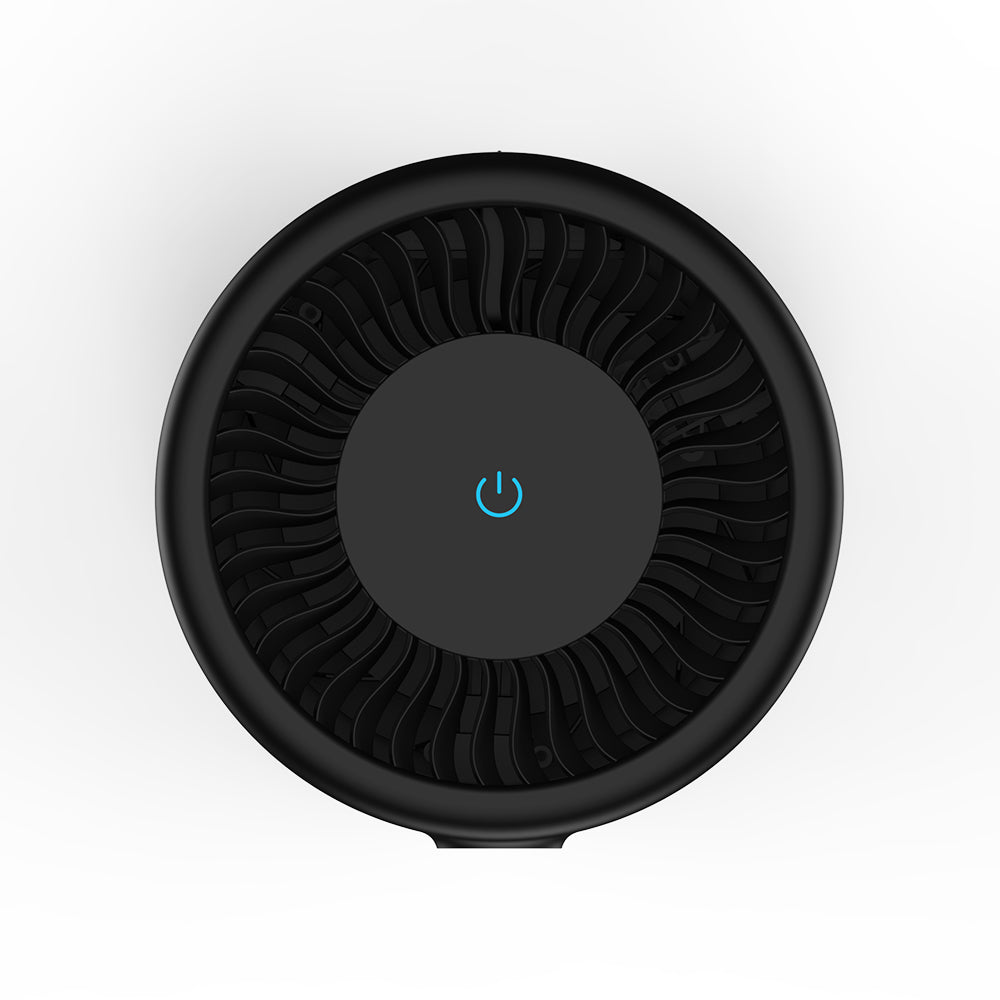
Both brands make compact white cylinders. An independent tester’s side-by-side pairs the B-D02L with Levoit’s closest match, the Core 200S, using official specs and lab results.
| Feature | MOOKA B-D02L | Levoit Core 200S |
| Weight | About 3.6 lb | 6.6 lb |
| Warranty | 1 year (tester’s listing) | 2 years |
| App or voice assistant support | No | Yes |
| Filter replacement interval | Every 3 to 6 months | Every 6 to 8 months |
| Quoted airflow (CADR) | 135 CFM | 118 CFM |
| Particle reduction, small test room | 87% | 93% |
| Particle reduction, larger test room | 81% | 91% |
| Sleep-mode noise | 40.7 dBA | 42.1 dBA |
| High-speed noise | 61.1 dBA | 53.9 dBA |
| High-speed power draw | 15 W | 24.6 W |
Levoit cleaned more in both test rooms, ran quieter on High and offers app control with a longer warranty. The MOOKA draws less power and weighs about half as much, so it is easy to carry between rooms.
Filter changes are the recurring chore. The B-D02L is meant to get a new cartridge every 3 to 6 months, whereas the Core 200S is listed at 6 to 8 months between changes. In a home with pets or smoke, the MOOKA’s shorter cycle means more swaps.
In the tester’s smoke test, another Levoit model, the Core 300S, cleared smoke in 20 seconds. The MOOKA needed 113 seconds.
Care and Everyday Use
A MOOKA unit needs light upkeep rather than none. The notes below draw on the brand’s instructions and the independent tester’s observations, and anything that is general practice is labeled as such.
Unboxing
By design, the power adapter is packed inside the base next to the cartridge, so open the bottom cover to find it. The cartridge arrives in a plastic bag, and that bag has to come off before the purifier is switched on.
Controls worth knowing
With the unit running, hold the top power button for three seconds to turn the night light off or back on. The tester found that the timer does not start in Sleep mode, so choose Low, Medium or High before setting it. The tester also found that after a power cut the unit returns with its last fan speed and night-light setting.
Pre-filter and cartridge schedule
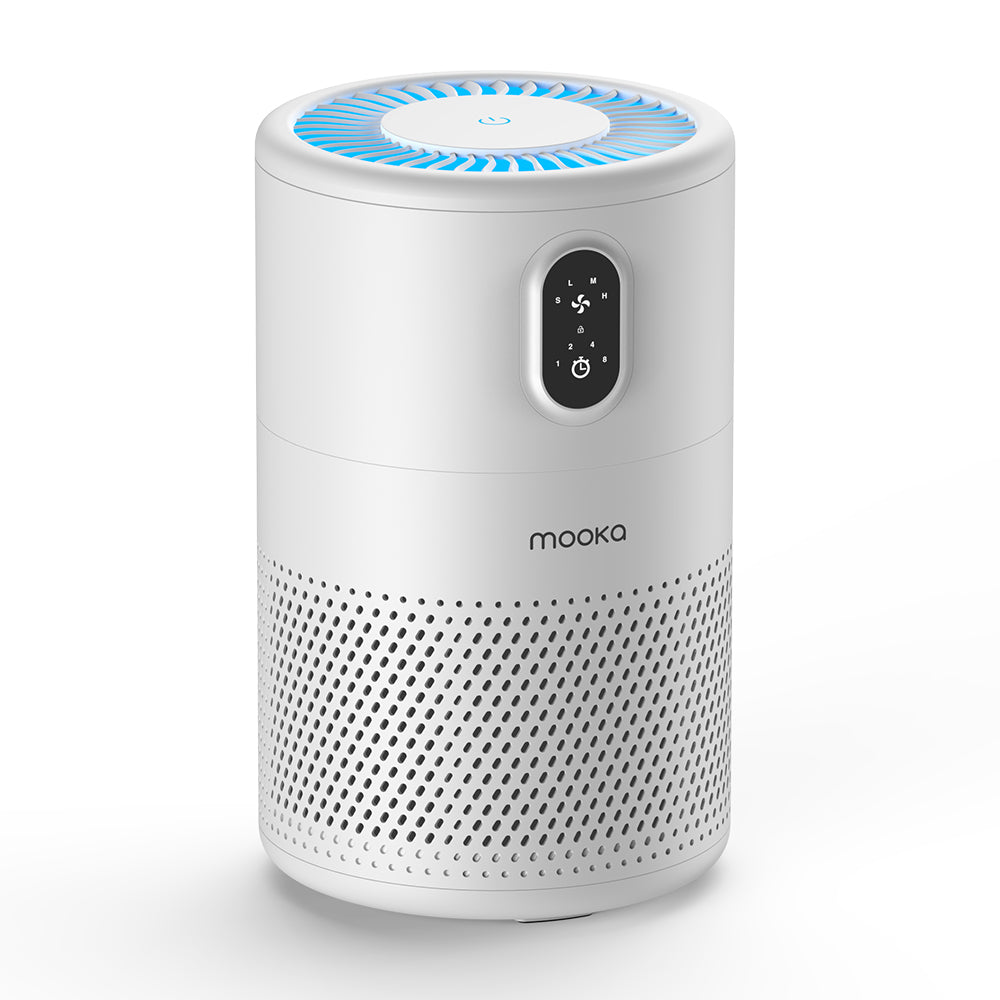
Two jobs recur. The first is the pre-filter: the tester found that it collects dust quickly and advises a clean no less often than once a fortnight. The B-D02L’s pre-filter belongs to a single cartridge that cannot be washed, so keep water away and lift dust from the outside with a soft brush or a vacuum’s brush attachment, a general habit rather than a brand rule. The KJ190L and PR1 come with a washable pre-filter, and the brand says rinsing or vacuuming it helps the HEPA layer last longer.
The second job is replacing the cartridge, which the brand puts at every 3 to 6 months depending on air quality and run time. A flashing fan button signals when it is due, and homes with pets, smokers or wildfire smoke should expect the shorter interval. The brand also sells Pet Care and Smoke versions alongside the standard filter.
Changing the filter
- Turn the base cover left to release its lock.
- Lift out the used cartridge and seat the new one.
- Refit the cover and turn it clockwise until it locks.
- With the unit switched on, keep the fan speed button pressed for three seconds to reset the indicator.
Placement and troubleshooting
The B-D02L draws air in from every side, so leave it some clearance. These are general habits, not brand rules: keep it out of corners and away from curtains, place it where you spend most of your time, and close doors and windows while it runs.
If the unit stops working, try a different outlet and make sure the base cover is fully locked. After that, contact the brand through the live chat on its store, with your order number handy.
Buying Safely, Returns and Warranty
Buying a purifier should be easy, yet a handful of details deserve a closer look.
The official places to buy
The brand’s own store, mookashops.com, stocks every current model along with genuine filters, and its shipping policy quotes delivery in 3 to 7 business days. MOOKA also sells on Amazon, where the product page links to a MOOKA Store brand page, a good sign that you are looking at the brand’s own listing.
Purchases on Amazon follow Amazon’s returns rules, not the brand store’s, so confirm the return period on the page before you order.
Red flags to avoid
An older MOOKA manual sends owners to a legacy web address for support and warranty activation. That address no longer belongs to the brand and now forwards to a parked page that is selling the domain, so never type personal details into whatever loads. More generally, a MOOKA listing on a website that has nothing to do with retail is a warning sign of a spam or hijacked page, and a card number should never go near it.
Genuine filters versus knockoffs
Third-party filters labeled as compatible with the B-D02L are everywhere, and the brand cautions that non-genuine filters can fit badly or underdeliver.
- Read the brand name. Genuine filters carry the MOOKA name, while listings reading compatible with or replacement for MOOKA come from third parties.
- Stay with the brand’s own channels. Its store and its Amazon brand page are where the brand itself sells genuine parts.
The day it arrives and returns
Open the box soon after delivery. The brand’s refund policy asks customers to flag a cracked case, a defective unit or the wrong model right away, and it expects the original packaging back with any return, so keep it.
A return on mookashops.com has to be requested within 30 days of receipt, and the brand says no refund or exchange is possible after that. These conditions apply:
- The unit is unused and in the condition it arrived.
- It is in its original packaging.
- You can show a receipt or other proof of purchase.
Return postage is your cost and comes off any refund. Exchanges are limited to defective or damaged items and are swapped for the identical product. Returns go to the California warehouse mentioned earlier.
Warranty
Before relying on a warranty, get the terms in writing. The brand’s store shows no warranty page, and the homepage mentions extended coverage without conditions. The only figure on record is one year, listed by the tester for the B-D02L and echoed by an older manual for a different model. Quote your order number when you ask support what applies to your unit.
Frequently Asked Questions
Does any MOOKA model work with an app?
No model covered in this guide supports an app or voice commands. The B-D02L has no air quality sensor either. Auto operation driven by a PM2.5 sensor appears on the PR1, KJ190H and KJ217.
Can the filter be washed?
Not on the B-D02L, whose cartridge is a single piece that should stay dry. Washable pre-filters are a feature of the KJ190L, KJ190H and PR1.
Where are the purifiers made?
The brand does not say. What its store does reveal is logistics: warehouses in four regions and a California address for returns.
Is ozone a concern?
The brand says its purifiers hold CARB certification, and the independent tester found no ionizer or ozone-generating feature on the B-D02L.
Is a purifier a medical device?
No, it is a household appliance, so raise any health concern with a doctor as well.
Is MOOKA worth considering?
For a compact, low-power purifier in a small room, the independent figures make the B-D02L a workable choice. Weigh the caveats covered above: it trails a comparable Levoit in measured cleaning, and its odor and smoke scores were below average. Decide by room size and priorities.
Final Thoughts
MOOKA suits shoppers who want a compact, low-power purifier for a small room and are happy to size it honestly. The lineup stretches from the compact M01 to the large-room KJ217, but its headline coverage numbers need translating, and the tester scored the B-D02L’s smoke and odor performance below average.
Measure the room first, pick the model by need, and buy from the brand’s own channels with your order number saved. When you are ready to look at options, check the current price on the MOOKA store on Amazon. The link opens Amazon.