LUXE ORIENTA is a modern Chinese fashion label built around qipao dresses, silk blouses and Mamian skirts. Its product pages name their fabrics, which is a good sign, but those names help only if you know what they stand for.
This guide gathers the useful parts in one place: who stands behind the label, what the fabrics are, how to pick and size a piece, how to look after silk, and what the shipping and return rules say. Wherever the brand makes a claim, the guide says it is the brand’s claim.
No hands-on testing sits behind it. It is built from the brand’s own pages and policies, so you can decide with the facts in front of you.
Who Is Behind LUXE ORIENTA
The company behind the label is LUXE ORIENTA CO., LIMITED, headquartered in Hong Kong’s Wan Chai district. The brand reports 13 boutiques spread over Shanghai, Shenzhen and the provinces of Jiangsu and Zhejiang. It says its garments are made through production hubs at Hangzhou Sijiqing and Shenzhen Nanyou, two garment districts. Online, it says orders reach the UK, New Zealand, Singapore and the US.
The timeline starts in 2015 with Yalanji, a domestic Chinese label whose first boutique opened in Nanjing, in Jiangsu province. The brand says it became a leader of what it calls the New Chinese Style between 2017 and 2019, and that it had reached the premium end of that market in China by 2020. LUXE ORIENTA came afterward, presented by the company as Yalanji’s international face.
Leah Zhang is named as the founder on the brand’s story page, which describes her background as including time at Chanel and YSL. That is the brand’s own account of her career.
The same page lists five values: quality craftsmanship, innovation within tradition, a customer-centric approach, sustainability through ethical sourcing and the preservation of Chinese cultural heritage. Its mission is to bridge East and West. None of the five comes with a third-party certification, so read them as positioning, not as proven facts.
What the Catalog Covers
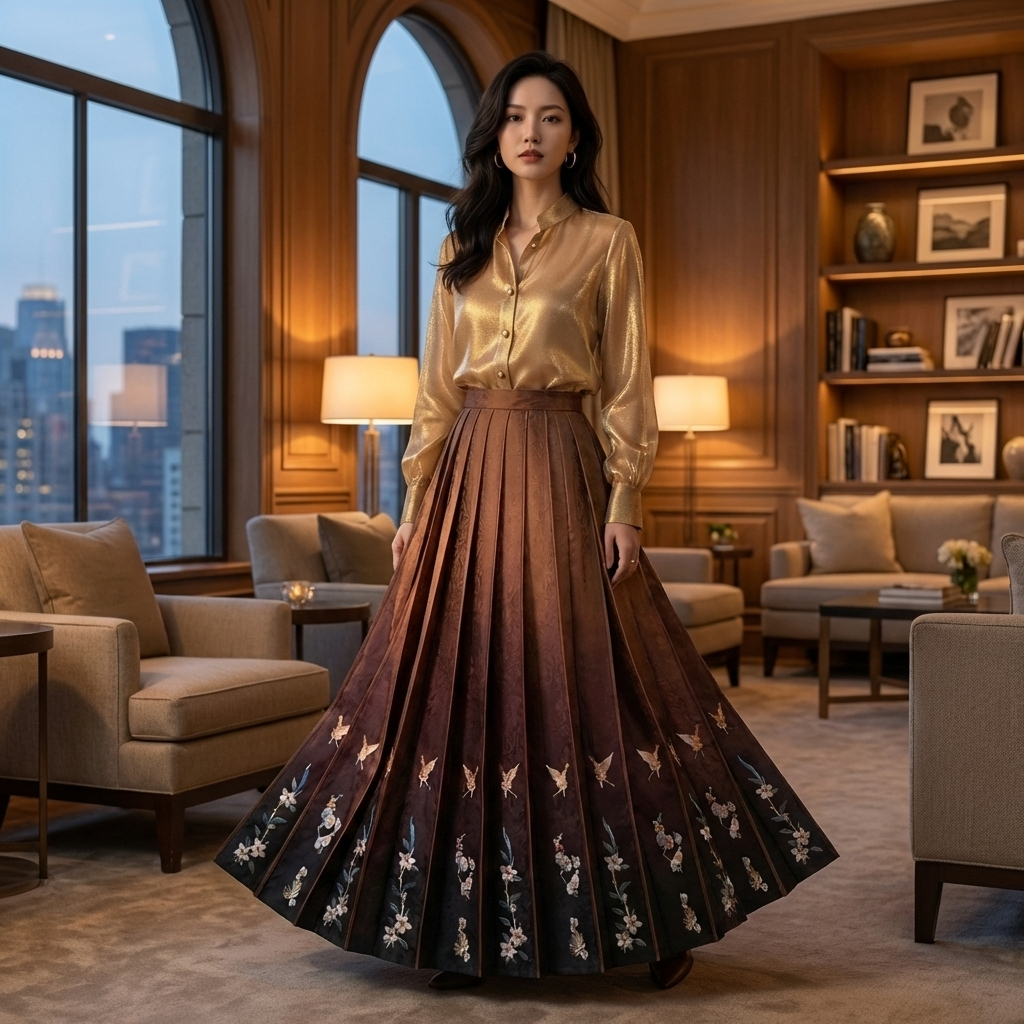
Three garment types carry the catalog: qipao and cheongsam dresses, silk blouses with a mandarin collar and frog buttons, and Mamian skirts, also called horse-face skirts. Songjin and Tang jackets round out the range. On fabric, the brand works mainly in mulberry silk jacquard, brocade and hand-dyed Xiangyunsha, and its product pages name the material for each piece.
The brand puts the champagne mulberry silk jacquard blouse front and center on its homepage, with a woven bamboo and floral pattern, pearl buttons and lantern sleeves. Our full verdict on the LUXE ORIENTA champagne silk blouse walks through its size chart, care rules and return terms.
Pricing follows the fabric and the amount of handwork. Silk jacquard blouses and the qipao dresses made of Xiangyunsha or mulberry silk, available with short or long sleeves, sit at the lower end of the range. Hand embroidered Xiangyunsha Mamian skirts are the most labor-intensive pieces and the priciest in the line. Prices and promotions can shift, so check the current price at LUXE ORIENTA before you decide.
Fabrics and What They Mean
A gut check on silk-look fabrics
According to the brand’s blog, real mulberry silk and Xiangyunsha take so much labor to produce that synthetic silk-look fabrics will always undercut them. A much cheaper qipao that claims the same fabric deserves a second look at its listing, so you know what you would really be getting.
Mulberry silk jacquard
Jacquard is a weaving method. It puts motifs such as bamboo and flowers into the cloth itself instead of printing them on top. Most of the brand’s blouses use it, in 100% mulberry silk. The result is described as light, breathable and slightly reflective, with more shape-holding body than plain silk charmeuse.
Brocade weaves
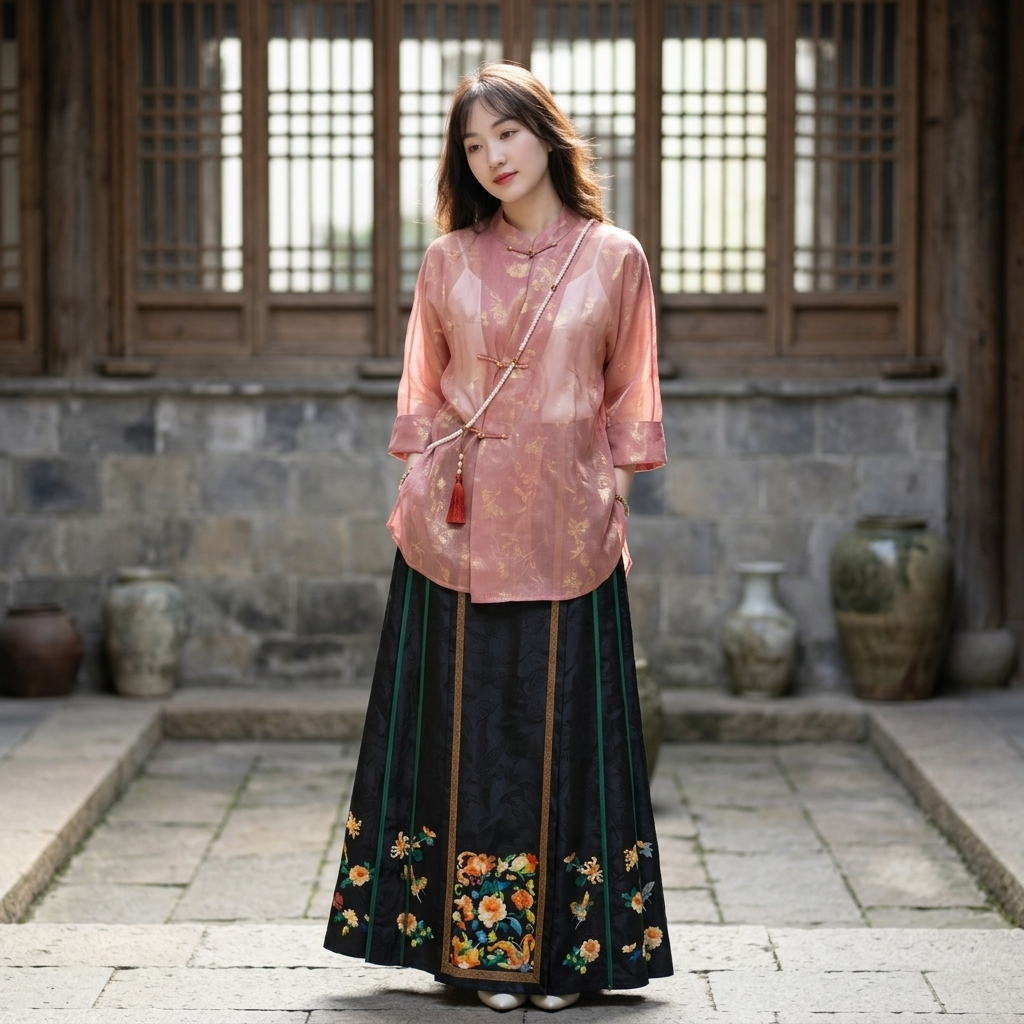
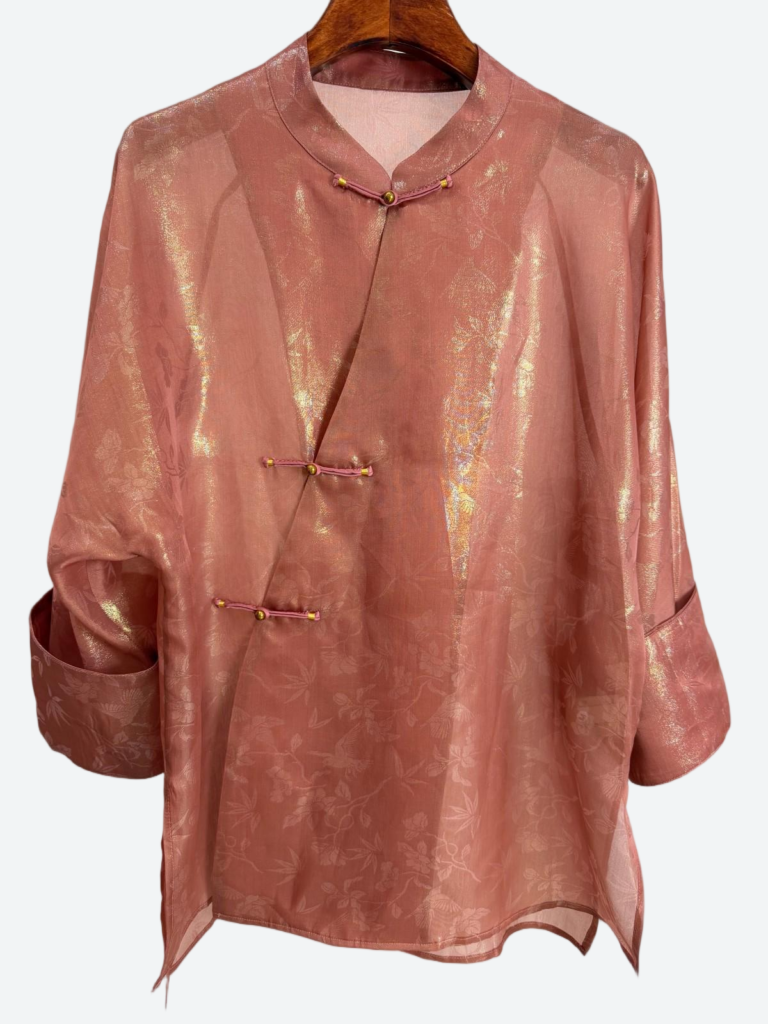
Think of brocade as the dressier cousin of jacquard: a heavier, more ornate weave with roots in formal and ceremonial Chinese dress. The brand draws on both Shu and Song brocade styles for a few pieces. The pink mulberry silk shimmer brocade blouse shows the difference: its floral pattern is denser and more structured than a plain jacquard’s.
Xiangyunsha
Also called gambiered Guangdong silk, Xiangyunsha is a heritage fabric. It is dyed by hand with a natural mud finish that leaves a matte sheen, and its texture is said to improve with wear. The brand uses it across its qipao dresses and Mamian skirts. It is described as rare and labor-intensive to produce, which helps explain why the hand embroidered Mamian skirts sit at the top of the price range.
Fastenings and motifs
Look at the closures. Many qipao and blouses use pankou, knotted frog buttons, instead of ordinary buttons. The brand’s blog treats them as more than fasteners, saying they stand for craftsmanship and cultural continuity, and they are typically tied by hand. The motifs carry meaning too. Phoenix, peony and cloud patterns are traditionally linked to prosperity, femininity and good fortune, and the brand’s product descriptions use that vocabulary.
How to Choose Your Piece
Match the piece to the occasion
- Daytime, the office or an event: a jacquard blouse, worn with plain trousers or a skirt.
- Evenings, cocktail parties and cultural events: a qipao dress.
- A statement moment: a hand embroidered skirt as the centerpiece, with everything else in the outfit kept quiet.
Qipao or cheongsam
The two words often get swapped, but the brand’s styling content draws a line between them.
- Qipao: usually cut closer to the body, often with modern touches such as an asymmetrical neckline or shorter sleeves. For an evening out, the brand suggests bright prints, modern heels and understated jewelry.
- Cheongsam: a straighter, more conservative line with longer sleeves, aimed at formal settings. For a formal or work occasion, the brand suggests jewel tones with classic pumps or a longline coat on top.
Start with the smallest commitment
There is no independent review history that this guide can point to for the brand, so a blouse is the lower-risk way in. It lets you judge fit, fabric weight and construction before you commit to one of the skirts. To look for one, see LUXE ORIENTA’s range at its own store.
Seven pieces from the catalog
- Champagne mulberry silk jacquard blouse: the featured piece, with bamboo and floral jacquard, pearl buttons and lantern sleeves.
- Pink mulberry silk shimmer brocade blouse: a denser brocade weave with frog buttons, raglan sleeves and a more structured A-line cut.
- Black hand embroidery Xiangyunsha Mamian skirt: Xiangyunsha dyed by hand, then decorated with hand embroidery of flowers and pavilions on traditional panels.
- Ink black floral jacquard Xiangyunsha skirt: woven jacquard in place of embroidery, a more understated take on the same fabric family.
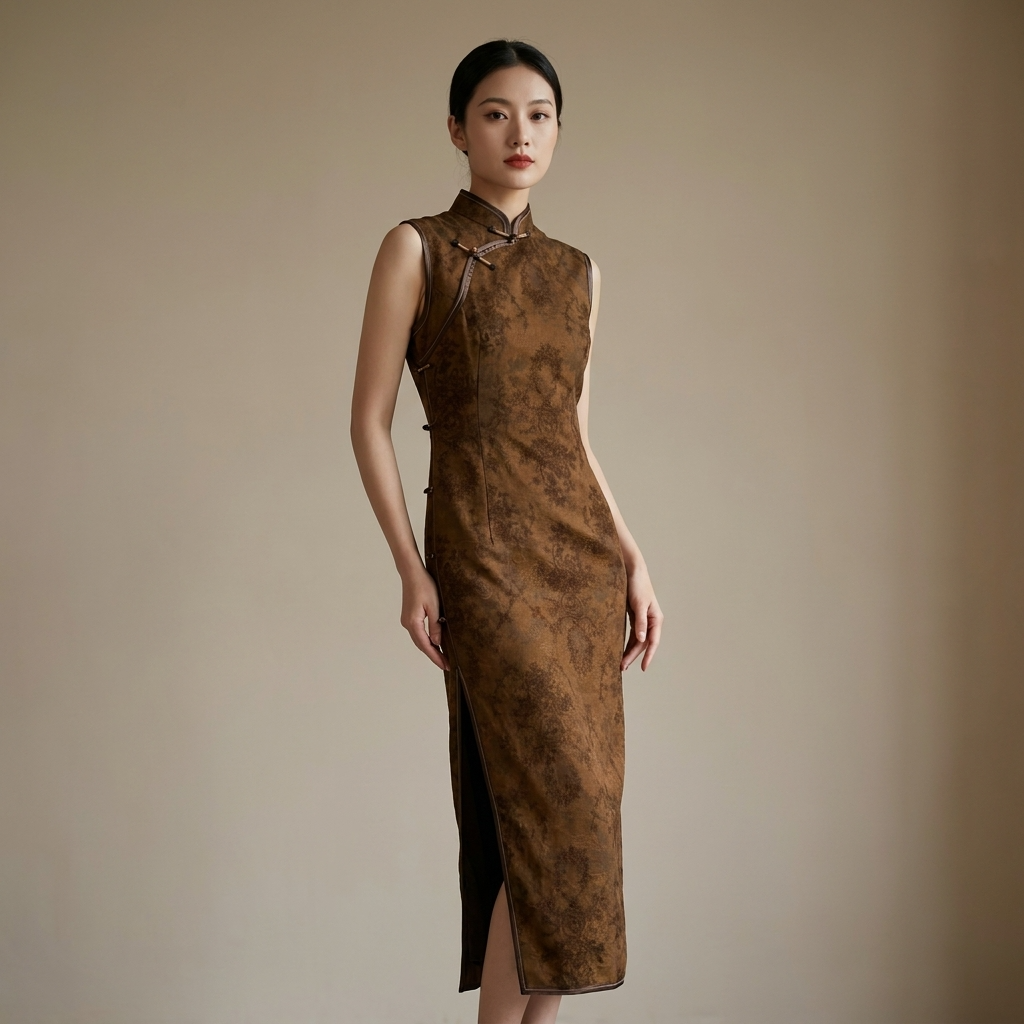
- Vintage brown Xiangyunsha sleeveless qipao: a cut suited to warmer-weather events, and a way to try Xiangyunsha before moving up to a skirt.
- Rust red floral print Xiangyunsha qipao: short sleeves and a bolder print.
- Green black diamond sleeveless Xiangyunsha qipao: a geometric print.
Sizing Without Guesswork
The brand’s size guide warns that Chinese size labels run smaller than US and EU ones. Silk and Xiangyunsha barely stretch, so a sizing miss is hard to absorb. Three habits help.
- Take your bust, waist and hip measurements before you look at any size letter.
- Check them against the chart on the exact product page, not just the general conversion table.
- When you land between two sizes, take the larger one, as the brand advises. Structured cuts such as qipao dresses and Mamian skirts punish a size that is too small the most.
To show what a product chart looks like, here is the one listed for the champagne blouse, in centimeters.
| Measurement | S | M | L |
| Chest (cm) | 80-82 | 84-86 | 86-88 |
| Waist (cm) | 64-66 | 68-70 | 74-76 |
| Low hip (cm) | 86-90 | 90-92 | 94-96 |
| Arm length (cm) | 57-59 | 58-60 | 60-62 |
Care and Storage
The brand’s product care guide is the source for the notes below. Materials vary from piece to piece, so read each item’s label too.
The strictest case: Xiangyunsha
The guide puts dry cleaning first and rules out both soaking and machine washing. The guide says the mud finish left by hand dyeing is sensitive to humidity, so keep these pieces somewhere dry and well ventilated, away from lasting dampness.
Silk, jacquard and brocade
For mulberry silk and silk jacquard, a dry cleaner is the recommended route. Hand washing is the fallback: cold water, a mild detergent, no wringing, shade instead of direct sun while it dries, and a low-heat press only if needed. The guide lists brocade and jacquard as dry clean only, so where the notes overlap, take the stricter one. The raised weave can flatten or catch when it rubs against rough surfaces, so shield patterned areas from friction.
Embellished and embroidered pieces
Turn them inside out for cleaning and hand them to a dry cleaner instead of the washing machine. Do not tug at decorative elements, and hang these pieces apart from other garments so the decoration does not snag.
Rayon, viscose and wool blends
Some pieces are blends instead of pure silk. Rayon and viscose take cold hand washing only, with no machine and no tumble dryer, and they should dry flat or on a hanger before a low-heat iron. Wool and blended pieces fare better at the dry cleaner, and folding them for storage keeps the shoulders from stretching.
General storage
Keep bleach and harsh chemicals away from everything. The brand’s storage advice is a breathable garment bag in a cool, dry spot, with space between garments, because a crowded closet creases compressed silk more easily. For delicate pieces, steam is gentler than pressing with an iron.
How LUXE ORIENTA Compares With Icicle
Icicle comes up in LUXE ORIENTA’s own blog, which puts it at the top of its list of peer brands. In short, Icicle suits shoppers who want understated pieces for the office and a long, well-documented history. LUXE ORIENTA suits shoppers who want traditional silhouettes for weddings, events or cultural occasions.
- Origins: Icicle began in Shanghai in 1997, founded by Ye Shouzeng and Shawna Tao. LUXE ORIENTA traces itself to 2015 through Yalanji and arrived later as the label’s international face.
- Footprint: Icicle has grown to 200-plus stores, with flagships in Beijing, Shanghai and Paris, and it bought the French house Carven in 2018. LUXE ORIENTA reports 13 boutiques in mainland China and sells almost entirely direct online outside China.
- Range: Icicle covers full ready-to-wear, built around natural fabrics such as cashmere, linen, wool, silk and cotton. LUXE ORIENTA keeps a narrower catalog of qipao, silk blouses and Mamian skirts.
- Look: by its own materials, Icicle favors a minimalist, nature-driven style in neutral colors. LUXE ORIENTA goes for bold jacquards, phoenix and flower motifs and traditional cuts that look ceremonial or statement-driven.
The two are not on equal footing when it comes to sustainability. Icicle’s positioning has long press coverage behind it, while LUXE ORIENTA’s ethical sourcing statements are the brand’s own words, with no independent confirmation to point to. That does not make them false. It means the evidence is thinner.
If a long, well-documented history matters most to you, Icicle’s is the longer and better documented one. If the traditional silhouette is the point, LUXE ORIENTA’s catalog is aimed squarely at it.
Where to Buy With Confidence
The brand sells online through luxeorienta.com, run by the registered company LUXE ORIENTA CO., LIMITED. For buyers outside China it is the only channel the brand lists, and its 13 boutiques are all in mainland China, so they are not practical from the United States. You can see LUXE ORIENTA’s range at its own online store directly.
A few checks help you confirm that you are dealing with the brand itself.
- Domain and policy pages: the brand’s own domain is luxeorienta.com, and its shipping, returns and warranty pages should be there.
- Company details: the registered name and the contact details should match across the policy pages, the checkout and your order confirmation. The site gives one Hong Kong address in Wan Chai for contact and headquarters and a separate one in Sheung Wan for return shipments.
- Support: answers come on weekdays from 9am to 5pm Hong Kong time.
- Checkout: Google Pay, Apple Pay, PayPal, Visa and Mastercard are accepted, and orders go out with tracking. A listing that skips tracking or takes only unusual payment methods deserves caution.
The brand’s site lists no authorized international retail partners, so a listing elsewhere that claims to sell LUXE ORIENTA is not confirmed as coming from the brand. If you buy anywhere other than the brand’s own site, make sure the seller is authorized, and compare the listing’s photos, price and return terms with the brand’s own pages first.
Shipping, Returns and Warranty
These terms come from the brand’s shipping and return policies. They matter more for a fabric with no stretch, where a size miss is hard to fix.
- Processing: about 2 business days for items already in stock. Made-to-order or handmade pieces need 5 to 30 business days of production before the parcel ships.
- Delivery: from the brand’s factory in China by UPS, DHL or FedEx, about 7 to 15 business days in total, depending on destination.
- Cost: nothing is charged for shipping, wherever you live and whatever you spend. Duties and customs fees sit outside the price, and your local customs office may add them, at rates that differ by country.
- Return window: 30 days from delivery, and the brand’s support team must approve the return first. The piece must be unworn and unwashed, with original tags, packaging and proof of purchase.
- Return shipping: the brand pays when the reason is a defect, and you pay when it is size or preference. Approved refunds return to the original payment method within 10 business days.
- Not returnable: gift cards, custom or personalized orders and sale items.
- Quality guarantee and warranty: the guarantee runs 30 days from delivery and promises a replacement, refund or other fix for a defective item. A 1-year warranty then covers manufacturing defects.
Because silk will not stretch and sale items cannot go back, settle your size first, then ask support if your particular order is eligible before paying.
Frequently Asked Questions
Is LUXE ORIENTA the same as Yalanji?
In the brand’s telling, yes. LUXE ORIENTA is the international side of Yalanji, a label for the Chinese domestic market whose first boutique, in Nanjing, dates to 2015.
What is Xiangyunsha?
A traditional Guangdong silk that is colored by hand and finished with natural mud, which leaves a matte look. In the brand’s catalog it appears in the qipao dresses and Mamian skirts.
Should I size up with LUXE ORIENTA?
Often, according to the brand: its labels are Chinese sizes, which run smaller than US and EU ones. Measure yourself against the chart for the exact piece, and take the larger size if you land between two.
Does LUXE ORIENTA ship to the United States?
Yes. The brand says it ships worldwide, the United States included, at no charge and with no minimum order. Customs fees are billed separately.
What is the return window, and are sale items covered?
Items can come back within 30 days of delivery if they are unworn, unwashed and still tagged and packaged. Sale items, custom orders and gift cards are not covered, so ask support about your order before buying.
Does the brand offer a warranty?
It lists a 30-day quality guarantee and, separately, a one-year warranty on manufacturing defects.