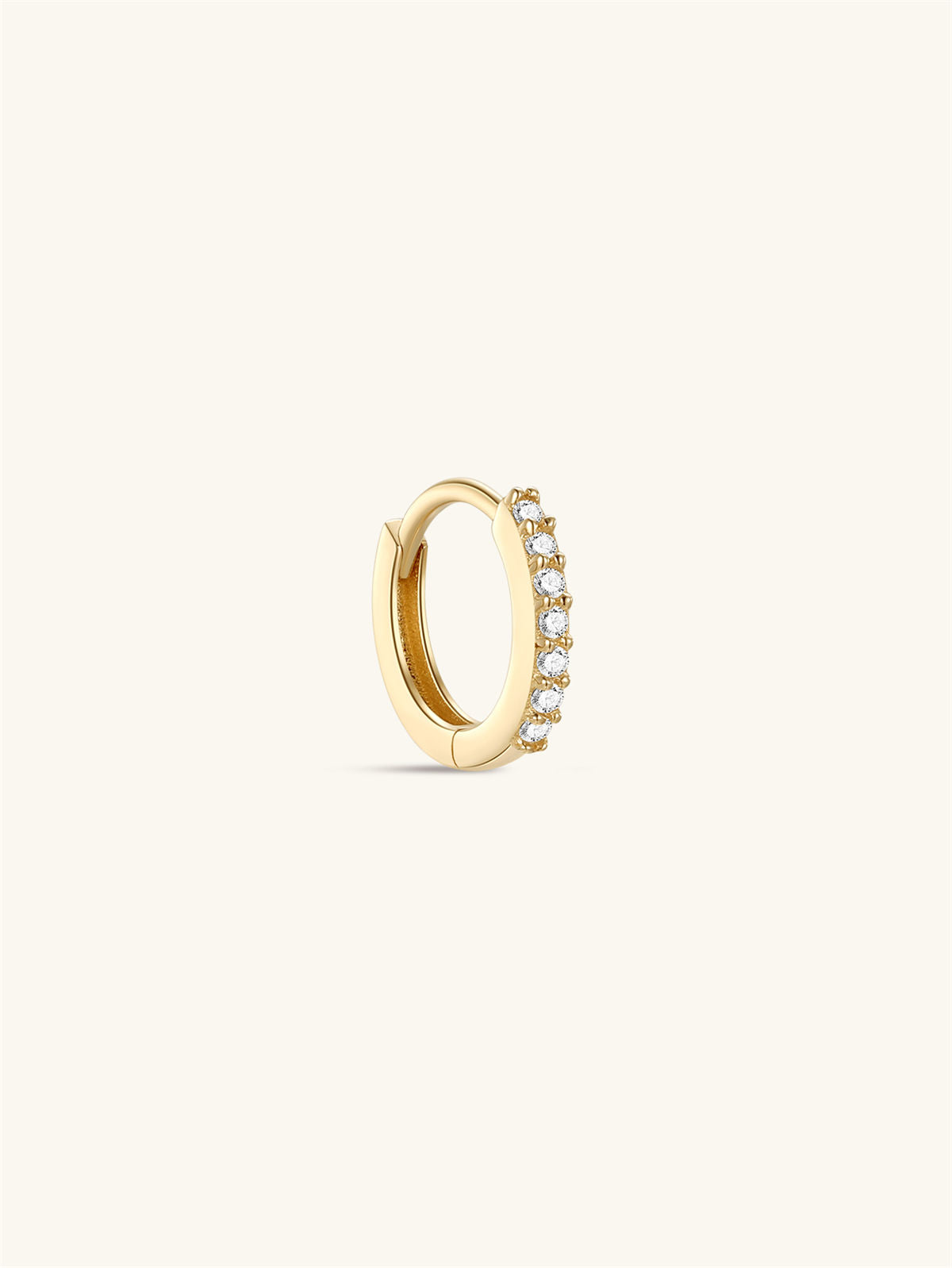
Kosiner Jewelry sells earrings, necklaces, rings and bracelets made with piercings in mind, and the catalog is big enough that picking a first piece can turn into a long scroll. The brand is built around the flat-back stud, which it markets as a nap earring because the back sits flush against the ear.
This guide gathers the useful parts in one place. You will find the story behind the brand, a plain-English reading of its metals and stones, a way to match a piece to your piercing and budget, a comparison with Mejuri, and the shipping, return and care details that matter once you order.
Everything here rests on published information, mostly the brand’s own pages and policies. Where that information leaves a gap, the guide says so instead of guessing.
The Story Behind Kosiner
Kosiner frames its origin as a founder’s answer to a pricing problem. On its About page, the brand says the jewelry trade stacks markups and middlemen between factory and customer, which puts good pieces out of reach for many women. Its fix was to design in house and sell straight to shoppers online, skipping the wholesale and retail layers.
The founder describes a childhood in which, in her words, basic necessities were a luxury. She later studied, built a career in jewelry design and became financially independent on her own earnings rather than family money or outside backers.
The brand points to this direct model as the reason its pieces mostly list between about $45 and $115.
How the designs get made
Kosiner describes its design work as in house. A team creates each collection, the files go through CAD, 3D printing and rendering, and the pieces are cast locally. The brand also says it releases new collections weekly and that factory capacity for bulk runs helps hold costs down.
These are the brand’s own statements. Its cost figures have not been independently confirmed.
What the story leaves out
Some basics are missing from the page: it gives no founding year, headcount or headquarters. The stated mission is empowerment and inclusivity in fashion, with fine-jewelry materials within reach of more women.
A direct, founder-led brand sets its own policies, and no outside retailer stands behind them. That matters once this guide reaches returns.
What Kosiner Sells
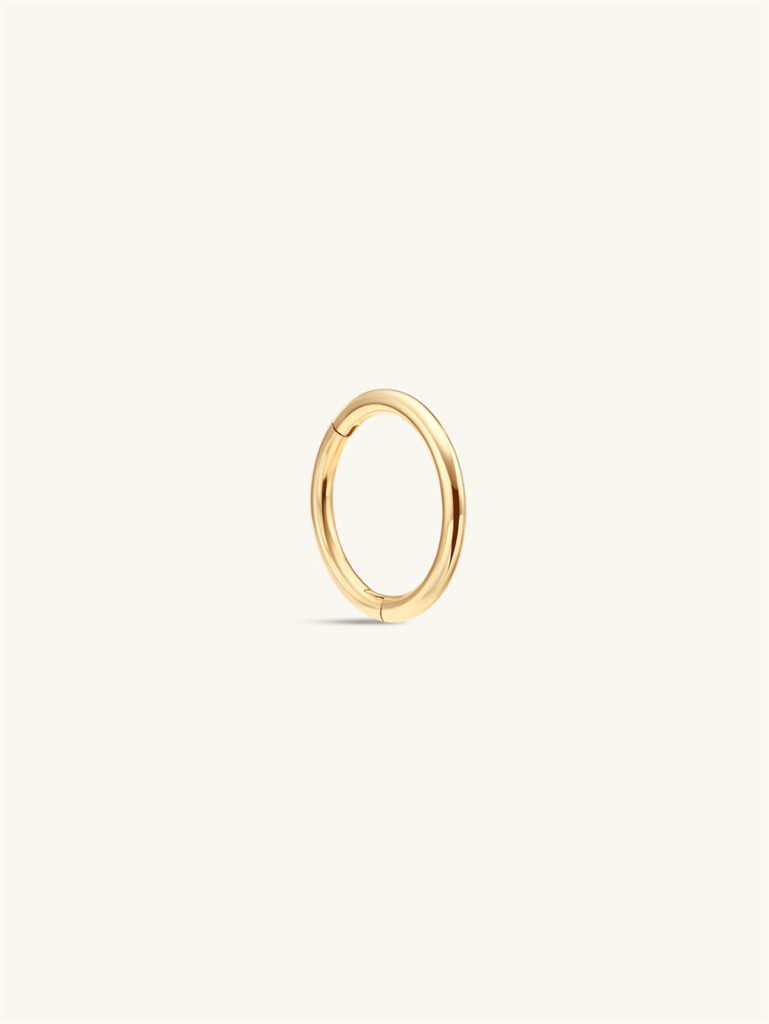
Earrings are the core of the catalog: studs, hoops, huggies and drops, with necklaces, rings and bracelets alongside. The earring pages are organized by where you wear them, from lobe, conch and helix to daith, tragus and rook, with navel and nostril options as well.
Seasonal named collections, among them Aurora, Seaspritz and Étoile, sit next to the core range. Materials span 14K solid gold, 925 sterling silver, titanium, vermeil and gold plating, with lab-grown diamond or cubic zirconia as the stones.
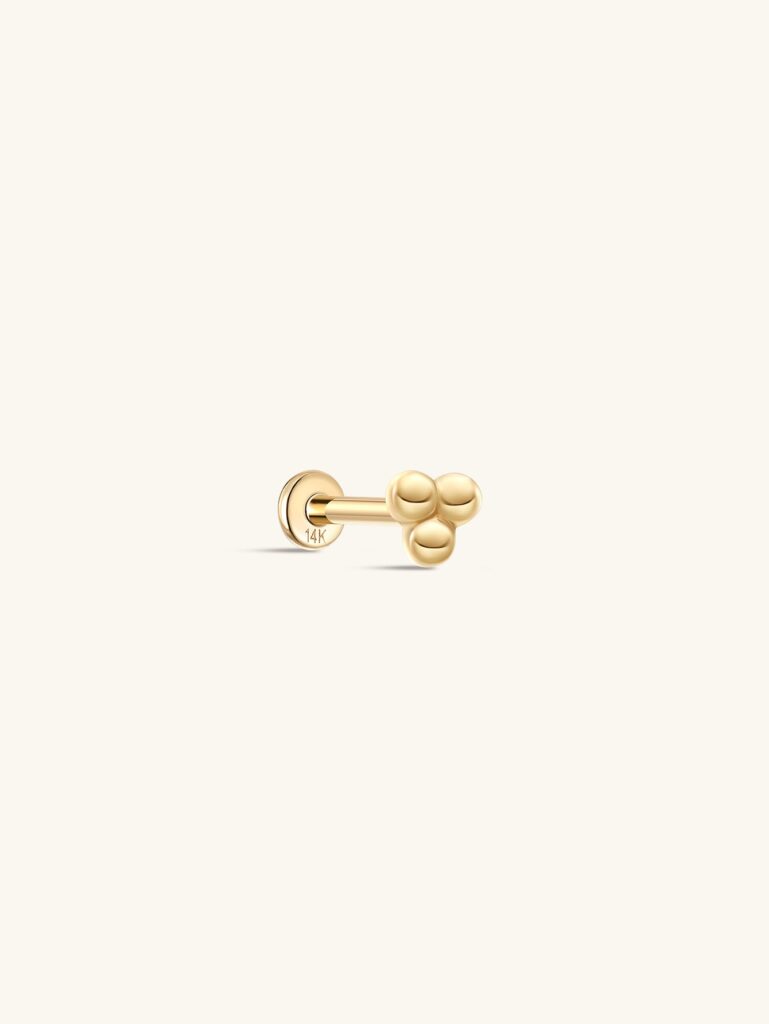
The flat-back stud is what the brand is built around. Instead of a butterfly clutch behind the ear, the underside is a low disc that rests against the skin. Kosiner pitches that shape as comfortable enough to sleep on, which is where the nap earring name comes from.
Materials in Plain Terms
Metal names in jewelry listings blur together, yet each one affects cost and upkeep differently. Kosiner publishes a spec per material, so they can be compared directly.
14K solid gold
Solid gold is gold throughout, with no coating on top. Kosiner’s material guide describes the alloy as 90% recycled gold with the other 10% responsibly sourced. With nothing on the surface to wear away, solid gold carries a higher price than plated pieces.
925 sterling silver
The 925 stamp stands for 92.5% silver alloyed with 7.5% copper. Kosiner says its silver is 95% recycled. Compared with gold, silver is cheaper and lighter but needs more attention, because it tarnishes if left unworn.
Titanium
Kosiner makes its titanium pieces from G23, a medical grade of the metal, and markets them as hypoallergenic and corrosion-resistant. It is the material the brand recommends for fresh piercings.
Vermeil and gold plating
Two layered options sit below solid gold. Vermeil is a regulated term, and Kosiner’s version is sterling silver finished with a 2.5-micron coat of 18K gold, built from 95% recycled materials according to the brand. The plain gold-plated line also starts with 925 silver and 18K gold, but it adds an e-coating for durability and has a thinner gold layer than vermeil.
The brand markets both as hypoallergenic. A thicker layer should take longer to wear through to the silver underneath.
Lab-grown diamond and cubic zirconia
Grades on the brand’s listings are VS for clarity and F to G for color, and the stones are grown by the CVD method, short for chemical vapor deposition. In grading terms, VS means inclusions are hard to see unaided, and F to G counts as near-colorless.
Plenty of the flat-back studs can be ordered with either a lab-grown diamond or an AAAAA cubic zirconia in an identical setting. AAAAA is the top CZ grade, but the stone is still a synthetic stand-in, not a diamond. Picking CZ is the easiest way to lower the price while the metal and the setting stay the same.
Start With Placement
Different piercings call for different builds, so settle where the earring goes before you choose a style.
- New piercing: Kosiner steers fresh piercings toward titanium, so that is the place to start.
- Lobe: for a stack, keep studs small and low, around 2mm to 4mm, so each piece has room.
- Cartilage (helix, tragus, rook, conch): choose a truly flat back and a light design, because bulky pave or pendant styles can look lopsided there.
- Daith: hoops and huggies usually suit this piercing better than studs.
If earrings have given you trouble before, start by looking at the metal. Kosiner markets four lines as hypoallergenic and nickel-free (titanium, solid gold, vermeil and gold plating), while its material guide recommends titanium for new or very sensitive piercings.
Vermeil and plated pieces put a layer of gold over silver, so they cost less than solid gold and need more careful handling. Those hypoallergenic labels are the brand’s own claims, not medical advice, and a piercer or doctor is the person to ask about a known metal allergy.
Kosiner’s (EAR)Ducation Hub carries a fit guide for each product type, from earrings to rings. Read the right one before you order, because gold pieces cannot go back for a size change.
Choosing by Budget
Kosiner’s catalog falls into rough price tiers. Treat the bands below as a guide, since individual pieces vary, and check live prices before you decide.
| Tier | What you tend to find |
| Entry | Minimalist 14K gold studs, 2mm to 3mm, with a single stone |
| Middle | Pave-set styles, huggie hoops, and studs with a lab-grown diamond or CZ |
| Upper | Pendant-style flat backs, chain drops and layered designs |
Two pieces show how far the catalog stretches. The Minimalist 2MM Flat Back Stud is the entry point to solid gold in the catalog, at about $45. The Dainty SweetHeart, a small 14K gold heart, is covered in our full verdict on the Dainty SweetHeart Flat Back Stud, and its price is best checked live at the store.
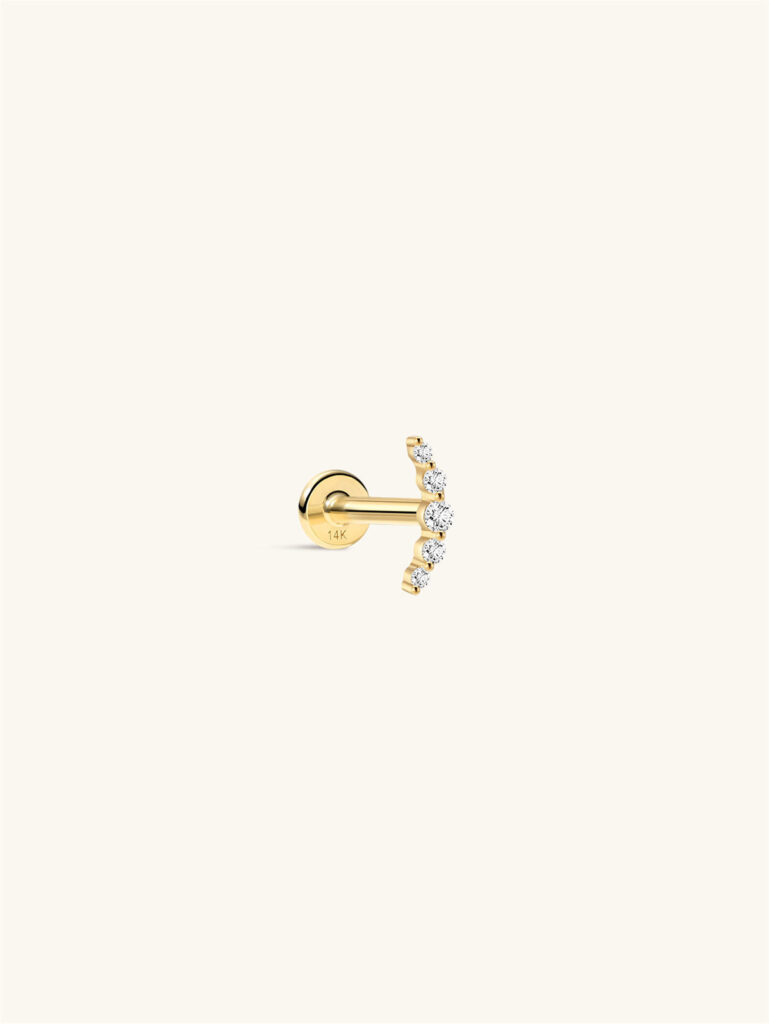
Other studs in the same family include the Minimalist Flat Back Stud, the Dainty Pave Crescent in its lab-grown diamond version, the Delicate Bezel, the Minimalist Trinity and the Delicate Pave Curved. The Bezel holds its stone in a close rim. The Trinity uses three stones. The Pave Curved follows a curved line of stones and can sit beside a plain stud in a stack.
Stone choice is the other lever. Swapping the lab-grown diamond for CZ in the same design lowers the cost while the metal and shape stay put.
How Kosiner Compares With Mejuri
Mejuri is a fine-jewelry brand that sells a similar mix: studs in 14K gold, sterling silver and diamond for everyday stacking. The comparison below sets the two brands’ published prices and policies side by side.
Plain gold studs
On the Mejuri side, basic non-diamond gold studs are mostly 10k, starting at roughly $80 and reaching about $158 for detailed designs. Kosiner’s plain 14K solid gold studs begin at about $45 with its smallest minimalist style, and more elaborate designs cost more. Kosiner’s entry price therefore sits well below Mejuri’s, with a higher karat.
Diamond studs
Mejuri’s smallest natural-diamond studs start at roughly $138 to $238. Kosiner uses lab-grown diamonds in its flat-back studs and prices them in line with its plain gold studs.
Where Mejuri leads is stone detail, since it publishes carat weight and diamond origin for each piece. Kosiner’s listings state clarity and color grade, but carat weight is missing from some of them, so confirm the stone size first if it matters to you.
Recycled content
Both brands make recycled-metal claims. Kosiner states fixed figures in its material guide, 95% recycled silver and 90% recycled gold. Mejuri says it uses recycled gold in some parts of its range, but the share differs by collection and is not listed piece by piece.
Returns
Returns are the one area where Mejuri comes out ahead. Its standard policy lets you send back most items you have not worn, within a set window. Kosiner excludes its whole solid 14K gold collection, so for most of the catalog a change of mind does not earn a refund.
On the published numbers, Kosiner is the cheaper way to get real gold or a lab-grown diamond. Mejuri charges more and offers easier returns plus finer stone detail, so a buyer who values those has a good reason to pay the difference. For a first flat-back stud, Kosiner is the lower-cost trial, provided the final-sale rule is acceptable. You can browse Kosiner Jewelry’s range at its own store to compare for yourself.
Buying Direct and Shipping
Kosiner sells through its own website, in line with its stated aim of skipping the middlemen. The brand’s site does not appear to publish a list of authorized retailers or physical stockists, so its own store is the only sales channel this guide can confirm.
If you buy anywhere other than Kosiner Jewelry’s own site, make sure the seller is authorized, and run a few checks first.
- Warranty and returns: the brand ties its 2-year warranty and return terms to purchases made through its own channel, so a resold piece may come with no protection.
- Material details: a real listing names the karat, the clarity grade and the metal type, and a vague gold-tone description is a warning sign.
- Price: a solid gold piece priced far below Kosiner’s own range may not be solid gold, or may not be genuine.
- Photos: compare a third-party listing’s images with the product photography on Kosiner’s site.
Shipping is free on orders over $59, and below that the cost is worked out at checkout. Allow 24 to 48 hours for processing after payment clears, then use the regional estimates below for transit.
| Region | Delivery estimate |
| US and Canada | 7 to 12 business days |
| UK | 7 to 10 business days |
| Australia and New Zealand | 7 to 10 business days |
| Other regions | 7 to 15 business days |
Delivery covers any country that DHL serves. The store supports five currencies (USD, GBP, EUR, AUD and CAD), and checkout takes major credit cards or PayPal.
Returns, Exchanges and Warranty
Start with the baseline: Kosiner allows returns for 30 days from purchase on eligible items. The item must be unused, in the condition it arrived and in its original packaging, and an approved refund goes back to the payment method you used.
Then comes the exclusion list. Final-sale items include the full solid 14K gold collection, digital items and gift cards, and shipping charges are never refunded. With gold making up most of the catalog, a change of mind will usually not qualify.
Defects and shipping errors are the exception, and they apply even to final-sale gold. In those cases Kosiner says it does not bill for return shipping. Send support the order details promptly once the problem appears.
For eligible non-gold items, the buyer pays return shipping unless the fault is a manufacturing defect or a Kosiner mistake. Kosiner adds that it watches return activity for excess or fraud.
Exchanges work on price differences: a cheaper replacement leaves the balance as store credit, and a pricier one means paying the gap. Opened body jewelry cannot be exchanged at all, a rule the brand ties to hygiene.
Two points stay unclear. The site advertises a two-year warranty, yet its public policy pages never say where a defect ends and normal wear begins. The sizing window is also inconsistent: a general FAQ mentions 7 days for exchange requests, while the returns page says 30. If your order could land in that gap, ask Kosiner support before buying.
Care and Everyday Wear
Fine metals are not maintenance-free, but the routines are simple. Kosiner publishes care steps for each material, and they boil down to three jobs: cleaning, storing and avoiding the wrong conditions.
- Everyday cleaning: gold and titanium both do well with a soft damp cloth after wear, and mild soapy water (warm for titanium) handles a deeper clean. Of all the materials Kosiner sells, titanium asks for the least upkeep.
- Storage: solid gold needs nothing special because it does not tarnish. Sterling silver belongs in an airtight pouch when unworn, and a polishing cloth deals with tarnish that does form. Regular wear helps silver too, since skin oils slow tarnish.
- Gentle handling: vermeil and gold-plated pieces need the most care. Avoid harsh soaps, chlorine and long water exposure, and keep them apart from other jewelry.
Some habits protect any piece. Jewelry goes on last, after makeup, lotion and perfume, and comes off for the pool, the shower and hard workouts. Different metals belong in separate spots, since a harder one can scratch a softer one.
Studs worn to bed benefit from a brief wipe every few days, before buildup has a chance to show.
Frequently Asked Questions
Can I sleep in a flat-back stud?
That is the idea behind what Kosiner calls nap earrings. It is the brand’s own design claim, so judge the comfort on your own ear.
Is Kosiner’s 14K gold solid or plated?
Solid, according to the brand. Its material guide lists the gold as 90% recycled and 10% responsibly sourced.
How is vermeil different from gold plating?
Vermeil is sterling silver finished with a 2.5-micron coat of 18K gold, a regulated standard. Kosiner’s gold-plated line uses a thinner coat, topped with an e-coating for durability.
Does the brand call its earrings hypoallergenic?
Yes, for its titanium, solid gold, vermeil and plated lines. For fresh or very sensitive piercings, it points to titanium.
What if I want to return a gold piece?
A change of mind does not qualify, because the 14K solid gold collection is final sale. Defects and shipping errors are still covered.
Where do I find sizing help?
Kosiner’s (EAR)Ducation Hub has the fit guides. Check the right one before ordering, since gold cannot be returned over sizing.
Which piece suits a first-time buyer?
A small, simple solid gold stud such as the Dainty SweetHeart is one option to start with, as long as you accept that it is final sale. You can browse Kosiner Jewelry’s range at its own store and read the fit guide before you order.