
Stretch jeans shopping usually begins with a trade-off: the pair that suits your calf squeezes the thigh, and the pair that suits the thigh hangs loose everywhere else. GINGTTO’s pitch is aimed squarely at that problem.
This guide shows how to choose among the brand’s jeans, shorts and cargo pants. It covers what the fabric specs mean, which pieces make a good first order, how to size, how GINGTTO stacks up against a performance-focused label, how to wash stretch denim and what to check before you buy.
Everything here comes from the brand’s published details and independent write-ups. Where the sources go quiet, the guide says so instead of guessing, and it leaves current figures to the store listing.
Who GINGTTO Suits Best
GINGTTO is a direct-to-consumer menswear label aimed at athletic and slim builds. Its core product is stretch denim meant to keep pace with a body that trains, rather than denim that resists every squat and stride.
That focus shows in who it fits. If you carry muscle in your thighs or calves, you will recognize the problem the brand describes. If your days involve plenty of walking, lifting and errands and you want clothes that cope, the same logic carries over to the shorts and cargo pants.
It is a weaker match if you want moisture-wicking fabric, odor control or a loose, baggy silhouette. The jeans lean slim, and the fabric stays on the simple cotton-spandex side.
Before you browse, decide how you will wear the piece. Everyday casual, warm weather, travel and workwear-adjacent days, and statement outfits each point to a different corner of the catalog, and the sections below follow that logic.
The Idea Behind the Brand
GINGTTO takes its name from the phrase “Gentleman in Motion”. The brand’s idea is that a pair of jeans should not get in the way of a crouch, a quick walk or a reach for a high shelf.
The brand’s own materials trace the idea to a fit problem. Most skinny cuts assume a slim leg, so a trained thigh forces a choice: accept strain at the knee seam, or size up and live with slack at the waist and ankle.
The brand’s response is a cotton-spandex blend with stretch threads running horizontally through the weave. Three words anchor its messaging: persistence, metanoia and sharing, which the brand ties to keeping at what you care about, outgrowing your limits and being confident in who you are.
Whatever you make of the philosophy, it points at a clear customer: someone who trains, spends the day on the move and wants clothing that keeps pace.
The line has widened to cover chinos, cargo pants, hoodies, match sets and shorts in both denim and chino, so the single stretch skinny jean it began with is one item among many. Orders go through GINGTTO’s own website or its official Amazon storefront. Members of GINGTTO Club, the brand’s loyalty program, get early access to new drops, and shipped parcels can be followed on 17TRACK.

What the Fabric Specs Mean
Spec sheets for stretch denim can read like a foreign language, so here is a plain translation of what GINGTTO lists.
The cotton-spandex blend
Across GINGTTO’s skinny jeans, cotton makes up 97 to 98% of the fabric and spandex the remaining 2 to 3%. The flagship ripped jean sits at the 98/2 end. The sources describe that as a standard ratio for stretch denim.
The black skinny jean lists 97% cotton and 3% elastane. Elastane is simply another name for the same kind of elastic fiber.
Horizontal stretch threading
GINGTTO’s product copy credits stretch threads that run horizontally through the weave, not just an evenly blended fiber. The design intent is to put the give where the leg bends, whereas an even blend spreads it in every direction. Where the elastic fiber sits is one of the main ways brands differ.
The threading is what the brand’s “True Muscle Fit” wording refers to. Per the brand’s copy, the goal is a jean that hugs an athletic build without making you size up.
Two-way, four-way and reinforced seams
The brand talks about two-way or four-way stretch. Two-way stretch generally means the fabric gives across its width, while four-way means it gives across and along. Some higher-tier styles add reinforced seams as well.
On the white ripped jean, the brand lists four-way stretch, a slim cut with a tapered ankle, and a finish it describes as abrasion-resistant and wrinkle-resistant.
Whether any of this works on your frame depends on your proportions, and the specs alone cannot settle that. They do show a concrete fabric approach rather than a slogan.
Pieces Worth Starting With
GINGTTO’s range is deep, so a shortlist helps. These seven pieces cover the main jobs, from the flagship jean to everyday cargo pants.
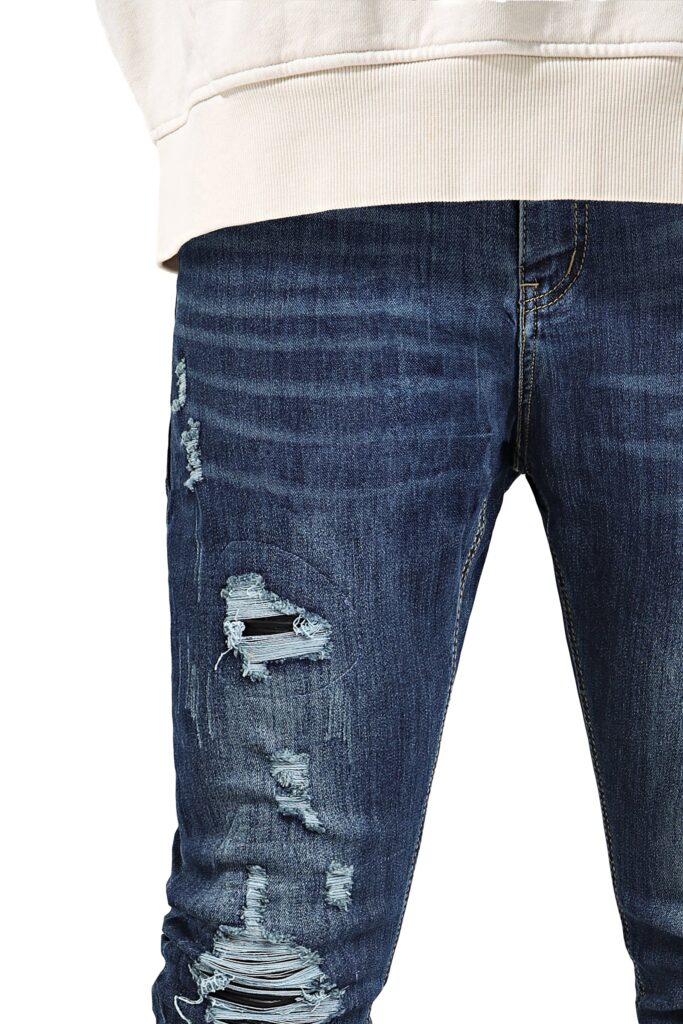
Ripped stretch skinny jean
The flagship, and the piece the brand leads with. Its fabric is 98% cotton and 2% spandex, with the stretch threaded horizontally. For a deeper look, read our full verdict on the GINGTTO ripped stretch skinny jean.
Black skinny jean
The cleaner choice for anyone who wants the fit without distressed styling. It uses a 97% cotton, 3% elastane blend on the same True Muscle Fit construction.
White ripped skinny jean
It follows the flagship’s four-way stretch idea, with a slim, tapered ankle and a finish the brand describes as resistant to abrasion and wrinkles. A lighter alternative to the darker washes when the weather warms up.
Dark blue denim short
The product page calls it super stretchy, and it carries the same comfort-first thinking as the jeans. A practical swap once full-length denim becomes too much.
Dark grey stretch chino short
A dressier option than the denim version. It keeps the stretch fabric and suits smart-casual settings where denim would feel too relaxed.
Black casual cargo pant
A straight-fit cargo built around its pockets. Side pockets close with zippers, the cargo pockets with velcro, and the waistband is elastic. Those details make it a natural fit for travel days and work-style outfits.
Khaki straight-fit cargo pant
A lighter khaki tone with the same pocket layout. It works as a neutral to rotate in beside the darker cargo colors.
Choosing by Build, Style and Budget
Start with your build
Carrying muscle in the thighs or calves? Start with the styles that use the brand’s “True Muscle Fit” wording, the ripped skinny jean among them. GINGTTO says the horizontal threading in those cuts is meant to fit a larger leg while leaving the waist size alone.
A leaner leg and a taste for more room point toward the straight-fit or relaxed cargo pants, which skip the skinny taper.
Match the piece to the occasion
Think about where the piece will spend most of its time. For warm weather, denim or chino shorts come from the same fabric family as the jeans. For statement outfits, the ripped, marble-wash and spray-paint finishes sit on the same stretch fabric as the plain colors. Travel days and work-style outfits call for a cargo pant with useful pockets. For everyday wear, a plain black or blue skinny jean is the easy default because it slots in beside whatever is already in your closet.
Think in tiers
In broad terms, shorts and the simpler skinny jeans form the entry tier, cargo pants sit in the middle, and the ripped, stretch-forward jeans lead the jean line at the top. Because figures change, check the current price on Amazon, where GINGTTO’s storefront lists the full range, before you settle on a piece.
Getting the Size Right
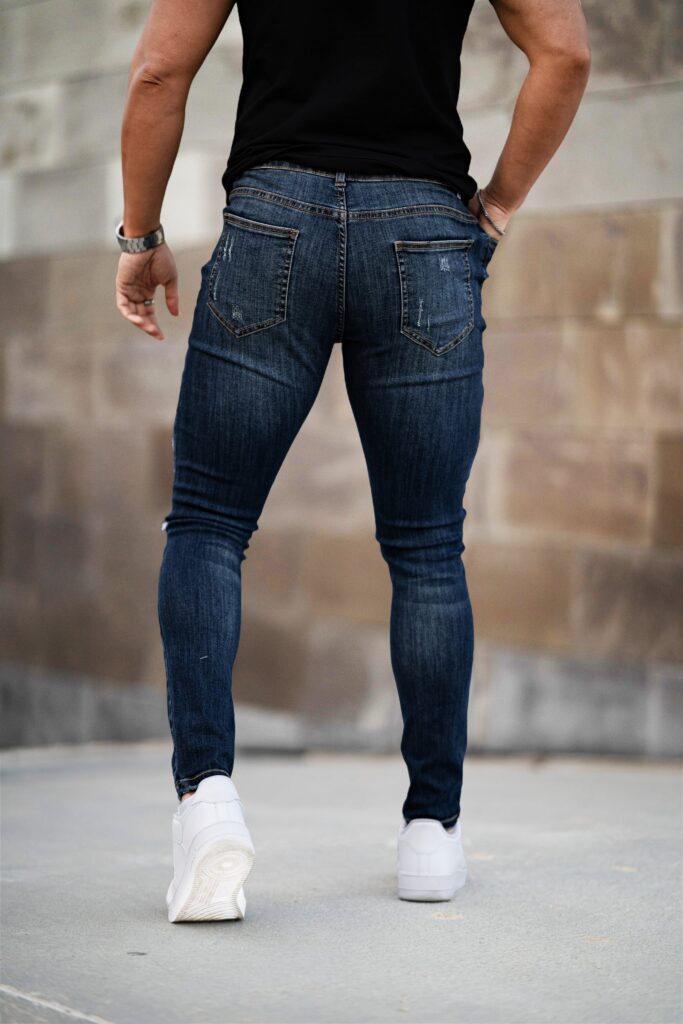
The core skinny jeans follow a slim, leg-hugging cut. That cut is the whole point of the jean, but it leaves little hidden slack, so measure before you order.
Two numbers are worth knowing. The core skinny styles use a 30-inch inseam at every waist size from 28 to 40. The leg opening grows with the waist, from about 10 cm at size 28 to roughly 14 cm at size 36.
For a wider ankle, size up rather than counting on the denim to ease over time.
Independent reviews also note that fit can shift a little between two pairs sold in the same size. That makes your own waist and inseam measurements the safer guide, particularly if you sit between sizes.
One habit pays off. Lay your best-fitting jeans flat, measure the waist and inseam, and compare those figures with the brand’s size chart before you commit.
GINGTTO Compared With DUER
DUER makes a useful yardstick for GINGTTO. Its performance denim targets people who cycle, hike or lift, and GINGTTO pursues a similar athletic-fit promise using simpler fabric.
| Jean | Fabric approach | Extras |
| GINGTTO ripped skinny | 98% cotton, 2% spandex | Horizontal stretch threading |
| DUER slim stretch | Cotton and organic cotton with COOLMAX polyester and a little Lycra | Antimicrobial treatment, reinforced gussets, moisture-wicking fibers |
The fabric is where the two diverge. DUER mixes cotton and organic cotton with COOLMAX polyester and a little Lycra, and adds an antimicrobial finish aimed at odor between washes. The polyester is meant to manage temperature and moisture. GINGTTO’s base is nearly all cotton with a small amount of spandex.
The practical split: if hot, sweaty wear is your main concern, DUER’s feature list speaks to it. If your priority is moving freely and getting the thigh right, GINGTTO’s design speaks to that. DUER sits in the premium tier and GINGTTO in the value-minded one, and both list a 30-day return window.
If technical fabric matters and the extra cost does not bother you, DUER is the better match. If a slim cut with stretch is enough, GINGTTO makes more sense.
Care That Protects the Stretch
GINGTTO’s care instructions come down to three rules: cold wash, no fabric softener and air drying. The reasoning usually given is that spandex can lose stretch while the denim still looks fine, so a careless wash can go unnoticed until the jeans no longer give the way they did.
- Cold water: warm and hot cycles are tough on elastic fibers and can shrink cotton.
- No fabric softener: it can leave a coating on spandex that dulls the stretch over time.
- Air dry: tumble-dryer heat can age the elastic fibers sooner.
Wash less often
Fewer washes are easier on both color and stretch. Between wears, spot-clean stains and hang the jeans to air, then save the machine for roughly every third to fifth wear unless something calls for it sooner.
A general tip: turn the jeans inside out before they go in the machine, so the outer surface rubs against less.
Extra care for ripped washes
Rips are the weak point of a distressed pair. Frequent laundering is likely to fray them further, so the lighter your washing schedule, the longer the distressing is likely to look like a design choice instead of wear.
Pressing and storage
If a pair needs pressing, keep the iron on low or medium and avoid pressing directly on the stretch panels. Between wears, hang the jeans from the waistband. Long stretches folded in a drawer can leave a crease at the same line every time, which hanging avoids.
Buying Safely, Returns and Shipping
GINGTTO sells on its own website and through its official Amazon storefront, and those are the safest places to order. To see the lineup in one place, open the GINGTTO storefront on Amazon.
Checks for any marketplace
- Seller name: it should read GINGTTO, not a generic reseller account.
- Return terms: an outside seller can set its own, so read them before checking out.
- Records: save a screenshot of the listing and your checkout page in case a return is disputed.
- Pricing that seems too good: treat it as a reason to slow down.
The return policy
The brand’s published policy allows returns and exchanges for 30 days after the package arrives, but only for orders placed through its own channels. Buy from an unofficial reseller and that seller’s rules apply instead, and they may be tighter.
Items have to be unworn, unwashed and still carrying their tags. Return postage is yours unless the return stems from a quality problem or a sizing error on GINGTTO’s side. Once the brand receives the item, a refund takes roughly 15 days to arrive, and after day 30 a refund is no longer the likely outcome.
Note that the original shipping charge does not come back, even when a return is approved, so ordering several sizes to find the right one carries a cost.
Shipping basics
Parcels travel with 4PX Express or FedEx Express and typically arrive in 3 to 10 days. An order placed on a weekend leaves the following business day. For a lost or damaged parcel, the brand wants to hear within 14 days of the order date, which is a good reason to check the contents promptly.
Common Questions
What does the name GINGTTO mean?
It comes from “Gentleman in Motion”, the brand’s way of describing clothes made to move with an active day rather than hold it back.
What is GINGTTO Club?
A loyalty program run by the brand. Members get a first look at new product drops.
Is the stretch the same on every style?
Not necessarily. Most skinny jeans list 97 to 98% cotton and 2 to 3% spandex, and the denim shorts are described as built from the same stretch fabric family. The sources give no fabric breakdown for the cargo pants, so check each listing.
Is GINGTTO worth it next to DUER?
That depends on what you need from the fabric. If a slim cut with basic stretch covers it, GINGTTO does the job. If you want moisture-wicking or odor control, DUER lists those features and GINGTTO does not.
Can I track my order?
Yes. After dispatch, 17TRACK is the service for following the parcel.
What should I buy first?
Start with the ripped stretch skinny jean or the plain black skinny jean. Measure first, follow the three wash rules, and run through the marketplace checks above before you order.