A ductless mini split is one of the simpler ways to heat and cool a single room without ductwork. It is also an easy purchase to get slightly wrong, because size, climate rating and installation each change the outcome.
Della is a direct-to-consumer HVAC brand, founded in 2012, whose catalog centers on this kind of equipment. This guide covers how its mini splits are sized, how the four series differ, what installation and warranty involve, and how to keep a unit healthy once it is on the wall.
Everything about Della here comes from the brand’s published specs, warranty terms and policies, with some general buying sense layered on top. Where a figure is Della’s own, the text says so.
Who Della Is and What It Sells
Della’s own account puts its founding in 2012 and traces the idea to garage heat waves, meaning the struggle of keeping a garage or workshop cool when there is no central air. Comfort that is easier to reach and simpler to trust was the pitch from the start.
The brand’s growth, in rough order:
- 2015: a Los Angeles warehouse opens to speed up delivery, which matters for heavy ductless equipment.
- 2018 to 2020: the mini split lineup takes shape, and distribution in South Carolina gives Della a presence on both coasts.
- Later: the Della+ app brings WiFi scheduling and voice control to units that had relied on a remote.
- After that: central air conditioning joins the catalog, organized by home size.
The catalog now reaches well past mini splits, covering central air, pool heat pumps, portable and window air conditioners and tower fans. The mini splits themselves come as single-zone and multi-zone systems. On the recognition side, Della earned a Red Dot design award and has teamed up with LA Galaxy on community comfort projects.
Awards do not predict long-term reliability, and Della is younger than HVAC names with decades of field data. That is why the practical details below, especially installation and registration, deserve extra attention.
Size the Unit to the Room First
Capacity is sold in BTU steps, and Della ties each step to a rough floor area.
- 9,000 BTU: a room of 350 to 400 square feet or so.
- 12,000 BTU: a room of roughly 550 square feet at most.
- 18,000 BTU: a space nearer 800 square feet.
- 24,000 BTU and up: whole-floor territory.
The costlier error is going too small. A unit short on capacity runs nonstop to hold the temperature, which can mean bigger electric bills and wear that shortens its life. When a room falls between two sizes, round up.
A few general habits help here. Measure the room instead of estimating. Count any open doorway into a hallway or kitchen as part of the space you are cooling. Rooms with large windows or tall ceilings deserve a second look before you settle on a size.
Match the Series to Your Winters
With the size settled, the series comes down to your coldest typical night. Della publishes ratings for each line, and the lines are not interchangeable.
Motto
Motto is where the lineup begins. Della built it for moderate weather and ordinary cooling, without the cold-weather engineering found in the other lines, so heat is a light supplement here, not the main job. It makes sense when freezing nights are uncommon and the lowest price matters most.
Vario
Vario sits one step up on efficiency, with 19, 21 and 23 SEER2 models. Della rates its heating down to -4°F and lists the indoor head near 28 dBA. It suits winters where a cold night usually lands somewhere between 10°F and 25°F outdoors.
Optima
Optima is the cold-climate line, aimed at places like the Upper Midwest, northern New England and high-altitude regions. The standard models, at 23 or 24 SEER2, are rated down to -13°F. The flagship pairs Ultra Hyper Heat with 25 SEER2, and Della rates it to keep producing warm air as low as -22°F. When your lows regularly dip below 0°F, this is the series rated for that.
Serena
Serena is the Energy Star-certified line at 22 SEER2. Della markets savings of up to 57 percent on cooling costs versus older equipment. Serena alone includes lifetime warranty coverage from the first day, while the others ask you to register first. Energy Star status is often a baseline for efficiency rebates, so Serena units tend to qualify most easily.
| Series | Efficiency | Built for |
| Motto | Entry level | Moderate climates and budget buyers |
| Vario | 19, 21 or 23 SEER2 | Milder winters, heating rated to -4°F |
| Optima | 23 to 25 SEER2 | Extreme cold, heating rated to -22°F |
| Serena | 22 SEER2, Energy Star | High efficiency and a built-in lifetime warranty |
One general tip: judge a climate by its coldest typical stretch, not its yearly average, because that is when a heating rating actually matters.
Zones and Indoor Unit Styles
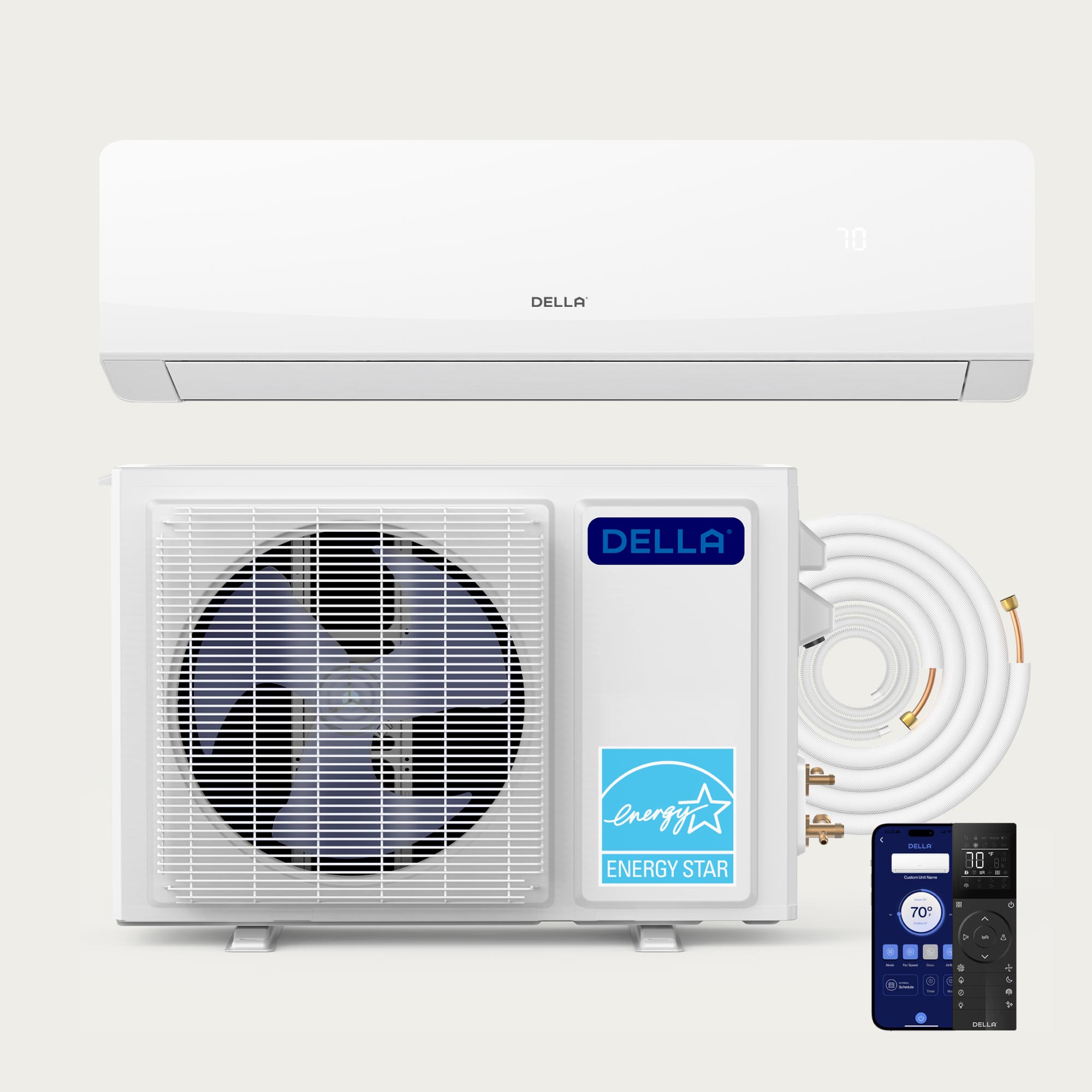
Think of zones as the number of rooms you want to control. Single-zone means one indoor unit on one outdoor condenser, a match for one room. Multi-zone shares one outdoor condenser among 2 to 5 indoor units that you set independently.
The trade is cost against footprint. Multi-zone is pricier at purchase, but it spares you several outdoor units, a real benefit when exterior wall or yard space is limited.
Three indoor styles are on offer.
- Wall-mounted: the standard format and the lowest cost.
- Ceiling cassette: sits flush in the ceiling for a tidier look, at a higher price and with a more involved installation.
- Concealed ducted: hidden behind drywall, a fit for renovations, though cost and complexity climb noticeably.
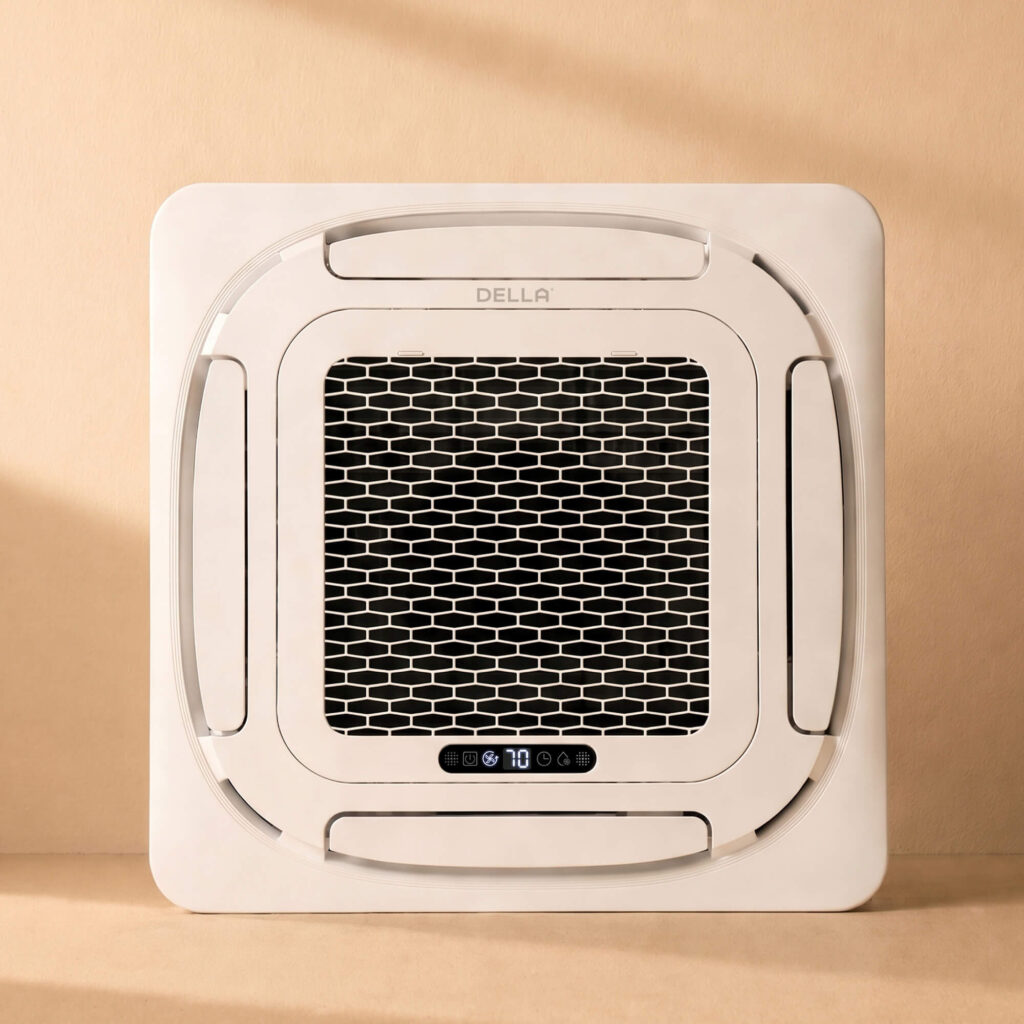
Before choosing a style, picture the wall or ceiling where the indoor unit would go and the spot where the outdoor unit can sit. Those two locations often settle the question for you.
Models Worth a Closer Look
Della’s catalog is broad, so this is a short rundown of the mini split lines covered in this guide. Prices are approximate regular prices at Della, so confirm the current figure before you order.
- Vario 12000 BTU, 21 SEER2: about $850 at Della. Rated for up to roughly 550 square feet, with a -4°F heating rating and about 28 dBA indoors.
- Vario 12000 BTU, 23 SEER2: about $830. Heating range is slightly narrower than on the 21 SEER2 model, in exchange for the higher efficiency rating, and the unit gains self-cleaning and auto-defrost functions.
- Serena 12000 BTU: from about $780. Energy Star-certified at 22 SEER2, with the built-in lifetime warranty.
- Optima: from about $895, rated 24 SEER2 with Ultra Heat performance for cold and extreme-cold climates.
- Motto: the cheapest way into the lineup. Its pricing shifts more often, so check the current price at Della.
For a closer look at the middle-tier model, read our full verdict on the Della Vario Series 12000 BTU mini split.
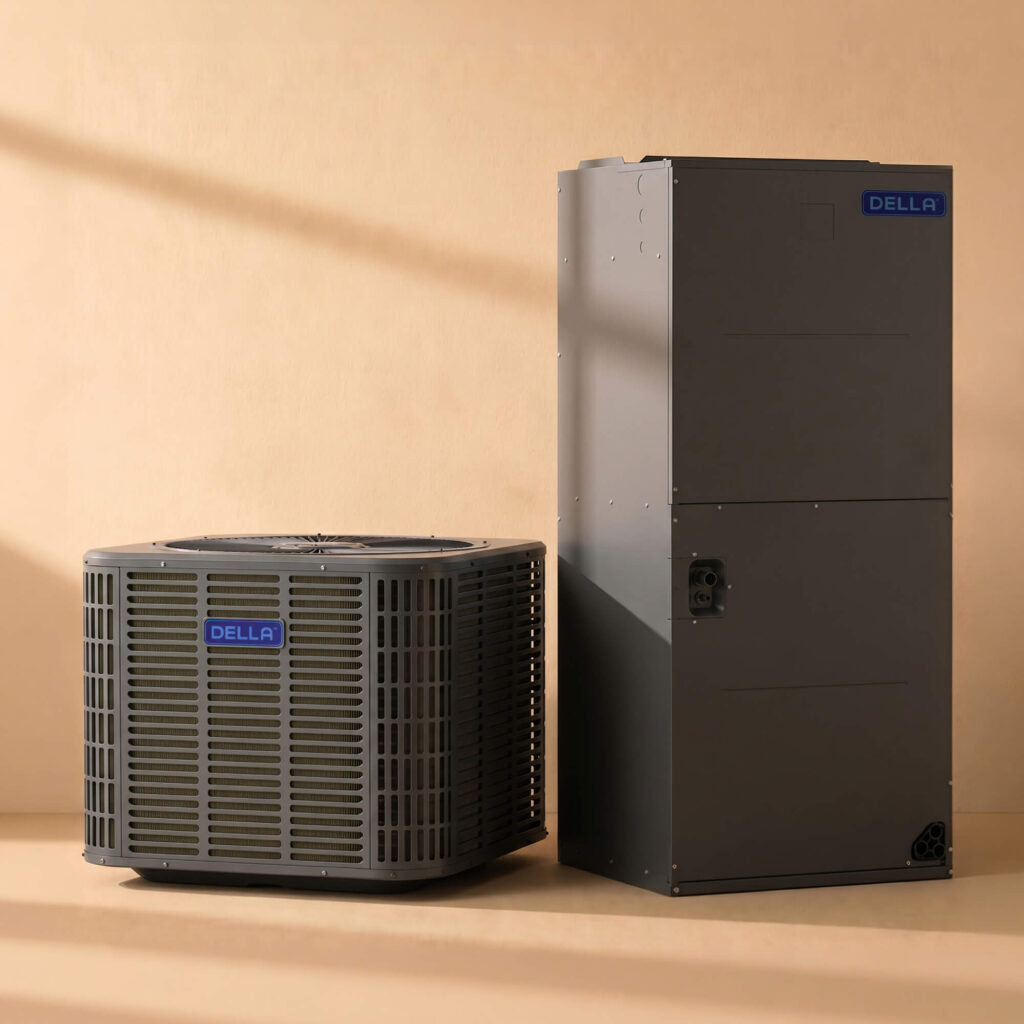
Whole-home options exist too. Central units are matched to home size in four tiers, from apartments and condos at 800 to 1,000 square feet up to large single-family homes at 2,001 to 2,500, with townhouses (1,001 to 1,500) and single-family homes (1,501 to 2,000) in between. Standard coverage is three years on parts and five on the compressor, and registering stretches that to five years and ten.
Pool heat pumps come with defrost built in and a compressor and heat exchanger warranty of ten years. Registering lifts parts coverage to lifetime, but after year one you cover return shipping on any parts claim.
Rebates are worth a look as well. Della keeps a rebate center that points to federal, state and utility efficiency programs, which differ by location. Energy Star models such as Serena most often qualify.
Installation and the MRCOOL Question
MRCOOL makes a natural comparison because its DIY lines arrive pre-charged, which removes the need for a vacuum pump or a license to handle refrigerant. Della takes the traditional route instead: a standard vacuum-and-charge install by a licensed HVAC technician, much like most conventional mini splits. The brand runs an installer locator to help you find one.
Compare totals, not sticker prices, because installation labor is billed separately. On the unit alone, a 12,000 BTU Della runs roughly $650 to $900 at Della, against $1,200 and up for a comparable MRCOOL DIY unit. Add an installer’s fee to the Della side and the gap narrows, often to near parity, with Della occasionally still cheaper.
The other differences are smaller.
- Warranty: MRCOOL’s baseline is a 7-year compressor warranty. Della begins with a 30-day full return and parts coverage, then reaches lifetime parts coverage for units registered in time.
- Cold weather: MRCOOL’s DIY systems are generally rated to around 5°F, while Vario is rated to -4°F and Optima to -22°F.
- Smart features: both include WiFi, app control and voice-assistant support, through SmartHVAC for MRCOOL and Della+ for Della.
Choose MRCOOL if installing it yourself matters. Choose Della if paying an installer is fine with you and you value a lower unit price, a broader product range or a rating for harsher cold.
Warranty, Returns and Where to Buy
Warranty terms vary by product category, so check which one you are buying.
- Mini splits: a full return or free replacement parts in the first 30 days, free parts through year one with free shipping on them, then lifetime parts coverage if you registered within 100 days.
- Central air: three years on parts and five on the compressor, rising to five and ten with registration.
- Pool heat pumps: ten years on the compressor and heat exchanger, with lifetime parts after registration.
- Window AC, portable AC and tower fans: one year of limited parts, extendable to 18 months in total when registered. Return shipping is on you.
No tier covers technician labor, flood or lightning damage, third-party components, or problems caused by improper installation or misuse. Registration is what separates a one-year warranty from lifetime parts coverage on most products, so complete it the day the unit arrives.
Returns work on a 30-day clock for mini splits, window units, portable units and tower fans. The product must go back in working condition with all accessories and its original packaging. From day 31, Della moves to parts replacement under warranty and no longer refunds.
Delivery is free by ground to the 48 continental states only, so PO boxes, Alaska, Hawaii, Puerto Rico and international addresses are out. Expect 1 business day of processing (2 to 4 in peak season), then 1 to 3 business days in transit.
Where you buy affects the warranty paperwork. Buying straight from Della’s own site gives you a purchase record inside Della’s own system, which keeps registration simple. If you buy anywhere other than Della’s own site, make sure the seller is authorized. The practical risk is an unauthorized seller, since registration asks for proof of purchase and a receipt from an unclear seller can cause friction later. Look for a listing sold by Della or by the retailer itself rather than an unfamiliar third party, and keep the receipt for registration.
A wholesale program for businesses that hold a reseller certificate also exists, which explains why you may spot Della units at local HVAC supply shops.
Keeping a Mini Split Running Well
Routine cleaning is what keeps most mini splits going for years, and Della’s guidance covers the basics without a technician. Here is the rhythm, followed by the details.
- Indoor filter: every 2 to 4 weeks in heavy-use seasons, every 1 to 2 months in mild ones, and more often in homes with pets or a lot of dust.
- Indoor and outdoor coils: once a year as a minimum, ideally ahead of your busiest season.
- Condensate drain: a periodic check for clogs.
- Space around the outdoor unit: kept clear of debris.
- Technician inspection: once a year.
Indoor filter
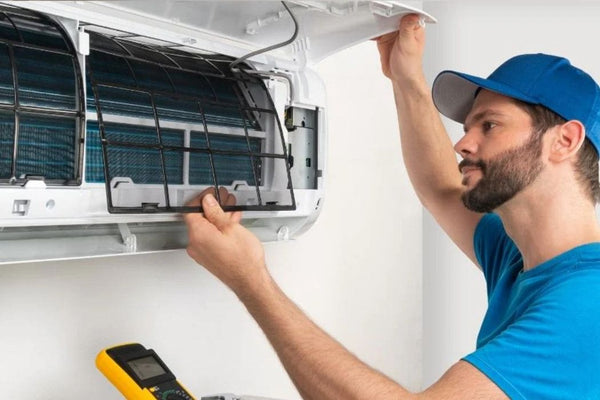
The job takes four moves: open the front panel and lift the filter out, wash it in warm water with a touch of mild detergent, rinse it well, then let it dry all the way before it goes back in. Skipping that last step is a common cause of a musty smell. Wipe the cabinet with a damp cloth while you are there.
Coils and drain
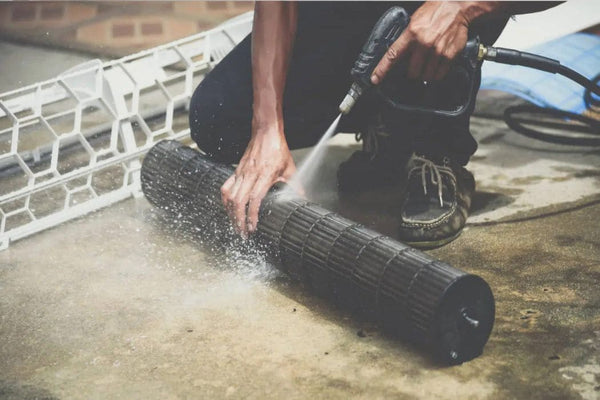
Buildup on a coil blocks airflow, and that costs efficiency. With the cabinet off, a coil cleaner or a soft cloth gets the indoor coil clean, and the outdoor coil gets the same treatment on the same yearly schedule.
If the condensate line clogs, water has nowhere to go but back into the unit, and leaks can follow. A periodic check, a flush when needed and a look at the condensate pan for mold keep that from happening.
Outdoor unit and professional service
Around the outdoor condenser, remove leaves, grass clippings and other debris on a regular basis. A hose takes care of the exterior, a brush handles the grill, and the fan blades can be washed gently with soapy water.
Once a year, bring in a licensed technician to look over electrical connections, refrigerant levels and mechanical components, a deeper check than anything you do at home. Staying current on maintenance also supports a warranty claim.
Common Questions
When was Della founded?
The brand dates its start to 2012.
How much does a 12,000 BTU Della mini split cost?
It generally runs about $650 to $900 at Della, depending on series and SEER2 rating, before installation labor.
Do I need a professional installer?
Yes. Della’s units need a standard vacuum-and-charge install, which is work for a licensed HVAC technician. MRCOOL’s pre-charged DIY lines avoid that step.
How loud is a Della mini split?
Della lists about 27 to 28 dBA with the fan on low, comparable to rustling leaves.
Is there a phone app?
Yes, it is called Della+. It covers scheduling and remote control over WiFi, and the units also pair with Alexa and Google Assistant.
How cold can it heat?
That varies by line. Vario is rated to -4°F, while the flagship Optima models reach -22°F.
How do I register the warranty?
Registration happens on Della’s warranty registration page and has to be completed within 100 days of the purchase date. Done on time, it turns parts coverage into lifetime coverage for mini splits and pool heat pumps, and it unlocks the longer tier for central air.
Is Della a long-established HVAC brand?
It dates from 2012, so it is younger than legacy HVAC names. That is one more reason to register on time and use a licensed installer.
Before You Order
A short checklist keeps the purchase on track.
- Measure the room and count any open spaces that connect to it.
- Match the series to your coldest typical night, not your average.
- Budget for a licensed installer on top of the unit price.
- Register within 100 days of purchase and keep the receipt.
- Buy from Della’s own site, or confirm the seller is authorized before you order.
When you are ready, visit Della’s site to browse the range and check current prices, then compare the series that fit your room and climate.