Custom window shades are hard to shop for because nothing comes off a shelf. Every piece is cut to your measurements, so the wrong style or size is an expensive mistake instead of a quick swap.
By its own account, inCustom is factory-direct. It makes Roman shades, zebra blinds, roller shades, honeycomb shades, woven wood, motorized blinds and outdoor screens to order. Starting prices run from about $31 to about $67 at inCustom depending on the style, and the public review history is thin, so it pays to read up before you order.
This guide pulls together the brand’s published specs and policies to help you pick a style, measure, order and look after it. It is research-based rather than a hands-on test, and wherever the brand makes a claim, the guide says so.
What inCustom Sells
The range falls into indoor and outdoor groups. Indoors, the choices are Roman shades, roller shades, woven wood, zebra blinds and honeycomb (cellular) shades, and a number of those come in smart motorized form. Outdoors, inCustom offers fence and privacy screens in UV-resistant mesh, along with an outdoor roller shade.
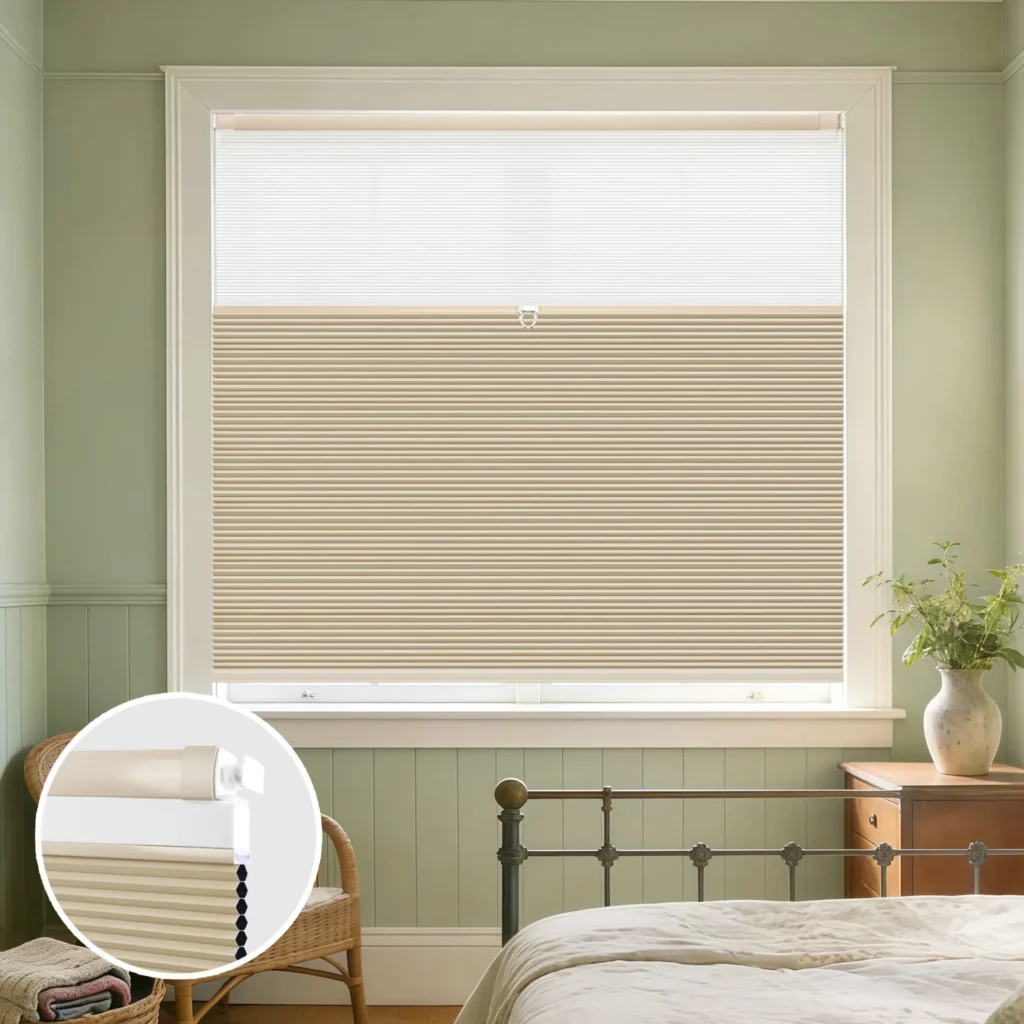
On its homepage, inCustom features the Cordless No-Drill Day and Night Cellular Shade most heavily, from about $30.99 at inCustom for the smallest custom size. It pairs a light-filtering layer with a blackout layer in one shade. If you want a closer look, here is our full verdict on the inCustom Day and Night Cellular Shade.
The table below lists the example models the brand highlights, with their starting prices at inCustom. Treat the numbers as approximate starting points, since the final price depends on the size and options you choose.
| Style | Model | Starting price at inCustom |
|---|---|---|
| Cellular, dual layer | Day and Night, cordless, no-drill | about $30.99 |
| Cellular, top-down bottom-up | Blackout, cordless | about $30.99 |
| Zebra, cassette | Modern Daylight (A201) | about $35.99 |
| Zebra, cassette | Elite Dimout (A221) | about $36.99 |
| Zebra, uncased | Sleek Daylight, bead chain (A202) | about $66.99 |
| Roman | Blackout, single layer (LM365) | about $33.99 |
| Outdoor roller | Cordless, wand operation | about $65.99 |
You can browse the whole range on inCustom’s own site, and that link opens inCustom’s store.
The Brand Behind the Shades
Start with what inCustom says about itself. Its About page uses the tagline “The Architects of Your Uniqueness” and frames the mission as made-to-measure shades for every room in a home. Orders, the brand says, are crafted by skilled artisans with no intermediaries, and it credits that setup for factory prices and quicker turnaround than a conventional retailer.
The corporate details are thinner. The site names Hangzhou Xishan Import and Export Co., Ltd as the operating company and lists South El Monte, California as its US address, but it gives no founder name and no founding year. This guide treats the origin story as unconfirmed rather than guessing.
Two published figures fit the factory-direct story without proving it. Production is stated at two to five business days, and entry-level shades start under about $31 at inCustom. Both are consistent with a business that skips a retail layer, though neither confirms the artisan description.
Reach and sustainability are also self-reported. inCustom says it has shipped everywhere from California to Copenhagen, and it lists recyclable packaging and eco-friendly fabrics as sustainability commitments. Shipment volumes and third-party sustainability certification could not be confirmed beyond what the brand states, so read them as the brand’s own claims.
Alongside retail, a trade and dropshipping partner program has its own route, separate from the standard checkout. That is a sign designers and small resellers are part of the audience as well as homeowners.
The Main Shade Styles
Half a dozen styles can blur together on a catalog page. Here is what separates them, based on the specs the brand lists.
Cellular shades
These use a hexagonal honeycomb that traps air in small pockets, which is the source of their insulating reputation. The fabric is a hydro-entangled non-woven material, and an aluminum film inside is said by the brand to block UV rays.
The Day and Night version stacks a light-filtering layer and a blackout layer, so one pull switches between them. A second option, the Blackout Cordless Top Down Bottom Up shade, skips the dual layer. It is dropped from the top edge, which gives privacy while daylight still enters through the lower part. Both start from about $30.99 at inCustom.
Zebra blinds
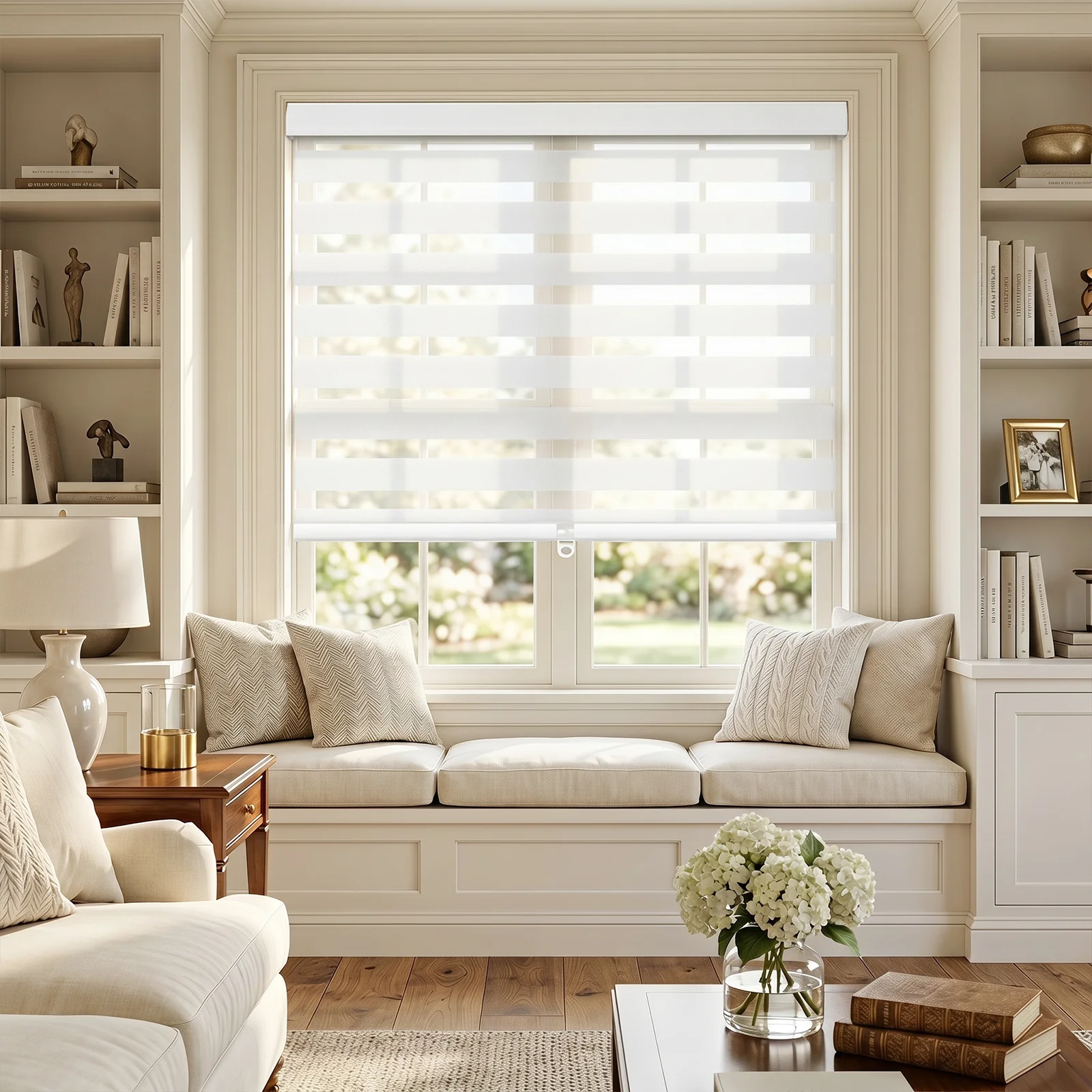
A zebra blind alternates sheer and solid stripes, so sliding the layers lets you move between a daylight view and full privacy. inCustom typically uses dual-layer polyester at 191 GSM.
In the cassette versions, a curved valance wrapped in fabric hides the mechanism, and the roller is a thicker 38mm aluminum tube. The result looks tidier than a bare roller. The Elite Dimout A221 leans toward blackout from about $36.99, while the Modern Daylight A201 favors light filtering from about $35.99. The Sleek Daylight A202 drops the valance entirely for a minimal, no-drill bead chain look from about $66.99.
Roman shades
Instead of winding onto a roller, a Roman shade gathers into soft pleats stacked across the window, which feels closer to a curtain. inCustom’s cordless blackout Roman shade, model LM365, starts from about $33.99 at inCustom and sits on an aluminum track. Depending on the model, you can get corded or cordless operation.
Roller shades
Roller shades are the most basic mechanism: a single sheet of fabric wound on a tube. The indoor range offers blackout or light-filtering fabrics, finished with a square hood at the top.
Woven wood and motorized options
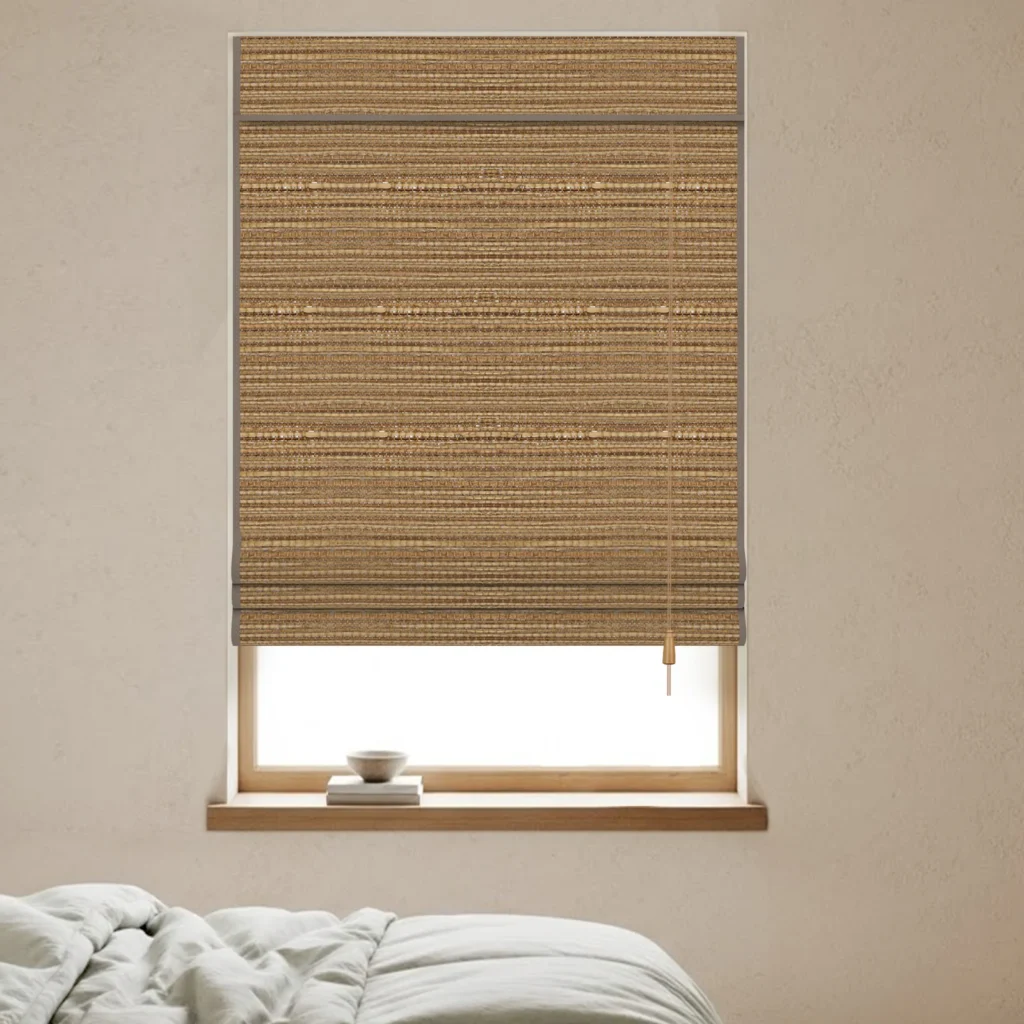
Woven wood adds natural texture as an alternative to fabric. The motorized line spans several shade types, uses the same no-drill approach as the manual versions and adds remote or app control. Prices for some motorized variants are not published, so check the page of the exact model you want before you commit.
Outdoor roller shades
The indoor fabrics are not rated to withstand outdoor exposure, which makes outdoor shades a category of their own. The outdoor version is built from 220 GSM HDPE mesh, which the brand rates at blocking 90 percent of UV rays while letting air through. A cordless wand moves it, and it arrives with a full do-it-yourself hardware kit. The brand describes it as suited to pergolas, patios and gazebos, and it starts from about $65.99 at inCustom.
How to Match a Shade to a Room
Fit is the main thing to get right when choosing a style. A useful habit is to note when you use the room and what you want from the window at those times, then pick the mechanism that suits that pattern.
Bedrooms and nurseries
For bedrooms and nurseries, put blackout and insulation first. inCustom’s cellular Day and Night shade is the style built for that brief, pairing a blackout layer with a honeycomb structure the brand ties to insulation. Cordless operation deserves extra weight in any room with kids or pets.
Living rooms and home offices
These rooms call for flexibility, since the light changes through the day. A zebra blind lets you dial anywhere between full daylight and full privacy with one control, without swapping shades.
Dining rooms and traditional spaces
If you want a softer look than a roller or cellular shade gives, Roman shades are the better visual fit. The folds look closer to drapery than any shade that winds onto a roller.
Patios and pergolas
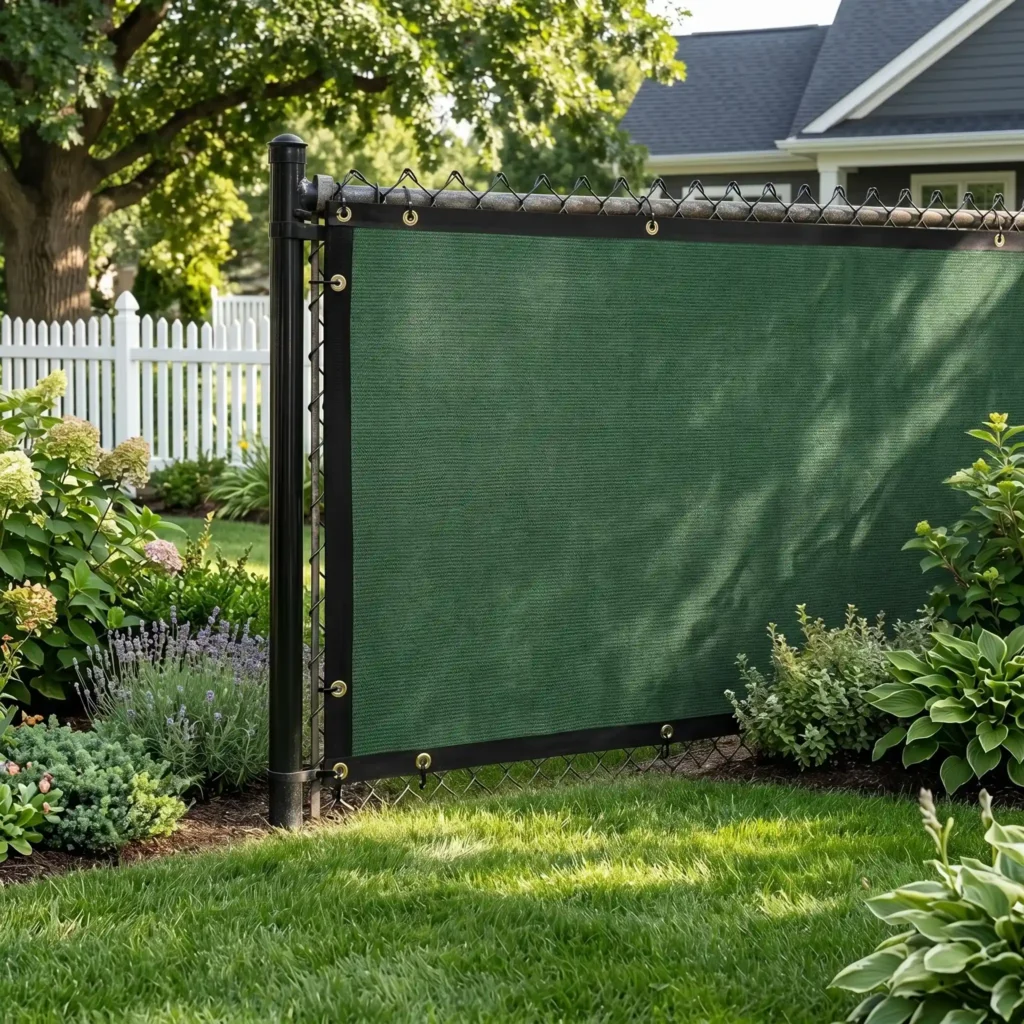
Choose the outdoor roller shade rather than improvising with an indoor one, because the indoor fabrics are not rated for outdoor use. For fences, the brand also makes privacy screens from UV-resistant mesh.
High or awkward windows
Motorized shades remove the need to reach for a cord or wand. They use remote or app control, with the same no-drill mounting as the manual range.
When budget decides
Among the models listed in this guide, cellular and Roman shades have the lowest starting prices, each below about $34 at inCustom. Zebra blinds and the outdoor roller shade begin higher.
Sun direction is a useful general tiebreaker. A window that gets strong direct light all day deserves a fabric you will not mind seeing change over the years, so factor that in before you pick a color.
Measuring, Samples and Ordering
Because every shade is cut to the width and height entered at checkout, the accuracy of your measurements decides how the order turns out. Measure more than once, write the numbers down and compare them with the size chart on the product page before paying.
Samples are the cheapest insurance. inCustom sends free sample kits with more than 50 fabrics, and a swatch looks different on a screen than it does against your own wall, so hold each one up in the room at different times of day.
The brand positions installation as a do-it-yourself job. A complete hardware kit and a video guide come with its shades, and many models mount without drilling.
Where you buy matters for a made-to-order brand. inCustom sells through its own site, and its sizing tools, fabric choices and warranty terms apply to orders placed there. If you buy anywhere other than inCustom’s own site, make sure the seller is authorized, and do not assume a similarly named product carries inCustom’s warranty or Measurement Protection. The surest route is inCustom’s own store, and that link opens inCustom’s site.
Designers and resellers who need many pieces are better off asking about the trade program than placing repeat retail orders.
Returns, Warranty and Shipping
Returns
inCustom treats every piece as made to order, so its stated policy limits returns to quality issues or major errors. Even then, customer service has to authorize the return before anything ships back, the item must be undamaged and in its original packaging, and the original shipping cost stays with the buyer.
Measurement Protection
Wrong measurements fall under a separate program. It offers one free remake per residential order for up to three pieces, as a replacement and not a refund. The report has to arrive within 7 days of delivery, with photos attached.
Lifetime Limited Warranty
The warranty belongs to the first buyer and is tied to the address where the shade was first installed, and commercial installs get 10 years instead of a lifetime. Coverage falls into three buckets: materials, meaning deterioration, tearing or peeling that outside damage did not cause; workmanship, meaning seams, stitching and construction under normal use; and hardware, meaning operating systems, brackets, rails and internal parts.
Four things are not covered:
- Installation mistakes
- Accidents and outside damage, including severe weather
- Slow fading from sunlight and ordinary wear
- Mold or mildew caused by moisture
To make a claim, email customer service with your order number, photos or video, a description of the fault and your present address. The brand says it acknowledges claims within six business hours.
Shipping
After two to five business days of production, standard delivery takes about 7 to 15 days, varying by destination, while expedited options arrive 7 to 10 days after dispatch. US and Canada orders ship free with no order minimum, shipments are insured, and duties, taxes and handling fees are folded into the checkout price. Change an address early, because it is only possible before the shipping label is created.
How inCustom Compares With Blinds.com
Blinds.com makes a useful benchmark for any custom shade order. Founder Jay Steinfeld opened it as an online store in 1993, and The Home Depot bought it in 2014, which leaves a documented history of the kind inCustom does not publish.
Sizing mistakes are the closest like-for-like match. Blinds.com’s SureFit guarantee remakes and reships free, even when the error was the customer’s, limited to a single replacement per product and 10 items in a household’s lifetime. inCustom’s equivalent is Measurement Protection, which allows a free remake once per residential order, with a 7-day reporting window and photo evidence. On warranty length, inCustom offers a lifetime limited term (10 years for commercial installs), while Blinds.com’s standard cover lasts 3 years.
Neither brand takes returns lightly. Both regard window treatments as custom items that are mostly final sale, apart from sizing mistakes and defects.
On track record, the two are far apart. inCustom has little third-party review data, most of its product pages show no published reviews, and the main concrete feedback is the testimonials on its own homepage. Blinds.com, by contrast, has a searchable complaint history with the Better Business Bureau that you can check before ordering.
Price is where inCustom aims to compete. Its starting prices run from about $31 to about $67 at inCustom depending on the style, and the brand credits its factory-direct model for factory pricing. This guide has not compared those numbers with other retailers, so check the current price at each store before assuming a saving.
Blinds.com suits shoppers who put an independently checkable record and Home Depot backing first. inCustom suits those who rank low starting prices and a lifetime warranty above a long public record.
Care and Maintenance
A lifetime warranty does not stretch to sun fading or to a headrail nobody ever dusts, so routine upkeep falls to the owner. The steps below follow inCustom’s published care guidance.
Fabric cleaning
Heat is the thing to avoid, because hot water and dryers make fibers tighten and shrink. When a wash is suitable, the brand’s guidance is cold water, a mild detergent and air drying. It also advises skipping heavy softeners, which it says can affect blackout backing over time. Read the care label before washing anything.
Fabric type changes the odds. Polyester and blends, which make up most zebra and cellular models, generally take a gentle wash better than natural fibers. Treat stains as soon as you notice them, and consider rotating panels once a year to even out sun exposure.
Protecting against UV and dust
The brand’s guidance ties dust and pollutants to faster fabric breakdown once sun exposure is added. Regular cleaning therefore keeps a shade tidy and is meant to slow fading too. South- and west-facing windows get the most direct light, so they benefit most.
If a Roman shade sticks
When a Roman shade will not raise or lower smoothly, inCustom’s troubleshooting guide looks at the headrail and the cord routing.
- Headrail: lower the shade all the way to release tension, then look for tangled cords, dust or crooked spools. A dry microfiber cloth, a soft brush or compressed air clears dust, and oil-based lubricants are best avoided because they attract more.
- Cords: lay the shade flat and trace each cord from the bottom bar up to the headrail, confirming that every ring is sewn on firmly and points straight out. For spiraled cords, unhook the bottom bar and leave them dangling until they untwist.
- Schedule: the brand suggests dusting monthly and giving the full headrail a check every 3 to 6 months.
Motorized shades
Battery-powered motors have their own rules. Recharge before the level falls under 20 percent, avoid cycling from empty to full every time, and use only the charger that came with the shade. In daily use, do not pull a motorized shade by hand unless it is designed for that, and keep the motor within its rated range of 32°F to 104°F.
For routine checks, inCustom’s maintenance rhythm has two tiers. Each month, wipe the track with a microfiber cloth or a handheld vacuum, check the motor for grinding or whining noises and confirm the brackets are secure. Each quarter, use only silicone-based lubricant, inspect the drive belt for fraying and test that the manual override moves smoothly.
Frequently Asked Questions
Is inCustom a manufacturer or a reseller?
By its own description, inCustom is a manufacturer. It calls itself factory-direct and says each product is made to order, cutting out intermediaries.
How long does an order take to arrive?
Plan on two to five business days of production first. Standard shipping then adds roughly 7 to 15 days, varying by destination, and an expedited option delivers 7 to 10 days after dispatch.
Is shipping free?
For the US and Canada, yes, with no order minimum. inCustom says duties, taxes and handling fees are already part of the checkout price, so nothing extra is added at delivery.
Can I get samples before ordering?
Yes. The brand offers free sample kits with more than 50 fabrics, which makes sense to request before a full custom order.
Are the shades cordless?
Many are. Cordless versions exist in the cellular, zebra and outdoor roller lines, and the brand positions them as a way to avoid the hazard that cords can pose. Some Roman models come corded or cordless, so check the product page.
Can I return a shade I simply do not like?
Usually not. Because each shade is custom made, a return needs a quality problem or a major error behind it, and the original shipping cost is not refunded.
What does the warranty exclude?
Four areas fall outside it: installation mistakes, accidental or outside damage, slow fading from long sun exposure, and mold or mildew that moisture causes.
Does inCustom sell to businesses?
Yes, through a separate trade and dropshipping partner program that runs next to the regular retail checkout.
Final Thoughts
inCustom suits shoppers who value factory-direct pricing on custom-sized shades and do not mind a thinner review trail than the big retailers. Free samples, a free Measurement Protection remake and a lifetime warranty take some of the risk out of ordering.
Match the style to the room first, measure carefully, order samples and keep the made-to-order return rules in mind. Do those four things and the main risk left is the one the brand cannot remove for you, which is a measurement typed in wrong.