
Hair extensions look simple until you open a brand’s catalog and meet a wall of names: Classic, Seamless, Invisi Edge, Genius Flex, Feather Crochet. GOO GOO Hair is a good example, because it sells across six installation methods under one roof, and the labels alone do not tell you which one belongs on your head.
This guide sorts the range by what each method asks of you in time, money and upkeep. It also covers who stands behind the brand, how to settle on color, length and quantity, how GOO GOO compares with Bellami, how to look after a set, and what the shipping and returns policies say.
Everything here comes from the brand’s published pages and policies, plus comments on third-party review sites. Where a statement is the brand’s own, the text says so. Where the evidence is thin, it says that as well.
Who Is Behind GOO GOO Hair
Some extension brands open with a founder’s photo and an origin story. GOO GOO Hair’s About Us and Our Story pages skip that: no founder is named and no founding year appears, which is worth registering before you buy.
What the pages do give is an operating profile. The brand says it has spent more than 20 years in the extension business with its own label, its own factory and a warehouse in the U.S. The listed parent company is Plarina International Trading Limited, with a workshop in Shatin, in Hong Kong’s New Territories.
Our Story frames GOO GOO Hair as a response to rivals that rely on vague claims and murky supply chains, and it states the aim of making extensions that are ethical and safe as well as beautiful.
The sourcing claims
In its own words, the brand is a collective of ethical suppliers, artisans and stylists spread across the world. Its stated practices are hair gathered with respect for donors, processing by hand with gentle, non-toxic methods, finishing through double-drawing and a silk treatment, and reusable, eco-friendly packaging.
All of this is the brand describing itself. No outside certification is cited and none of it can be audited from the outside, so treat it as a claim to weigh rather than proof.
A manufacturer first
In place of a personal story, the brand leans on programs: a Stylist Program for professionals, a salon line called GOO GOO PRO, a VIP membership tier and a referral reward scheme. A customer spotlight page shows buyer transformations.
Taken together, the brand presents itself as a manufacturer selling to consumers and stylists at once, not a start-up chasing a trend. That is its own positioning, and it says nothing about how any single set will perform.
Extension Methods Compared
The catalog is sorted by application method. Here is what each category is built to do.
Clip-ins
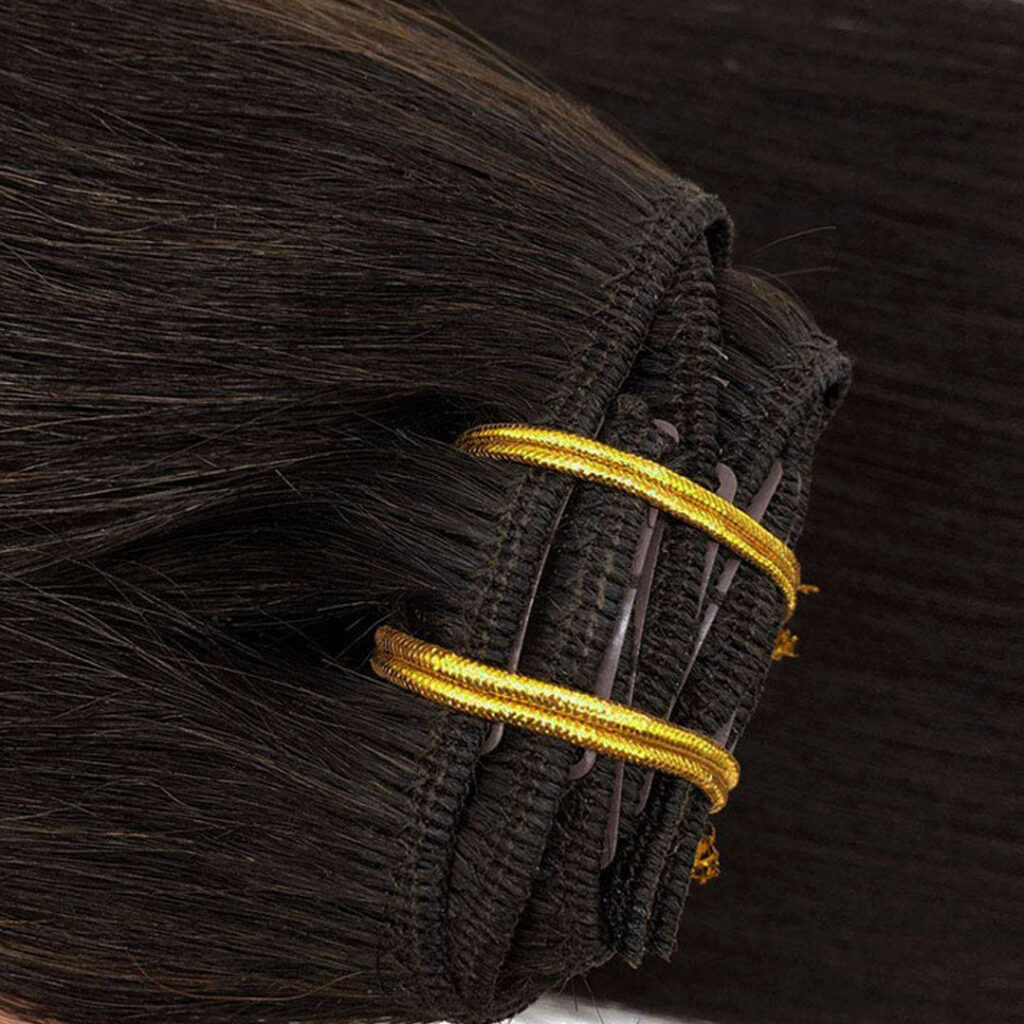
Clip-ins need neither adhesive nor heat, so they ask the least of you. Within the group, Seamless and Invisi Edge sets are built with thinner wefts, which the brand positions as a flatter profile that is harder to detect. The Classic set is 120 grams in seven wefts with silicone-lined clips, Thick sets weigh 150 grams, and Full sets add more hair for volume. The Elf Curly line is a separate range for naturally textured hair.
The brand says fitting and removal take minutes, and it gives a lifespan of about three to six months of regular wear.
Tape-ins
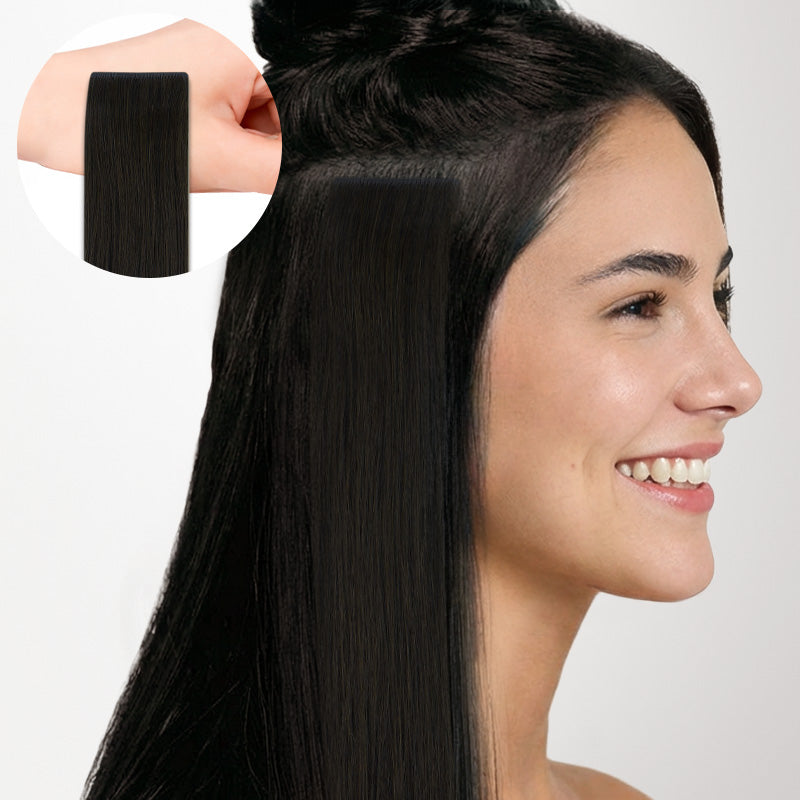
Invisi Edge Tape-Ins come in 50-gram and 100-gram sets, with a lighter Mini version for anyone who wants less bulk in each row. The brand describes the base as skin-like and ultra-thin, designed to lie flat even on fine hair. Prices run from about $69 to about $209, depending on length and weight.
The cost is maintenance: re-taping about every 6 to 8 weeks. Each set can go through up to three installs, which the brand puts at roughly six months in total with proper care.
Wefts
Wefts belong in a stylist’s chair. Installation, whether on a braided track or a bonded base, is professional work, and wefts are generally described as needing fewer touch-ups than either clip-ins or tape-ins.
The range runs from Sew-In Weft Classic (80 to 120 grams, about $60 to $63) to the Thick Sew-In Weft (120 to 160 grams, from about $111). Feather and Butterfly wefts are newer, flatter variants, and Genius Tape and Genius Flex are machine-wefted on a tape base for stylists who install several rows at a time.
Bonded tips
Feather Crochet, Flat Tip, I-Tip and Micro Link are bonded strand by strand and aimed at stylists and experienced wearers. They take the longest to fit. The brand’s pitch is that every small section moves independently, which it says gives the most natural blend. That is the brand’s own claim.
Quick-fit options
Wire and ponytail pieces are the quickest to put on, using a halo band or a drawstring rather than clips or glue. Toppers and scalp hair fill-ins solve a different problem, covering a thin patch or a widening part rather than adding length. They clip on, much like a small clip-in weft.
How to Choose the Right Method
Choose by how much commitment you want and by how your natural hair behaves. These are the situations the lineup is designed around.
For the lowest commitment
Clip-ins are the natural starting point: no adhesive, no salon visit, and they come out the same day. The Classic set is the one our full verdict on the GOO GOO Classic Clip-In set covers, with the specs, colors and fit laid out.
For a flat, everyday look
Look at Invisi Edge Tape-Ins. The brand designs their skin-like base to lie flatter than a clip-in weft, and they stay on between re-tapings instead of coming out each day. Budget for fresh tape every 6 to 8 weeks for as long as you keep wearing them.
For thin or fine hair
Think about weight before length. The brand’s FAQ suggests two to four packs for most hair types, depending on the goal. The Classic set’s wefts are thicker than those in Seamless and Invisi Edge clip-ins, so those two lines are the ones to compare if your hair is fine.
For maximum volume
Density is the job of the 150-gram Thick Clip-Ins, the Full Clip-Ins and the Thick Sew-In Weft. The sew-in needs a stylist to build a foundation track, so it gives up the at-home convenience of clip-ins.
For thinning spots or a wider part
Toppers and scalp hair fill-ins exist for this job. They cover one specific area instead of adding length across the whole head.
For the tightest budget
Sew-In Weft Classic starts at about $60, the lowest starting price among the lines covered here, but the professional install is a separate step.
| If your priority is | Start with |
| A first, low-risk purchase | The Classic Clip-In set, from about $79 |
| A flat, everyday look | Invisi Edge Tape-Ins, from about $69 |
| Slender, delicate hair | Seamless or Invisi Edge clip-ins |
| Serious density | Thick clip-ins, Full clip-ins or a heavy sew-in weft |
| Coverage in one area | A topper or scalp hair fill-in |
| The lowest starting price | Sew-In Weft Classic, from about $60 |
Color, Length and Pack Count
The Classic set comes in 16 colors. Solid options include Jet Black and Chocolate Brown, and the multi-tone balayage blends include Caramel Blonde and Platinum Blonde.
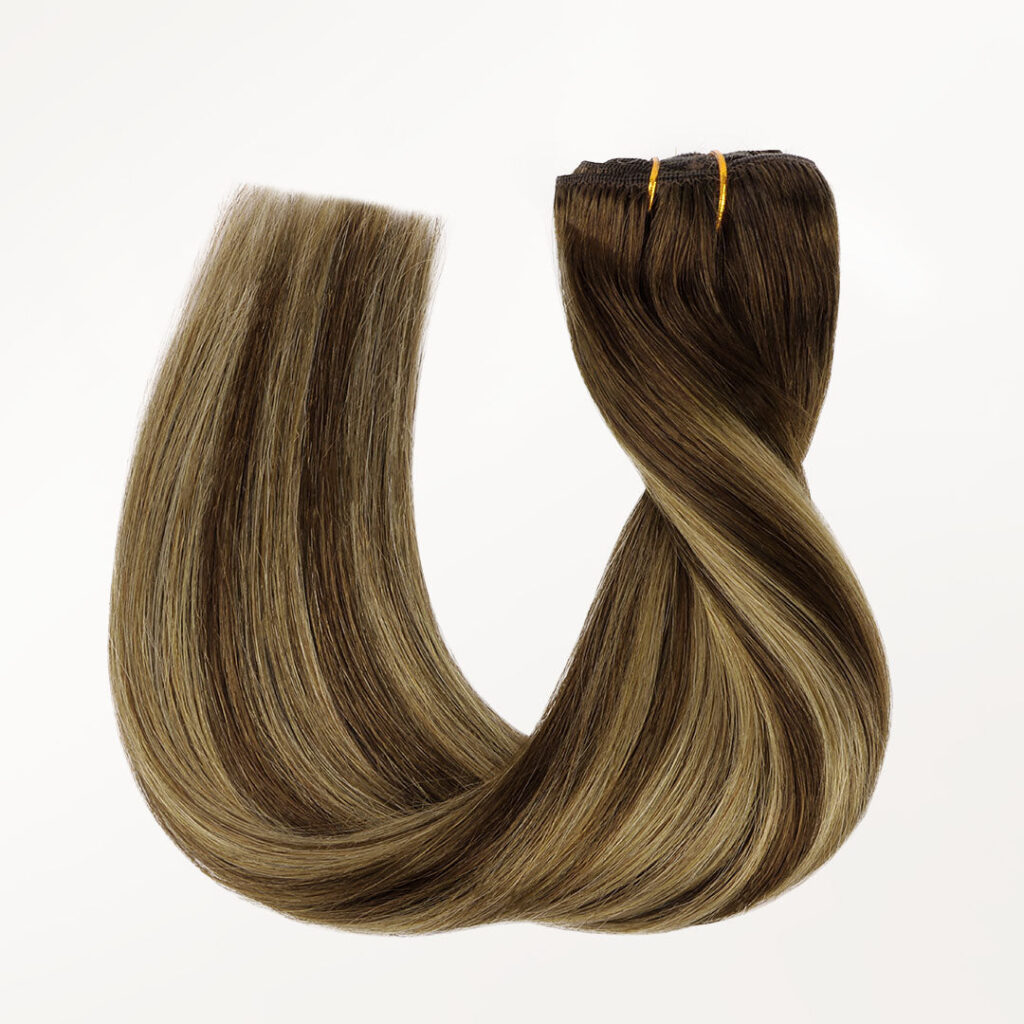
Judging shade from photos is hard, so the brand runs a color-match service. Email, live chat or Instagram DM the team a picture of your hair shot in natural light, and they help you find the closest color. Do it before ordering, because worn or altered sets fall outside the return terms.
Lengths run from 14 to 24 inches. On quantity, the brand’s FAQ points to two to four packs for most hair types, with the exact number set by whether you want more length or more fullness. Thin hair gets the same range as medium to thick hair.
A single Classic set weighs 120 grams, so think of it as a fullness boost. If length is the goal and you are not already near the length you want, plan for more than one pack.
When the order arrives, check the color and texture in daylight before you cut any security straps, since the returns policy expects them intact.
What Reviews Say, Good and Bad
On the brand’s own store, the Classic Clip-In page shows a rating of 4.96 out of 5 from roughly 2,700 reviews. The store-wide average is 4.9 out of 5 from nearly 9,900 reviews. A store’s own rating is one data point rather than an audit, but the volume is large enough to be worth noting.
Two reviewers on the store capture the praise. One says the extensions “literally melt into my hair”, blending well even in natural light, with no tangling or heaviness through a full day. The other reports that, in the reviewer’s words, it “feels great even after shampooing”, and thinks the price is hard to beat.
Third-party review sites paint a more mixed picture of the brand as a whole. Recurring complaints include split ends, thinning or shedding in some batches, tape adhesive that gives way sooner than expected, and colors that do not always match the product photos.
Scores gathered on a brand’s own store and comments posted on third-party sites seldom line up perfectly, and knowing that gap exists helps you shop with realistic expectations.
How It Stacks Up Against Bellami
Bellami works as the benchmark here because it sells comparable clip-ins made from 100% Remy human hair with a near-identical pitch. These are the points that matter for a purchase.
Price
The GOO GOO Classic Clip-In set ranges from about $79 to about $180 as length and color change. Bellami’s clip-in sets, by contrast, generally begin above $170. Judged only on where each price range begins, GOO GOO starts lower.
Materials and range
On paper the material claims are nearly identical, and both brands say heat styling is fine. The Classic line lists 16 shades, a figure worth setting against Bellami’s own color chart.
Track record
Bellami has been on the market longer. Third-party review sites show a mixed pattern for both brands. Praise for Bellami centers on the clip mechanism and hold, while complaints mention quality after washing. For GOO GOO, the complaints cluster around batch variation, as covered above.
Which to pick
If price decides it, GOO GOO’s lower starting point makes it the cheaper way to find out whether clip-ins work for you. If you value a longer selling history over saving money, Bellami has that record but costs more.
Care That Makes Sets Last
Extension hair is cut off from the scalp, so the brand’s care FAQ treats upkeep as part of the purchase. The routines below follow that FAQ.
Between washes
Start with the comb: use a wide-tooth comb and begin at the ends, moving upward, rather than pulling from the root down. Beyond that, the brand lists three habits for frequent wearers. Keep the hair moisturized, do not sleep on it damp, plus a hydrating mask roughly weekly.
Wash day
The brand’s schedule is one wash per 15 to 20 wears, with an earlier wash if buildup makes the hair feel heavy. It calls for sulfate-free shampoo and conditioner, saying sulfates strip the protective coating on Remy hair, followed by a gentle air dry with strong heat kept away until the hair is dry.
Heat and color
Heat tools are allowed when a protectant spray goes on first and the temperature stays under 350°F (180°C). The brand adds that heat can weaken tape adhesive and warp clip hardware over time, so keep irons away from both.
For color work, the brand recommends a professional and a strand test before committing. Going darker is generally safe by its account. Lightening is discouraged because, the brand says, it harms the outer cuticle that helps Remy hair resist tangles.
Taking tape-ins out
Tape-ins come out with alcohol. The brand’s method is 91% isopropyl sprayed onto the tape, a wait of a few minutes, then a slow, gentle separation. A little oil deals with leftover residue, and a regular wash finishes the job.
Buying, Shipping and Returns
Where to buy
Buying from GOO GOO’s own store is the cleanest route. The brand’s return policy covers only channels it controls directly, and the color-match service and Stylist Program apply there too. If you buy anywhere other than GOO GOO’s own site, make sure the seller is the brand itself, since return terms and authenticity guarantees differ by seller. You can browse GOO GOO’s range on GOO GOO’s own store.
Signs of a fake or repackaged set
- A price far under the brand’s: the Classic Clip-In set starts around $79 on the brand’s own store, so a near-identical set at half that from an unfamiliar seller deserves scrutiny.
- Loose hair in the photos: the brand’s return policy refers to a security strap on original packaging, so a listing showing unsealed hair is a warning sign.
- Photos that do not match: compare the colors and weights on offer with the brand’s product page.
- No return address: if a seller cannot say where returns go, the brand’s 30-day window will probably not be honored.
Shipping
Free shipping applies worldwide. The brand keeps warehouses in several countries, and an order ships from whichever is closest to the delivery address. Stock status sets the timeline: in-stock items go out immediately, while items that are out of stock wait another 4 to 7 business days before leaving, which matters if the order has a deadline such as an event.
Orders are processed seven days a week, and a tracking number may need up to 48 hours after dispatch before it works. A missing apartment or house number in the address can add 1 to 2 business days. On international orders, the recipient pays any customs duties and VAT.
Returns
The return and exchange window is 30 days from the ship date rather than the delivery date. A set qualifies only if it is unworn, uninstalled, undamaged, unwashed and undyed, and still in its original packaging with the security straps attached. Once a return is approved, you have 14 days to post it with tracking.
Return postage is yours on a standard return or exchange. The brand pays only when it shipped a damaged or incorrect item. Refunds follow within 5 to 6 business days of the set being received and inspected.
The brand also publishes a delay provision. When an order runs 10 or more days late, customs holds included, it says it offers a 30% refund immediately, with the remaining 70% to follow once the item is confirmed received.
Frequently Asked Questions
How many packs do I need?
The brand’s FAQ puts most hair types at two to four packs, depending on whether you want length or fullness. Thin hair falls in the same range as medium to thick hair.
How do I find my color match?
Email, live chat or Instagram DM the team a picture of your hair shot in daylight, and they will help you choose.
Which ways can I pay?
The brand takes PayPal, major credit and debit cards, and Klarna or Afterpay installments.
Can I try the set on before deciding?
That conflicts with the return terms, which require a set to be unused and uninstalled. Use the color-match service before you order instead.
Can I change or cancel an order?
Yes, until a shipping confirmation email arrives. Contact customer service before then, and the team will try to update or cancel the order.
The Bottom Line
GOO GOO Hair presents itself as a manufacturer selling to shoppers and stylists alike, with a catalog that spans six methods and a lower starting price than Bellami’s clip-ins. Clip-ins suit a first try, tape-ins suit a flat everyday look, and wefts and bonded styles belong in a stylist’s chair.
Be realistic about the evidence: store ratings are strong, third-party review sites report batch complaints, and the sourcing claims are the brand’s own words. Match your color first, inspect the hair on arrival and follow the care routine.
When you are ready to compare lengths and shades, browse GOO GOO’s range and check current prices at GOO GOO’s own store before you order.