
ChoiceQuill is reader-supported. When you buy through links on this page, we may earn a commission. You pay the same price either way.
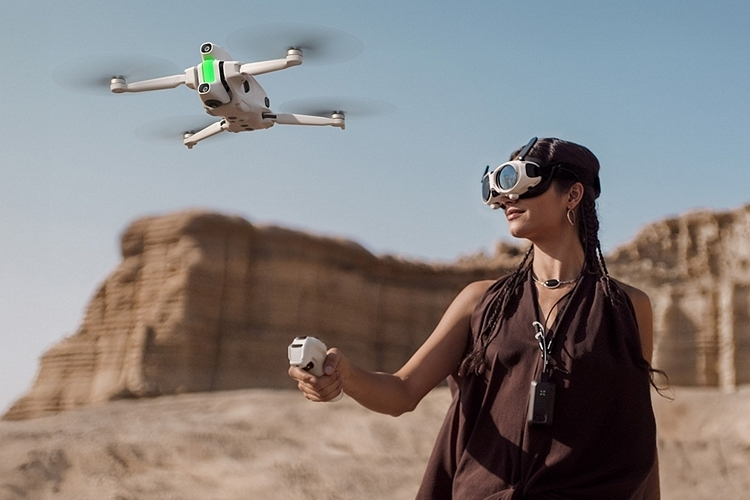
Insta360 has moved into drones. Through a new spin-off company, the maker of well-known 360-degree cameras and action cams has built the Antigravity A1.
One feature sets the A1 apart right away. Even DJI has not built it into any of its quadcopters.
The company bills the A1 as the world’s first 360 drone. Its camera system captures a spherical view of everything around the aircraft, which opens the door to aerial shots that drones have not managed before.
Two Lenses, One Spherical View
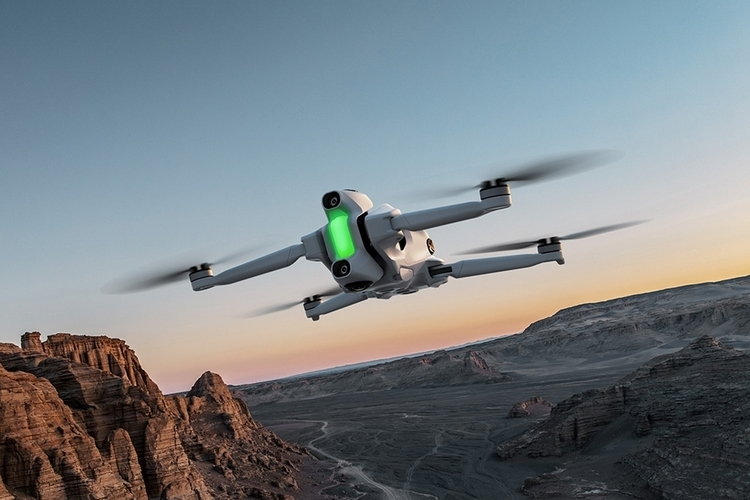
The A1 uses a dual ultrawide lens setup. One lens sits on top of the drone and the other on its underside.
Each one captures a 180-degree view, covering the front and the back. The drone stitches those views into a 360-degree live video feed automatically.
The system can record spherical video in 8K. AI algorithms erase any part of the drone that appears in the shot, the same trick Insta360 uses to remove selfie sticks from clips shot on its 360-degree cameras.
Another carryover from those cameras is reframing in post-production. Because the recording covers the whole sphere, you can choose your framing later and avoid missing moments that a conventional drone camera might not capture.
Three Parts: Drone, Goggles and Grip
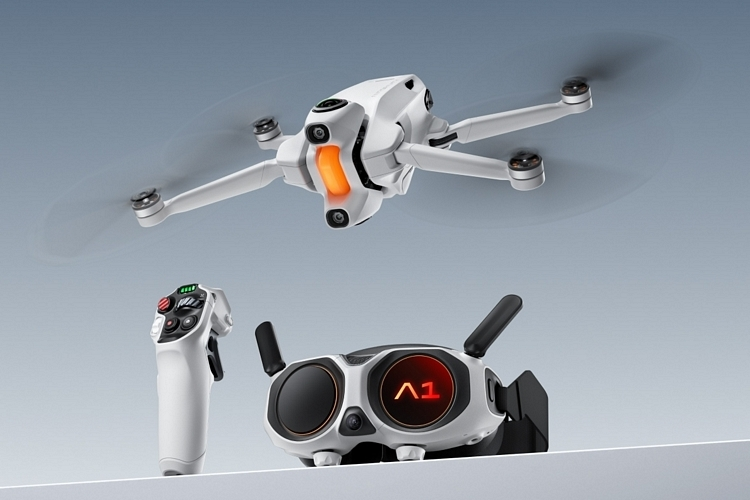
The drone is only part of the package. The full set has three parts: the drone itself, a set of OLED goggles named Vision and a motion controller named Grip.
Flying it resembles piloting an FPV drone, with one difference. Instead of a video feed locked to a single field of view, you get the full 360-degree live feed.
To look at another angle, you simply turn your head. The goggles detect the movement and shift the framing to match, and the drone’s real flight path stays unaffected.
On paper, that sounds very intuitive.
How the Grip Controller Works
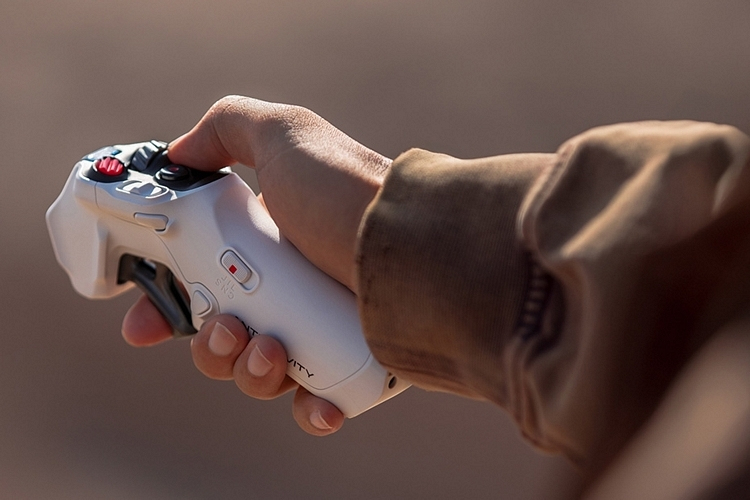
Grip is something like a cross between conventional drone controls and the classic Wiimote. It is meant for one-handed use.
Physical controls cover several jobs. Buttons handle functions such as start/stop recording, reset view and switch orientation, among others. A trigger controls speed, and a dial adjusts things like altitude.
Steering relies on motion control. Move the Grip to the right and the drone goes right, and pull it back to make the drone fly backward.
A reticle appears in the goggles to show the direction of travel, so you can see that the drone is following your lead. The company calls the experience FreeMotion and claims it feels natural, intuitive and more immersive than typical drone flight.
Weight, Sports Mode and Availability
The drone weighs just 249 grams, which keeps it below the registration threshold in most places. A Sports mode unlocks faster flight speeds for anyone who wants the racing-style FPV experience.
The A1 is slated for release, though there is no exact pricing yet. The company has indicated that all three components together should cost somewhere between $1,300 and $1,700.

Olivia Vance
Believing that a great blog post should feel like an ongoing conversation rather than a lecture shapes everything I write. I lose track of time digging into the finer details of a topic just to ensure you leave the page with a fresh, reliable perspective.