ChoiceQuill is reader-supported. When you buy through links on this page, we may earn a commission. You pay the same price either way.
Many of us end up sitting cross-legged in a desk chair at some point in the day. The AtHope Cross-Legged Office Chair is designed around that habit.
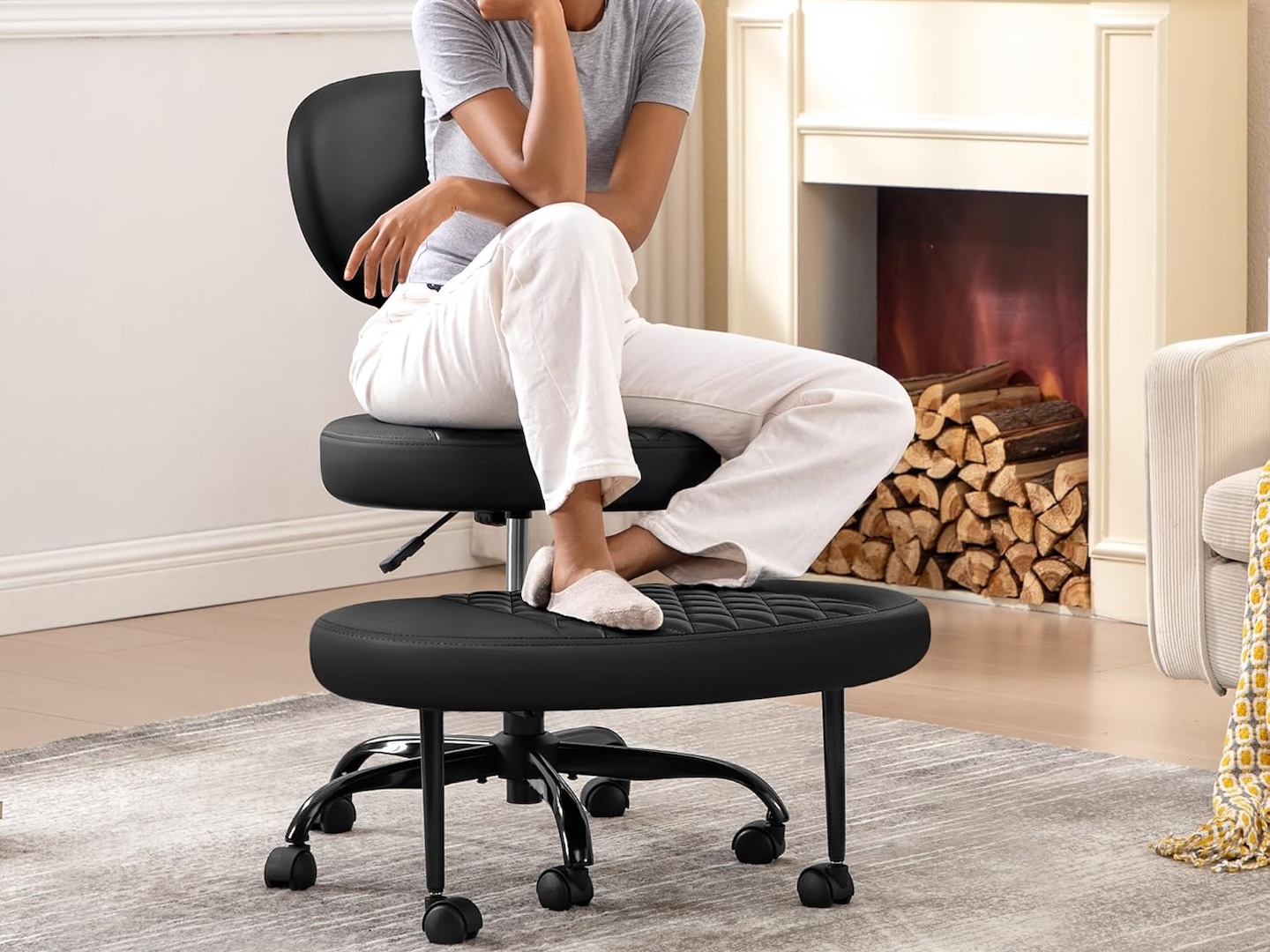
A raised footstool is built into the base, and it rotates 360 degrees. Depending on the color, the price lands around $119 to $130.
To judge it, we read the listing and a large pile of buyer reviews. One question drove us: does it deserve the favorable Herman Miller comparisons that buyers make?
Inside the Build: Leather, Sponge and Wheels
PU leather covers both the seat and the footstool, and its perforated pattern lets the material breathe.
High-density sponge fills both parts. Cheaper stools tend to use thin foam, so this is a step up.
The base rolls on ordinary office chair casters and can be raised or lowered. Lumbar support is built into the backrest.
How the Footstool Changes the Way You Sit
Here is what really separates this chair from an ordinary desk chair: the footstool. It spins through a complete 360 degrees.
Its height is chosen so you can tuck one leg or both beneath you. You can sit cross-legged, kneel with your shins on it, or sit sideways with your legs angled off to one side.
Comfort Over Long Sessions: What Buyers Report
Reviews keep coming back to comfort during long stretches of sitting.
One buyer found the seat roomy and supportive. Even through lengthy sits, their thighs stayed free of numbness.
Numbness is a frequent complaint with narrower kneeling chairs.
The most striking review is from a buyer who has ADHD. With this chair, they worked for three straight hours without standing up.
In their Herman Miller chair, they said, they could not manage that at all. Being able to shift between sitting positions kept their mind on the work, so they were not constantly wriggling out of the seat.
A different buyer summed it up in a line. The chair felt odd for the first few days, yet ordinary chairs now seem confining next to it.
Watch-Outs From the Wider AtHope Range
Some complaints turn up across AtHope’s wider lineup, mostly about its more traditional models. They are worth a look before you order:
- A backrest set lower than the photos imply
- Armrests that a few buyers lift out of the way instead of using
- Padding on the seat that leans firm
Colors and Assembly
Five colors are available: White, Black, Off White, Dark Gray and Dark Brown. Matching most home offices is easy with that range.
Assembly mirrors what AtHope’s other chairs require. Plan on a printed instruction sheet, a bag of hardware and about 20 to 30 minutes of work.
Pipersong’s Take on the Same Idea
Pipersong sells a rival take on this design, the Meditation Chair PRO. Its price is $299, and sometimes it is marked down from $399.
On top of that, the chair has memory foam cushioning, a steel hydraulic base certified by SGS, and a 1-year warranty.
Some of Pipersong’s own reviewers say the cushion is too hard for certain sitters. They also raise concerns about how long the white pleather option will hold up.
AtHope’s version costs under half as much. Its approach is the same basic PU leather and high-density sponge, minus the premium materials.
Who Should Buy It
Do you tend to sit cross-legged at your desk? Do long work sessions leave you fidgeting? Then this chair is a safe, inexpensive way to experiment.
It also lets you try alternate-posture seating without paying $300 for the Pipersong.
Someone who sits perfectly upright all day will still want a high-end ergonomic chair, because this one will not replace it.
People who cannot sit still are the better match. For them, the reviews suggest the comparisons it gets are earned.